
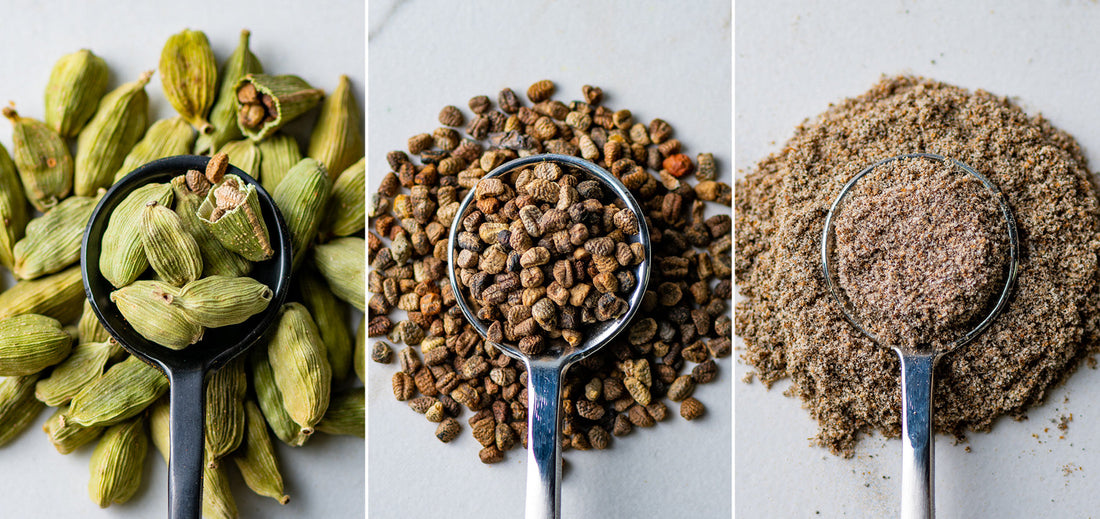
Cardamom is the third most expensive spice in the world by weight–after saffron and vanilla–which would seem to limit its appeal. It doesn't. The flavor is so concentrated that a teaspoon of cardamom powder transforms a cake, a pot of chai, or a cup of coffee in a way nothing else in the pantry quite replicates: floral and citrusy with a minty, eucalyptus-like warmth and a faint peppery edge. Scandinavians put it in pastries. South Indians build curries with it. Middle Easterners scent their coffee with whole cardamom pods.
That kind of range across completely different cuisines is the tell. Cardamom isn't a niche spice, just an underused one in most American kitchens.
What Is Cardamom?
Cardamom is the seed pod of a tropical plant native to the Cardamom Hills of southern India, where wild bushes have grown for at least 2,000 years, flourishing in rainforests and sometimes reaching eighteen feet tall. Today, Guatemala is the world's chief exporter of the highest-quality cardamom pods. The spice is related to ginger, but the flavor is a world apart.
Product Cards
You'll sometimes see it spelled cardamon or cardamum. It's all the same thing. When a recipe calls for "cardamom," it almost always refers to green cardamom, which is the more common variety. Green Cardamom's high cost comes down to the same factors that make saffron and vanilla expensive: a limited growing region, a labor-intensive harvest, and a relatively low yield per acre. Each small-sized pod is picked by hand when about 75% ripe to preserve peak quality and typically contains 17 to 20 tiny inner seeds. That care and scarcity drive the price, but cardamom's flavor is so potent that a little goes a very long way.
There is also black cardamom, which we don't carry. It has an earthy, smoky flavor that's entirely different and not interchangeable with green.
What Does Cardamom Taste Like?
Cardamom has a flavor that's genuinely difficult to describe because it hits several notes at once: floral, lightly citrusy, minty with eucalyptus-like warmth, and faintly peppery, with a sweet aromatic quality running through all of it. It's assertive rather than harsh. It's present and distinctive without being sharp.
The smell tells you a lot before the taste does. Ground cardamom should have a strong, slightly peppery, citrusy aroma with pronounced menthol-like notes. Whole cardamom pods and seeds will smell milder because it's grinding or crushing that releases most of the essential oils. A cardamom powder with a weak aroma is stale cardamom, and is not worth using.
What makes cardamom unusual as a spice is its ambidexterity: it works with equal success in sweet and savory dishes, with dairy and with meat, in hot drinks and in cocktails. It bridges the warm-spice world of cinnamon and ginger with a lighter, more aromatic quality that those spices can't provide. That versatility is why it shows up in everything from Scandinavian pastries to South Indian curries to Middle Eastern coffee.
What's the Difference Between Cardamom Pods, Seeds, and Cardamom Powder?
All three come from the same plant and share the same flavor. The difference is form, and the form determines when and how you use them.
Cardamom Pods are the whole fruit of the plant, used primarily to infuse flavor into liquids. To use them, give each pod a gentle crush with the flat side of a knife to crack it open slightly. This releases some of the oils and lets flavor steep out more efficiently. Drop them into simmering chai, coffee grounds before brewing, soup broth, rice cooking water, or a cocktail syrup. Remove before serving; the pods themselves are papery and not pleasant to eat.
Our recipe for Cardamom Cinnamon Buns uses seven green pods coarsely ground with a mortar and pestle. The slightly rough grind keeps pockets of cardamom flavor throughout the dough that a fine powder wouldn't achieve in the same way.
Recipe Card
Cardamom Seeds, sometimes called decorticated cardamom, are the inner seeds removed from the pod. They sit between pods and ground cardamom in terms of potency and versatility: more aromatic than pods alone, and grindable fresh when you need cardamom powder at peak intensity. Use a spice grinder or mortar and pestle. The seeds are firm and won't yield easily to a rolling pin.
Cardamom Powder (or ground cardamom) is finely ground cardamom seeds. We call our version Ground Inner Cardamom Seeds, which is exactly what it sounds like: the inner seeds ground to a fine powder ready to go directly into batters, spice blends, curries, and sauces. Cardamom powder integrates evenly throughout a dish where whole pods would release unevenly. It's the form most recipes call for, and for most home cooks, it's the most practical one to have on hand.
Quick conversion: 12 cardamom pods yield approximately ¾ teaspoon of finely ground cardamom powder. If a recipe calls for pods and you only have ground (or vice versa), this ratio will be your guide.
How Do You Cook with Cardamom?
Cardamom's range is wider than most spices. It works across baking, drinks, savory dishes, and even grilling — the same floral, aromatic quality that makes it shine in a cake does something equally interesting in a curry or a marinade.
In baking. This is where ground cardamom earns its keep for most American home cooks. The floral, eucalyptic flavor lifts citrus-based baked goods in a way that cinnamon can't. It's a natural partner for orange, lemon, and grapefruit. Our recipe for Cardamom Citrus Yogurt Cake uses a full tablespoon of ground cardamom with Greek yogurt, orange extract, and Tahitian vanilla, finished with an orange glaze and Pakistan rose petals.
Recipe Card
The recipe for Cardamom Berry Olive Oil Cake takes a simpler approach, with two teaspoons of ground cardamom folded into an olive oil cake with fresh or frozen berries and a light olive oil glaze. And for the easiest possible use of the spice, try making our Cardamom Whipped Cream. It requires nothing more than a teaspoon of ground cardamom beaten into heavy cream with a touch of powdered sugar. It's a simple upgrade for any dessert, or spooned into coffee and hot chocolate.
Recipe Cards
For chai-spiced baking, Mt. Baker Chai Seasoning is a good shortcut. It's a ground blend of Saigon and Indonesian cinnamon, cardamom, ginger, black pepper, star anise, allspice, and bay leaves, designed specifically for cakes, pies, muffins, and ice cream. A tablespoon or two in most baking recipes delivers the full warm-spice profile that cardamom anchors.
Product Card
In drinks. Cardamom and beverages have a long, well-documented relationship. The most well-known is chai: our Chai Spices blend makes a traditional masala chai when simmered in tea, milk, and sweetener. One ounce of the blend makes up to eight cups.
Product Card
Beyond chai, whole cardamom pods are one of the best ways to add complexity to coffee.
Quote Image - "From Thanksgiving to Christmas, it's a holiday tradition: 1/2 teaspoon of ground cardamom goes into our fresh-ground coffee before brewing. The flavor and aroma are a magical way to start the day." Janet Johnston, co-founder
For cocktails, our recipe for a Grapefruit Cardamom Gin Fizz infuses six cardamom pods in gin for 12 hours, then combines the strained gin with rosemary simple syrup, fresh grapefruit juice, and a splash of Prosecco. The cardamom's floral warmth plays off the bitter citrus beautifully. It's effortlessly elegant for a dinner party.
Recipe Card
In savory cooking. Cardamom belongs in curries and spiced stews as naturally as it belongs in a cake. It's a key component of Garam Masala and many South Asian spice blends. It's part of what gives Indian cooking its warm, complex aromatic signature.
For a no-work introduction to cardamom in a savory context, our Moroccan Lentils Spice & Easy mix features cardamom alongside cinnamon, sumac, cumin, and turmeric in a one-pot North African-style lentil soup that needs nothing beyond butter, water, and twenty minutes. The description is accurate: the floral cardamom threads through every bite in a way that's subtle but unmistakable.
Product Cards
For a grilling application, our recipe for Urfa-Cardamom Shrimp & Pineapple Skewers uses an Urfa-Cardamom Simple Syrup–a blend of smoky urfa chile heat and cardamom's floral sweetness–brushed on shrimp and pineapple before grilling. Sweet, spiced, and slightly smoky with grill char: the cardamom in the syrup lifts what would otherwise just be a spicy glaze.
Recipe Card