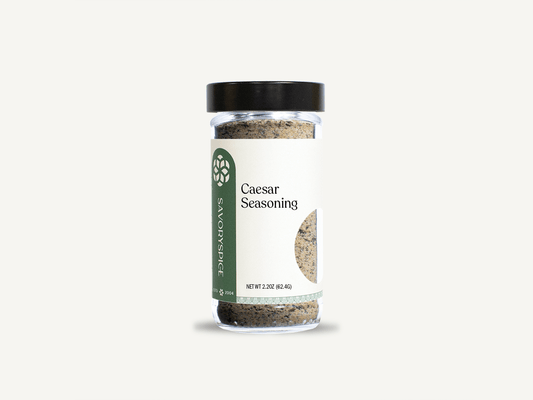
Caesar dressing has a specific flavor profile. It's tangy, umami, garlicky, cheesy, with a briny depth that traditional recipes attribute to anchovy and Parmesan. Most bottled versions require those two ingredients to hit it.
Our blend of Caesar Seasoning gets there without either. The anchovy function comes from nori; the cheese function from nutritional yeast. The result is a dry blend that makes a real Caesar dressing in five minutes, and turns out to be unexpectedly versatile on everything else in the kitchen.
What is Caesar dressing?
The Caesar salad originated in Tijuana in the 1920s, created as an improvised dish to feed an unexpectedly large crowd. The dressing formula that came out of it: olive oil, raw egg, Worcestershire Sauce, lemon, garlic, and Parmesan. It became one of the most replicated sauces in American cooking. The anchovy element entered as a later interpretation and is now widely considered standard, though the original reportedly didn't use it.
Caesar Seasoning is our dry version of that dressing, and it captures the flavor profile of the salad dressing in a form you can shake directly onto food (or make your own dressing!)
Unlike bottled Caesar dressing, it has no added oils or preservatives–it's just the concentrated seasoning. It stores on the shelf (refrigerate for best storage), works as a dry rub, and takes about five minutes to build into a full Caesar dressing.
What gives Caesar Seasoning its flavor without anchovies or dairy?
This is the most interesting part of how the blend is built. The two ingredients most responsible for Caesar dressing's distinctive depth–anchovy and Parmesan–are also the ones that make it inaccessible to a lot of people. This dairy-free and anchovy-free blend solves for both without relying on either.
Nori is the dried Japanese seaweed used in sushi rolls. Ground into a seasoning blend, it contributes a clean, oceanic umami note. It is not fishy, but savory and briny in the same register as anchovy. It fills the same functional role: the bottom register of the dressing's flavor profile.
Nutritional yeast is a deactivated yeast with a naturally savory, slightly nutty flavor that reads as cheese. It's what makes the blend genuinely cheesy without any dairy, and it handles the Parmesan dimension the dressing traditionally relies on.
Beyond those two, vinegar powder and citric acid supply the tang and brightness that lemon juice provides in traditional dressing. Black pepper and mustard add warmth and a gentle sharpness. Garlic, onion, and mushroom powder deepen the aromatic base. Greek oregano and turmeric round out the background. Coconut milk powder contributes a touch of creaminess.
How do you make Caesar dressing with Caesar seasoning?
The standard formula: 1 Tbsp of Caesar Seasoning, 1/3 cup of mayo (or vegan mayo), 1 Tbsp of olive oil, and lemon juice to taste. Whisk until smooth, refrigerate until ready to use. It keeps for about a week.
For a version that scales up well, our Plant-Based Caesar Dressing recipe increases the ratio: 3 Tbsp of Caesar Seasoning per cup of mayo, with 3 Tbsp of olive oil and 1.5 Tbsp of lemon juice. Ready in just five minutes, and it doubles as an aioli-style dip for crudités.
Plant-Based Caesar Dressing
Recipe by Miranda Barnett, Savory Spice Test Kitchen
Creamy, tangy, and lemony, this vegan Caesar dressing comes together quickly and is the perfect addition to your salad...
This homemade Caesar dressing is the perfect base for our Strawberry Caesar Salad. It's a summer riff on the classic that swaps chicken for sliced fresh strawberries. The combination of tangy Caesar, bright summer strawberries, and homemade croutons works better than it sounds: the acidity in the dressing pulls the strawberries into the savory register rather than making the salad taste like dessert.
For meal prep or potlucks, the same dressing base goes into our recipe for Caesar Pasta Salad: cavatappi pasta, chopped romaine, cherry tomatoes, and crispy chickpeas seasoned with Caesar Seasoning, all tossed cold. It makes six servings, keeps well in the refrigerator for a few days, and gets better as the pasta absorbs the dressing.
Homemade croutons take about 20 minutes and the Caesar Seasoning does most of the work. Toss 2 cups of cubed stale bread with 1 Tbsp of olive oil and 1 Tbsp of Caesar, spread on a parchment-lined sheet tray, and bake at 350° for 15 minutes, shaking the tray every five minutes until the cubes are dry and crispy. Or you can just follow along with our recipe for Caesar Croutons, which yields 2 cups and keeps in an airtight container for up to a week. It's worth making a full batch so they're ready for salads and soups through the week.
The dressing and croutons are the expected applications, but the seasoning's umami-forward profile makes it genuinely useful across a range of cooking that has nothing to do with salad.
Salmon: Spread a thin layer of mayo on salmon fillets and press Caesar Seasoning into the surface–1 Tbsp for a subtle flavor, up to 3 for a more pronounced crust. Bake skin-side down at 400° for 18-20 minutes. Our recipe for Caesar Salmonuses just two ingredients beyond the fish itself and serves two people in about 25 minutes total. Serve over rice, asparagus, or on a bed of greens with a drizzle of leftover Caesar dressing.
Potatoes: The blend's garlicky, tangy depth translates particularly well to potatoes. Boil small Russet or red potatoes until fork-tender, smash them flat on a sheet tray, drizzle with olive oil, and sprinkle generously with Caesar Seasoning before air-frying at 400° for 15 minutes until the edges are crispy and golden. That's what our Air Fryer Caesar Smashed Potatoes does, and it comes with a two-ingredient dipping sauce: sour cream and a tablespoon of Caesar. It works equally well in a 400° oven for 30-45 minutes if you don't have an air fryer.
Chicken and wraps: Our recipe for a homemade Creamy Chicken Caesar Wrap coats chicken tenderloins in a panko mixture seasoned with 3 Tbsp of Caesar Seasoning and shredded Parmesan, then air-fries (or bakes) them before wrapping with lettuce, cherry tomatoes, cucumber, and a Caesar mayo sauce. The wraps hold cold, which makes them a workable meal-prep option. Assemble them at the start of the week and pack them for lunch.
Compound butter: Mix a tablespoon or two into softened butter and let it come together at room temperature. It works as a finishing butter on steak, grilled corn, or roasted vegetables. The garlic and nutritional yeast in the blend carry well through the fat.
Popcorn: Toss fresh-popped kernels with melted butter and a tablespoon of Caesar Seasoning for a savory, cheesy bowl. The nutritional yeast settles into the popcorn the way powdered cheese does, and the result is noticeably more complex than butter-and-salt. It's closer to the umami of seasoned movie theater popcorn without any artificial cheese flavoring required.