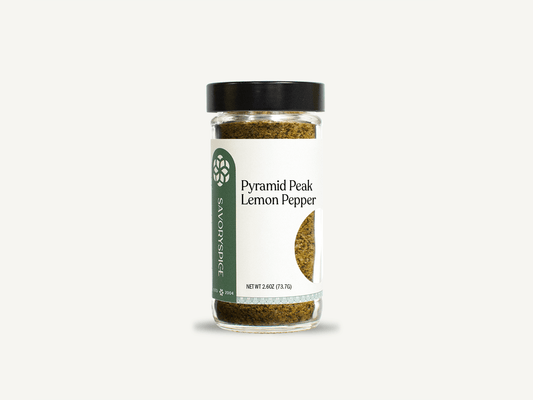
Lemon Pepper earns its place on the spice rack because the combination of flavors is genuinely smart: citrus brightens whatever it touches, black pepper adds warmth, and together they make almost anything taste more alive. Most people know they like it.
But most have also not really had a version that's been fully built out-where the lemon has dimension beyond sharpness, the pepper has depth beyond bite, and a layer of warm, aromatic spices underneath keeps the blend interesting across far more than a handful of applications. Pyramid Peak Lemon Pepper is built that way. Cook with it once and lemon pepper stops feeling like a single-use seasoning and more of an all-purpose blend.
What is lemon pepper seasoning, and what's in it?
Lemon pepper seasoning at its simplest is lemon zest, black pepper, and salt. That's the base. What makes Pyramid Peak Lemon Pepper distinctive is what gets layered on top: a full supporting cast of spices chosen not to distract from the lemon-and-pepper character, but to make it more complete.
Lemon peel appears in two forms: ground and minced, which creates different aromatic behaviors in the blend. Two grinds of black pepper (fine and coarse) give both background heat and visible peppercorn character. Salt and a small amount of white sugar balance the citric acid's sharpness without sweetening the blend. Granulated garlic and white onion build the savory backbone.
Then it gets more interesting. Fenugreek seed contributes a mild, almost maple-like sweetness that rounds out the citrus. Mace and Mediterranean thyme add earthy, slightly floral notes in the background. Coriander, cumin, and ginger build warm aromatic depth. It's the kind of depth that makes a seasoning taste complex without any single spice announcing itself. Cayenne sits low in the blend; it's not there for heat, it's there for lift. And then: Saigon cinnamon, anise seed, cloves, cardamom. They're all present in small amounts, all contributing to a layered aromatic finish that gives the blend its distinctive depth.
Named after Pyramid Peak, a 14,018-foot summit in the Colorado Rockies, this is part of a line of 14er-inspired blends. The name suits it. There's more going on here than the trailhead would suggest.
What does lemon pepper taste like, and is it spicy?
On the surface: lemon pepper is bright, citrusy, peppery, with a clean tartness from the lemon peel and citric acid. The flavor is familiar and reads immediately as lemon pepper. Underneath it, there's a warm, aromatic depth from the supporting spice blend: slightly sweet, slightly earthy, with a mild herbal background that fills in the finish of Pyramid Peak Lemon Pepper.
The question we hear often: is it spicy? No.
"Pepper" in lemon pepper refers to black peppercorns–the variety behind the sharp, slightly bitter quality of a pepper grinder–not chili peppers. There is a small amount of cayenne and ginger in our lemon pepper blend, but those are present at levels that add aromatic warmth and complexity, not heat. It's a safe call for people who can't handle spicy food.
What is Citrus Pepper Seasoning?
Citrus Pepper Seasoning is our salt-free lemon pepper seasoning. It's simpler, cleaner blend with a noticeably different flavor profile. Black pepper and garlic are the base. Both lemon peel and orange peel are in the blend (the orange is the key distinction from standard lemon pepper). Citric acid keeps the brightness up, onion adds savory depth, and smoked Spanish sweet paprika contributes a subtle smokiness and bittersweet quality that Pyramid Peak doesn't have. Oh, and it's also sugar-free.
The orange peel does something useful here. Rather than simply mirroring the lemon, it adds citrus breadth. It's slightly sweeter, slightly more aromatic, and that makes the whole blend feel rounder. The smoked paprika works in the other direction: a savory, lightly smoky undercurrent that's especially good on grilled proteins and roasted vegetables.
The practical difference is mainly about sodium control and simplicity. Because Citrus Pepper has no salt, you can add as much as you want and season the dish separately, or skip added salt entirely if that's what your diet requires. The shorter ingredient list is also cleaner: nothing is competing. Use it anywhere you'd reach for Pyramid Peak when you want pure citrus-pepper flavor with a smoky edge and full control over salt.
What is lemon pepper good on?
The most established application is wings. Lemon pepper wings have had a long cultural moment. The combination of bright citrus, peppery warmth, and rendered, crispy chicken skin is one of those flavor pairings that makes obvious sense the first time and keeps making sense every time after. Our recipe for Black Pepper Chicken Wings double as a recipe for lemon pepper wings when you apply either Pyramid Peak or Citrus Peppergenerously to both sides, then roast at 400°F for 40 minutes. The method is direct: season thoroughly and cook. No marinade required.
Seafood is the other natural home for this blend. The citrus elements do the same work a squeeze of fresh lemon does. It's cutting through richness, lifting the protein, bringing acidity into balance, ut with more complexity and staying power. Our recipe for Citrus-Marinated Shrimp Skewers uses a 15-minute marinade of orange juice, olive oil, and a tablespoon of either Pyramid Peak or Citrus Pepper, then six minutes on a hot grill. The same marinade formula works for scallops, chicken, or skewered vegetables.
One of the most useful things to know about Pyramid Peak is that it builds an excellent dip or dressing with almost no effort. The formula: 4 teaspoons of Pyramid Peak stirred into a base of 1 cup mayonnaise, ½ cup buttermilk, 1 teaspoon Dijon, roasted garlic, and dried dill weed.
The blend's built-in salt, acid, and aromatics mean you don't need to season it further. Just mix and adjust the consistency by adding more mayo for a thicker dip or more buttermilk for a thinner dressing. Sour cream or Greek yogurt can substitute for the mayo if you prefer.
Our recipe for Lemon Pepper Dip and Dressing works as a dipping sauce for both chicken and seafood, a dressing for salads and grain bowls, a spread for sandwiches, or a sauce for roasted vegetables. It comes together in five minutes and improves as it sits. If you're making wings on one day and a salad the next, a batch of this covers both.
What are the best lemon pepper recipes for weeknight dinners?
Lemon pepper works differently in longer-cooked applications. The bright citrus that pops on a quickly roasted wing softens in extended heat, while the deeper warming spices–coriander, cumin, mace, ginger–come forward as they have time to fully bloom. Braised and oven-roasted dishes pull more from that background complexity and less from the citrus peak, which is where you taste the full range of what a 21-ingredient blend actually does.
Our recipe for homemade Lemon Chicken Cacciatore demonstrates this clearly: bone-in chicken thighs and drumsticks braised in a Dutch oven with white wine, diced tomatoes, shallots, bell pepper, and mushrooms, with 2 tablespoons of Pyramid Peak stirred in with the aromatics before the oven. Thirty minutes at 350°F. The blend holds up through the cook without flattening. What you get at the end has warmth, depth, and citrus brightness woven together in a way that a simpler seasoning wouldn't achieve.
For a lemony side dish that shows the compound butter application: our recipe for Green Beans with Toasted Hazelnuts and Lemon Pepper Butter mixes softened butter with toasted hazelnuts and 2 teaspoons of Pyramid Peak, then tosses with blanched green beans. The compound butter can be made up to a week ahead (or frozen for three weeks), and the fat carries the lemon-and-spice flavor through the entire dish in a way that a direct sprinkle doesn't. It's also a good Thanksgiving or holiday side for anyone who wants something simpler than a full sauce.
Green Beans with Toasted Hazelnuts & Lemon Pepper Butter
The most counterintuitive application in our recipe collection is Tangy Lemon Bars, where Pyramid Peak goes into all three layers: the shortbread crust, the lemon curd filling, and the finishing powdered sugar topping. The reason it works is that lemon pepper's citrus elements amplify the lemon flavor in the curd rather than competing with it, and the trace amounts of warm spice–ginger, cardamom, cinnamon–add a dimension that plain lemon bars don't have. The pepper note mostly dissolves into the sweet-tart balance.
For a savory snack: this recipe for Zesty Oyster Crackers tosses crackers with oil, dried dill, garlic powder, and 2 Tbsp of Pyramid Peak, then baked at 275°F for 15 to 20 minutes. They keep well in an airtight container, work as a standalone snack or a soup accompaniment, and come together fast. The same seasoning-to-oil ratio works for most small crackers. It's a useful formula for clearing out a box that's going stale or putting together a quick game-day snack without much planning.