Cumin is the third most consumed spice in the world, trailing only chile peppers and black peppercorns.
Native to the Nile Valley and now grown primarily in India, it shows up in the spice foundation of Mexican, Indian, Middle Eastern, North African, and Mediterranean cooking simultaneously.
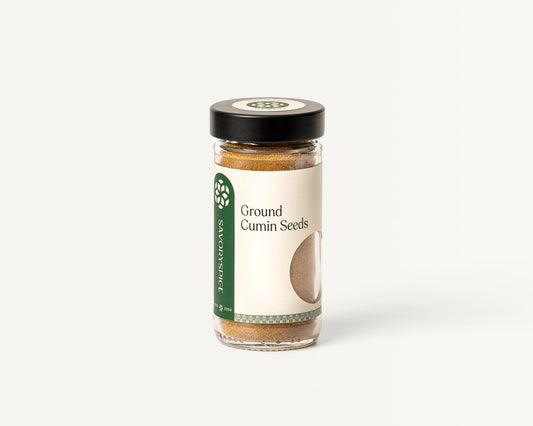
Both forms matter: whole Cumin Seeds stay potent until cracked and bring texture; Ground Cumin integrates seamlessly into sauces and braises. We carry both, and most cooks end up reaching for both.
What is Cumin?
Cumin seeds are the dried fruit of Cuminum cyminum, a flowering plant in the parsley family native to the Nile Valley in Egypt. From there, cultivation spread across the Mediterranean, the Middle East, and into India, which now produces more than 50% of the world's cumin supply. It's been a culinary staple for thousands of years: cumin seeds have been found in Egyptian tombs, and the spice appears in ancient Greek and Roman texts.
The name travels well. You'll see it called comino in Spanish (and on most Mexican spice labels), jeera in Hindi and Urdu, cumino in Italian, and kamoun in Arabic. All refer to the same seed. In French restaurants, it's not uncommon to see mild cheeses served alongside a small dish of cumin seeds and pepper — a tradition that speaks to how naturally cumin enhances dairy and fat.
Today, cumin ranks behind only chile peppers and black peppercorns in global consumption. The reason is simple: it works in virtually every savory context. It's a foundational ingredient in chili powder and most curry powders, which means it's quietly present in a huge share of everyday cooking even when it's not the named spice.
What Does Cumin Taste Like?
Cumin is earthy, warm, and slightly smoky with a deep aromatic quality and a faint hint of citrus. It's bold enough that a little goes a long way, but not sharp. Cumin's character is round and persistent rather than bright. Ground cumin has a slightly more concentrated smell and distributes evenly through a dish; whole seeds are more fragrant when toasted and have a mild texture.
What's interesting about cumin is how its flavor reads differently depending on what it's paired with. In Mexican and Tex-Mex cooking, cumin and coriander together pull out each other's citrusy, bright notes. The combination has a lighter quality than either spice alone.
In Indian cooking, cumin alongside turmeric deepens the earthy, slightly bitter notes of both. In North African cuisine, cumin is often used with warm spices like cinnamon and allspice, which brings out its nuttier, more aromatic side.
This is also why it's essentially irreplaceable in the dishes where it belongs. Cumin in chili isn't just one flavor in a stack. It's the earthy underpinning that makes the whole blend read as cohesive.
What's the Difference Between Cumin Seeds and Cumin Powder?
Both come from the same plant; the difference is form, and form determines when and how you use them. Cumin powder (or ground cumin) is simply whole cumin seeds that have been finely ground. The names are used interchangeably, and both refer to the same spice.
Cumin Seeds retain their essential oils intact until the moment you crack or grind them, which means they hold their potency longer and deliver a burst of fresh aroma when they hit heat. Whole seeds are the right choice when you want texture alongside flavor: in sausages, breads, and potato salads (the seeds provide occasional pops of earthy flavor), in pickling brines (where they release slowly into liquid), and at the start of a dish when you're building flavor in oil or ghee.
Cumin Powder (ground cumin) is the everyday workhorse form and, for most cooked applications, the more versatile one. Ground cumin disperses evenly through sauces, braises, and dry rubs, flavoring the entire dish rather than arriving in pockets. It's what goes into chili, curry, enchilada sauce, hummus, and carne asada marinade. Our founders reach for it constantly: for red and green enchilada sauces, chicken and white bean chili, and homemade hummus.
Toasting and frying whole seeds. The best way to use cumin seeds is to release their oils first. Dry toasting in a skillet is the simplest approach: heat the pan over medium heat, add the seeds in a single layer, and shake or stir for 2-3 minutes until they turn slightly darker and become noticeably aromatic. Remove from heat immediately and let them cool before grinding or using. Alternatively, fry them in oil or ghee: add seeds to hot fat and let them sizzle for 1-2 minutes before adding other ingredients. This infuses the cooking oil with cumin flavor, which carries through the entire dish.
Grinding your own. A spice grinder, electric coffee grinder, or mortar and pestle all work. Freshly ground cumin seeds are more potent than pre-ground because the volatile oils are at their peak the moment the seed is cracked. If you have whole seeds, grinding fresh just before using, especially for homemade dry rubs, is worth the extra step.
How Do You Cook with Cumin?
Cumin is a foundation spice, not a finishing one. In most applications, it goes in early–into hot fat, into the base of a sauce, into a dry rub before cooking–so it has time to develop and integrate.
In chilis and braises. Cumin powder is essential in chili, taco meat, fajita seasoning, green chili, and enchilada sauce. In every case it works as part of a team. It's usually with chili powder, garlic, and coriander. Remove it and the dish loses its defining earthy backbone. Colorado Green Chili, a recipe for slow-simmered pork and tomatillo chili, is one of the clearest examples of cumin as a lead ingredient, not a supporting one.
Colorado Green Chili
Recipe by Savory Spice Test Kitchen
Hatch Green Chile Powder gives this Colorado classic well-balanced, smoky heat any time of year.
In curry and Indian cooking. Cumin powder is a key component in most curry powders and nearly all Indian spice blends. Whole seeds fried in ghee at the start of a dish (a technique called a tadka or tempering) is one of the most common moves in Indian kitchens, setting the aromatic foundation for everything that follows. Cumin powder then often appears again in the sauce itself, building depth at two stages. It's central to Tikka Masala seasoning in our recipe for Halloumi Tikka Masala, where it works alongside garam masala and ginger in the base.
Halloumi Tikka Masala
Recipe by Michael Kimball, Savory Spice Test Kitchen
Unlock layers of flavor by toasting whole spices in this rich, silky, vegetarian curry.
With lentils and legumes. Cumin and lentils are a natural pairing. The spice's earthiness balances the sweet, nutty character of red and green lentils in a way that makes both better. Turkish Red Lentil Soup leans on this combination directly, with cumin providing the warm backbone of the dish.
In hummus and dips. Cumin powder is a non-negotiable in hummus. It's what gives the dip its earthy warmth and separates it from plain blended chickpeas. Our Simple Savory Hummus uses cumin seeds as a central ingredient alongside chickpeas, lemon, and a sesame-based substitute for tahini.
In soups and stews. Ground cumin integrates cleanly into pureed soups, adding warmth and depth without needing long cooking times. Cumin Carrot Soup, a thick, spiced carrot purée recipe from a longtime Savory Spice friend, uses 1½ tablespoons of ground cumin alongside curry powder and white pepper. A scoop of rice turns it from a starter into a full meal.
In BBQ sides. Cumin's versatility extends to dishes where it isn't the expected flavor. Cumin-Spiced Potato Salad uses whole seeds, coarsely crushed with a mortar and pestle, in a ranch-inspired dressing alongside dill weed and tangy pickles. The earthy seeds add complexity without making it taste like something else. It just tastes more interesting. A natural pairing for beef ribs and brisket.
Cumin Spiced Potato Salad
Recipe by Savory Spice Test Kitchen
Spiked with tangy pickles, earthy cumin, and a ranch inspired dressing, this potato salad makes a refreshing...
Cumin's flavor is distinctive enough that there's no perfect stand-in, but a few spices come close in specific contexts.
Coriander is the most practical substitute. It shares cumin's warm, earthy profile and the two spices are frequently used together for exactly that reason. They're complementary, not competing. In a dish that calls for cumin alone, coriander will produce a lighter, slightly citrusy version of the same earthiness. Use it at equal quantity.
Dutch Caraway Seeds are the closest in texture and appearance to whole cumin seeds, and share some of the earthy, slightly bitter character. But, caraway has a stronger anise note that will shift the flavor direction of a dish. Use it cautiously and start with less than the recipe calls for.
Turmeric shares cumin's earthy quality and deepens color similarly, but it doesn't have the aromatic warmth. It works as a partial substitute in dishes where cumin is one of several spices (adding back the earthiness) but won't replicate the full character on its own.
The honest answer: if you're making chili, curry, or any dish where cumin is foundational, the substitution will be noticeable. It's worth having both forms of whole cumin and cumin powder on hand. The seeds last up to two years stored away from light and heat, and ground cumin retains full potency for at least a year.
Yes, Cumin and Jeera are two names for the same spice. Often, you might see the same spice or the same ingredient layered in recipes or divided and added at different times in the cooking process. Adding a spice early in the cooking process gives a more subtle flavor while adding it at the end makes the flavor stronger. Adding a spice both at the beginning and end of a dish creates complexity and depth of flavor.
Savory Spice21/09/2023
Are Cumin & Jeera seeds same ? If so , why they are added in the SAME DISH at different stages of cooking ?
K . Ganesan21/09/2023
Leave a comment
Join our community
Join our email list and Loyalty Club to earn points and save 10% on your first order!