
Dill covers more culinary ground than most herbs get credit for. Fresh, it's grassy and bright with subtle anise notes that fade quickly in heat. Dried, it shifts into something warmer and more buttery. It's aromatic enough to hold up in dips, sauces, and grain dishes without losing itself. The seeds from the same plant are the foundation of a completely different flavor: the tangy, vinegary brine of a dill pickle. But Dried Dill Weed and Dill Pickle Seasoning have almost nothing in common at the table, despite coming from the same source.
Behind the Seasoning: Dill
Test Kitchen |

What does dill taste like?
Dill (Anethum graveolens) is native to western Europe and central Asia, with deep roots in German, Scandinavian, and Eastern European cooking. The word comes from Old Norse dilla, meaning to calm. It's a nod to its historical use as a digestive herb. It traveled through Mediterranean and Eastern European cuisines early, which explains why dill appears so distinctly in Greek, Russian, Polish, and Scandinavian kitchens: pickles, yogurt sauces, cured fish, potato dishes, dumplings.
Fresh dill is unmistakable. It's grassy, bright, slightly citrusy, with a mild anise quality that never tips into licorice. It's one of the few herbs where smell and taste are nearly identical. It's also highly volatile, as its aromatic compounds break down quickly in heat, which is why fresh dill is typically added raw or at the very end of cooking. Long braising, simmering, or roasting destroys what makes it taste like dill.
Dried Dill tells a different story. The drying process drives off some of the grassy brightness and concentrates what remains into something warmer, more buttery, and more aromatic in a way that actually performs better in cooked applications, dressings, and seasoning blends.

Dill Weed is still recognizably dill, but it has more body and a richer presence.
The fresh-to-dried conversion: 3:1 — 1 tsp dried dill = about 1 Tbsp fresh dill. Freeze-dried dill is the exception: it converts 1:1 with fresh, because the freeze-drying process preserves the volatile oils rather than driving them off.
Dill seed is a different ingredient entirely, despite sharing a plant with dill weed. The seeds are more bitter and more pungent, with a flavor closer to caraway than to the herb. Dill seed drives pickling brine flavor—the sharp, tangy bite that makes a dill pickle taste like a dill pickle—as well as rye bread and some Scandinavian preparations. Using dill weed when a recipe calls for dill seed, or vice versa, will produce noticeably different results.
How do you cook with dried dill?
The foundational rule with dried Dill Weed: add it toward the end of cooking.
Dried dill carries aromatic compounds that are volatile enough to lose impact under prolonged heat. It's more resilient than fresh, but not as heat-stable as oregano or thyme. In soups, sauces, and braises, stir it in during the last five minutes. In cold applications—dips, dressings, salads—the flavors bloom over time in the refrigerator, which is why resting or overnight chilling is almost always recommended.
Dill's best pairings include lemon, garlic, butter, cream, mustard, and coriander. It has a particular affinity for mild proteins that benefit from herbal brightness: white fish, salmon, chicken, shrimp, and eggs.
It works in starchy applications, like potatoes, rice, pasta, quinoa, legumes, where its aromatic quality can infuse the whole dish without competing with a bold sauce. And it's the defining herb in classic Eastern European and Scandinavian preparations: tzatziki-style yogurt sauces, cucumber salads, green goddess dressings, cured salmon.
For fish. Our recipe for Fish en Papillote is our best illustration of what dried dill does with white fish. 2 tsp of Dill Weed go directly onto the fillet—cod, tilapia, or any mild white fish—along with lemon slices, capers, and butter, before the whole packet is folded in parchment and baked. The papillote method traps steam inside the parchment, so the dill infuses the fish from the outside in without drying out or burning. That enclosed, steamy environment is ideal for preserving dried herb flavor: the result is intensely herby and bright without any harsh or flat notes.

Fish en Papillote
Yields
4 servings
Prep Time
15 minutes
Cook Time
15 minutes
For pasta and grain dishes. Our recipe for Lemon Dill Orzo with Paprika-Crusted Chicken uses 1 Tbsp of Dill Weed to build the orzo base. The herb goes in with lemon, chicken broth, and olive oil, and the whole pan bakes together until the orzo absorbs the liquid along with the dill's aromatic character. The chicken crisps on top with paprika while the orzo finishes underneath. The dill is prominent enough to be in the recipe title, which tells you something about its role: it's not a finishing sprinkle here, it's the foundational flavor of the dish.

Lemon Dill Orzo with Paprika-Crusted Chicken
Yields
6 to 8 servings
Prep Time
20 minutes
Cook Time
40 minutes
For grain bowls and hearty salads. Our recipe for Grilled Greek Salad with Dill Quinoa applies the same principle to quinoa: 1 Tbsp of Dill Weed cooks into the quinoa as it simmers, creating a herby grain base for grilled vegetables, tomatoes, cucumber, Kalamata olives, and feta. The dill-infused quinoa becomes structural to the salad rather than a topping. Without it, the dish changes character significantly. It's a strong example of how well dried dill works when it has time and heat to infuse a starchy base from within.

Grilled Greek Salad with Dill Quinoa
Yields
4 servings
Prep Time
20 minutes
Cook Time
20 minutes
For seafood with everything already built in. Our Cherry Creek Seafood Seasoning takes the dill-plus-fish pairing and fills out the rest of the equation: salt, lemon peel, black and white peppercorns, red bell pepper, dill weed, cracked dill seed, and onion in one blend.
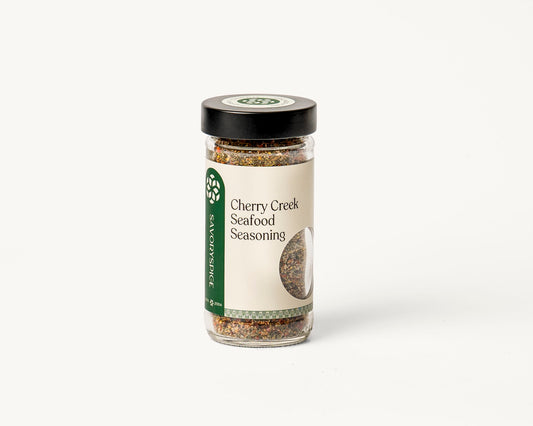
Where Dill Weed is pure herb, Cherry Creek supplies the lemon and pepper that most fish preparations call for alongside dill. It works on any seafood, on chicken, and on roasted vegetables, and it reduces a simple fish dish to a single seasoning decision.
For a weeknight rice shortcut. Our Mediterranean Dill Risotto Spice & Easy has it all—Arborio rice, tomato, dill, onion, and supporting spices pre-measured in one packet, ready in one pot in 20-25 minutes. The dill flavors the rice throughout the cooking process rather than finishing it, producing a more integrated, aromatic effect than dried dill added at the end. It works as a standalone side or as a base for roasted vegetables or grilled fish.


What is dill dip made of?
The classic Dill Dip—a seasoning mix stirred into sour cream, cream cheese, or a combination—is one of the most consistent applications for dried dill, and the overnight effect is real: the flavor a dill dip has immediately after mixing is noticeably different from what it tastes like after a few hours in the refrigerator. Dill seasoning needs time to rehydrate and bloom fully in a dairy base. Mixing and waiting isn't optional—it's the technique.
Our Dill Dip Mix builds from the core herb outward: dill weed, mild mustard, toasted onion, celery seed, parsley, ground dill seed, shallots, and garlic. Mustard adds sharpness that brightens the dairy base; the onion and shallot combination provides savory sweetness without raw bite; celery seed adds a subtle aromatic note that supports dill without competing with it.

The ratio is simple: 2-3 Tbsp of dill dip mix per cup of your base. Serve in a bread bowl, alongside raw vegetables, or thinned with buttermilk or lemon juice into a pourable dressing.
Our recipe for Grand Dill Dip uses 2 Tbsp of Dill Dip Mix in a base of cream cheese, sour cream, and mayonnaise. It's a richer, more full-bodied formula than a straight sour cream dip. The cream cheese and mayo add fat and structure that hold the dip's texture as it sits, making it a better choice for events where it needs to stay out for a while. The cream cheese base also makes this recipe worth trying as a stuffing for mushroom caps, a topping for smoked salmon, or a spread for sandwiches and wraps—the same mix, different format.

Grand Dill Dip
Yields
2 cups
Using it beyond the dip bowl. 2 tsp of Dill Dip Mix mixed into salmon, mayo, and lemon juice produces our recipe for Sandra's Salmon Salad. It's a salmon salad that uses the same herby-tangy flavor profile as the dip but applies it where you'd eat a vinaigrette-dressed protein. The mustard and shallot notes in the mix are doing the same work a dressing would do in a traditional salmon preparation. The salad works on crackers, toast, or as an open-faced sandwich filling. It's the clearest illustration that Dill Dip Mix functions as a general-purpose dill-herb seasoning rather than a one-application product.

Sandra’s Salmon Salad
Yields
2 to 4 servings
For a simpler herby dip base. Our top-seller Capitol Hill Seasoning— a blend of shallots, salt, pepper, dill weed, parsley, and chives—makes an excellent dip base when the goal is lighter and less complex than the full Dill Dip Mix profile. 2-3 Tbsp of Capitol Hill stirred into sour cream or Greek yogurt produces a dip that reads as bright and herby rather than creamy-rich; the chive note adds something Dill Dip Mix doesn't have. Capitol Hill also works as a rub for chicken, a seasoning for eggs, and a finishing sprinkle on roasted vegetables. It's the more versatile everyday seasoning of the two. It's useful for dip applications but not limited to them.

For Greek-style tzatziki. Our Greek Tzatziki Dip Spice & Easy takes the dill-yogurt pairing into a different tradition entirely. Where Dill Dip Mix is built around the American creamy-dip formula, tzatziki is built for Greek yogurt and brings cucumber, lemon juice powder, garlic, onion, and cumin into the mix alongside dill weed. The full flavor architecture of a classic tzatziki sauce rather than a dip seasoning blend. Stir the whole packet into two cups of plain Greek yogurt; chill at least 30 minutes before serving. Thin with milk or water to make a sauce or dressing for gyros, grain bowls, or grilled meats. The same dill herb, used the way Greek cuisine has always used it.

What is dill pickle seasoning?
Dill pickle flavor is built around different priorities than the herb: less about green, herbal brightness and more about salty, tangy, garlicky brine. The bridge between them is dill seed. It's the component that connects the plant to the pickle. Where dill weed is buttery and aromatic, dill seed is sharp and slightly bitter, with exactly the kind of pungency that drives pickling brine flavor.
Our Big Dill Pickle Seasoning builds from dill seed outward: dill seed, dill weed, vinegar powder, garlic, citric acid, honey powder, cayenne, and black pepper. The vinegar powder and citric acid deliver the tangy acidity that makes something taste pickled; the honey powder adds a subtle sweetness that rounds the sharp edges; the cayenne provides a steady heat underneath everything. The result isn't a wet brine. It's a dry seasoning that puts all the flavor components of a dill pickle brine onto protein, into a dressing, or as a finishing seasoning without any liquid.
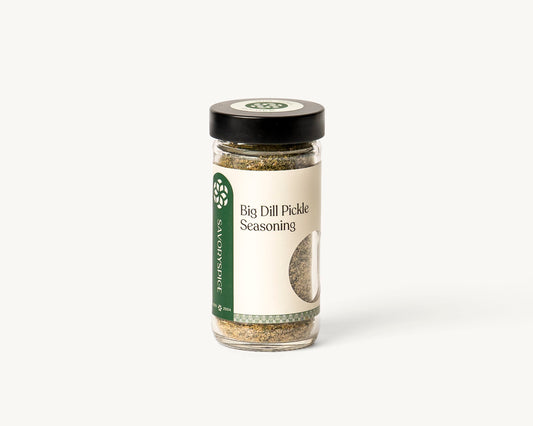
As a dry rub on chicken. Our recipe for Zesty Dill Pickle Wings use 3 Tbsp of dill pickle spices as the primary rub on two pounds of wings—tossed to coat, baked at 400°F with a flip halfway, then broiled for crispness at the end. The acidity in the vinegar powder functions like a brine marinade: it works into the surface of the meat and gives the finished wings a flavor that's immediately recognizable as dill pickle.

Zesty Dill Pickle Wings
Yields
4 servings
Prep Time
1 hour 5 minutes
Cook Time
30 minutes
In chicken salad. Our recipe for Big Dill Pickle Chicken Salad uses 2-3 Tbsp as the primary seasoning in a chicken salad built with diced pickles, mayonnaise, mustard, and red onion. The blend working alongside actual pickle pieces creates layered pickle flavor throughout. The dry seasoning provides the depth, the pickles provide the crunch and acidity, the mustard amplifies both. It's a chicken salad that's unambiguous about what it wants to taste like.

Big Dill Pickle Chicken Salad
Yields
4 servings
Prep Time
10 minutes
Cook Time
20 minutes
On potatoes. Our recipe for Big Dill Pickle Smashed Potato Salad uses the pickle seasoning twice: 1 Tbsp mixed into a mayo-and-sour-cream dressing, and then a second hit as a finishing sprinkle after plating. Smashing the boiled potatoes before roasting gives them craggy edges that crisp up and hold onto the seasoning better than standard potato salad; the double application of the blend means the pickle flavor comes through in the dressing, in the crust, and in the aroma, not just in one layer.

Big Dill Pickle Smashed Potato Salad
Yields
6 servings
Prep Time
15 minutes
Cook Time
45 minutes
What can you substitute for dill?
The standard conversion for regular dried dill weed is 1 tsp dried to 1 Tbsp fresh (3:1). Freeze-dried dill is the exception. It converts 1:1 with fresh because freeze-drying preserves the volatile oils rather than driving them off. Fresh dill should be added raw or at the very end of cooking; dried can go in a few minutes earlier.
Tarragon is the closest flavor substitute in most applications. Both share anise-like notes and a mild herbal quality; tarragon is slightly more intense with a sweeter finish, but in dips, sauces, and fish preparations it reads in the same direction. Use roughly the same quantity.
Fennel fronds look like dill and have overlapping flavor characteristics. Both are feathery and anise-adjacent, but fennel fronds are stronger and more assertively licorice-like. Use about half the amount and expect a more pronounced anise character.
Chervil works well as a mild dill substitute in cold applications and egg dishes. It's delicate, slightly anise-like, and pairs with the same ingredients as dill (cream, lemon, fish, potatoes). Like fresh dill, it doesn't hold up to heat.
For dill pickle flavor specifically, the equation is dill seed + acid + garlic + salt. Dill weed alone won't reproduce pickling brine flavor. It's the seed and the acid working together that create the characteristic sharpness. Celery seed can substitute for dill seed in a pinch; it has a similar bitterness and functions in pickling applications, though it's a different flavor direction.
For dip applications, any herby all-purpose seasoning that contains dill weed, parsley, and onion will produce a comparable result to a dedicated dill dip mix. Capitol Hill Seasoning (dill weed, chives, parsley, shallots, salt, pepper) makes a reliable dip base without the full complexity of a purpose-built dip blend, and the application range extends well beyond the dip bowl.
Previous article
Previous Article
Behind the Seasoning: Allspice
Next article
Next Article
Behind the Seasoning: Cajun & Creole
Leave a comment
Join our community
Join our email list and Loyalty Club to earn points and save 10% on your first order!