Saffron's reputation for being the world's most expensive spice is accurate—and also misunderstood.
The price isn't a premium for luxury branding. It takes 250-300 hand-picked Crocus sativus flowers to yield a single gram of threads, and those flowers bloom for exactly three weeks each fall.
What you get for that investment is a flavor no other spice can replicate: floral, earthy, faintly honeyed, with a beautiful golden color that transforms everything it touches. The difference between average and excellent saffron is real. We source ours from La Mancha, Spain and Taliouine, Morocco—two of the world's most respected origins—and the quality shows.
Where does saffron come from?
All Saffron comes from a single plant: Crocus sativus, a small autumn-blooming crocus cultivated in specific dry, sunny climates across Spain, Morocco, Iran, and parts of India and Greece. The plant doesn't grow from seed, it reproduces from corms, small bulb-like structures that are dug up, divided, and replanted by hand. Each corm typically produces two to nine flowers per season.
Spain's La Mancha region, the high plateau southwest of Madrid, has been producing some of the world's finest saffron for centuries. The dry climate, cold winters, and hot summers produce a flavor profile that's delicately floral and earthy with a warm, honeyed finish.
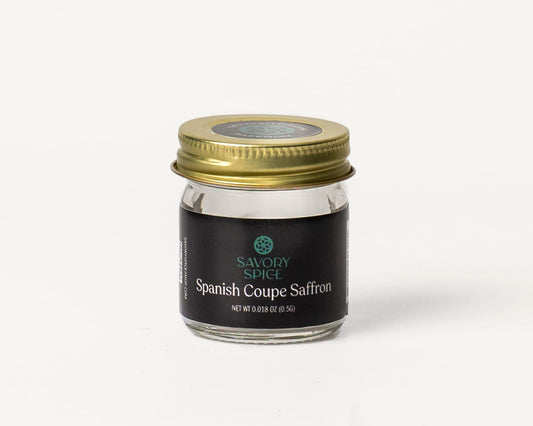
Our Spanish Coupe Saffron is Coupe grade, which is the highest classification in Spanish saffron, meaning only the deep red stigmas are included, with no yellow style filaments. The concentrated pigment in an all-red thread means more flavor and color per gram. We traveled to La Mancha during harvest season and watched the process firsthand: entire communities working from before dawn through the afternoon, picking flowers by hand in the narrow window between when they open and when they start to deteriorate.
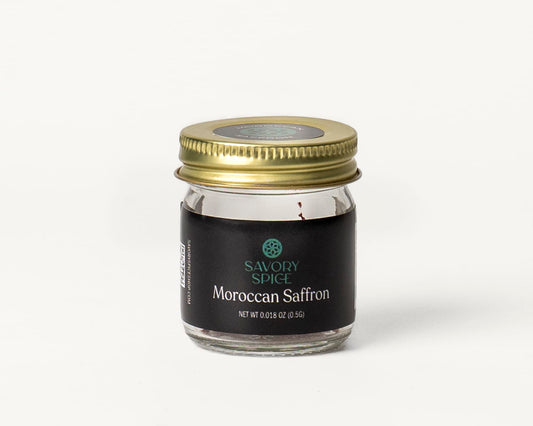
Morocco's Taliouine region, in the foothills of the Anti-Atlas mountains south of Marrakech, is the other great saffron origin. Our Moroccan Saffron comes specifically from the area around Suktana, sourced through the Taliouine Saffron Society, which is a cooperative that grows on roughly 10,000 square meters of land using natural fertilizers and sun-dries the stigmas for two days after harvest. The flavor profile sits slightly earthier and more honeyed than the Spanish, with a bright floral edge. Two genuinely different saffrons, worth having both.
For rice pudding and Persian desserts, Iranian and Moroccan Saffron are the traditional choice. The origin matters for flavor, and it matters for traceability.
What does saffron taste like?
Saffron's flavor is floral, earthy, and faintly honeyed, with a subtle metallic or medicinal edge that distinguishes it from every other spice in your pantry. The aroma is warm and unmistakable. It's sweet and complex, like hay and flowers at the same time. When it blooms in liquid, it adds a golden warmth to the flavor that's difficult to describe precisely because nothing else tastes quite like it.
Two chemical compounds drive what saffron does in a dish: "safranal," which is responsible for the distinctive aroma and flavor, and "crocin," the deep red pigment that produces that brilliant yellow-gold color. Both are released when saffron is exposed to warm liquid, which is why the blooming technique matters. Heat and liquid time transform the flavor.
In a quick bloom, saffron is bright and floral. In a long-cooked braise or a risotto, the flavor deepens and integrates, becoming earthier and more complex.
The one rule with saffron: use less than you think. 2-3 threads per serving is the right range. More than that, and the medicinal quality–always present in the background–starts to dominate the flavor. The spice should contribute a golden warmth and a floral depth, not announce itself as the thing you notice most.
Why is saffron so expensive?
The economics of saffron are simple: tiny yield, short window, entirely manual labor.
A single gram of saffron threads—roughly what you'd need for 4-6 servings of risotto—requires 250-300 Crocus sativus flowers. A pound of saffron requires approximately 112,000 flowers. All of them picked by hand. All of them processed within hours of harvest.
The Crocus sativus plant blooms for approximately three weeks each fall, and only in the early morning. Each flower has three red stigmas, and those are the saffron threads. The flowers must be picked before they fully open, then the stigmas are separated from the rest of the flower by hand and dried quickly to preserve the volatile compounds that carry the flavor. There is no mechanical shortcut that doesn't compromise quality.
The Coupe grade designation on Spanish Saffron means that only the bright red stigma tips are included, not the yellow style (the slender thread that connects the stigma to the flower). Yellow style contains far less safranal and crocin, which is why lower-grade saffron that includes significant yellow content produces a diluted color and weaker flavor per gram. When you buy Coupe grade, you're getting only the most potent part of the flower.
The practical implication: cheap saffron that seems like a bargain often isn't. If you need twice as much to get the same result, the savings disappear, and inferior saffron can produce off flavors rather than just weak flavor. Quality matters more with saffron than with almost any other spice.
How do you use saffron threads?
The standard instruction is to "bloom" saffron. Steep the threads in a small amount of warm liquid for 15-20 minutes before adding them to a dish. Warm water, broth, or milk all work. The liquid pulls out the crocin (color) and safranal (flavor) and distributes them evenly throughout whatever you're cooking, rather than leaving concentrated pockets of intensity where the threads sit directly.
The alternative technique: grind the threads first. Crumble them between your fingers or use a mortar and pestle to reduce them to a powder, then dissolve that powder in warm liquid before adding. Grinding releases more of the flavor compounds than steeping whole threads alone, and produces a more even color. For rice dishes, either method works. For custards or cream-based desserts where you want a smooth texture and consistent golden color throughout, grinding produces cleaner results.
Dosage: for most savory applications, 2-3 saffron threads per serving. A "pinch," which is what most recipes call for, is roughly 20 threads. That's enough for a dish serving 6-8 people. Measure by eye, not precisely: saffron threads vary in size, and a rough pinch from a practiced hand is usually correct.
Saffron's greatest affinity is rice. The combination is ancient: Persian tahdig with a saffron crust, risotto alla Milanese (the original Milanese saffron risotto, made with beef bone marrow and Parmesan), and paella. Paella is the dish most people associate with Spanish Saffron, and for good reason: the combination of Bomba rice, good stock, and properly bloomed La Mancha saffron produces a flavor that's hard to achieve by any other means. If you're making a homemade paella recipe from scratch, bloom your saffron in warm stock for at least 20 minutes and add it to the pan with the liquid, not before.
For our Crispy Persian Style Rice (tahdig) recipe, you get the clearest demonstration of how saffron works in that context. The recipe dissolves 1/16 tsp of Spanish Coupe Saffron alongside ¾ teaspoon of Ground Turmeric in hot water—a classic combination in Persian cooking, where turmeric broadens the golden color and saffron carries the flavor. That mixture is drizzled over cooked rice, which packs into a skillet and cooks over medium-high heat for 15-20 minutes until the bottom forms a deep, crispy crust—the tahdig. The rice is then inverted onto a plate golden-side-up and finished with pistachios and Candied Orange Peel Strips. The saffron-and-turmeric pairing is worth noting: turmeric provides color but not saffron's flavor, which is why recipes that suggest substituting one for the other always come up short on taste.
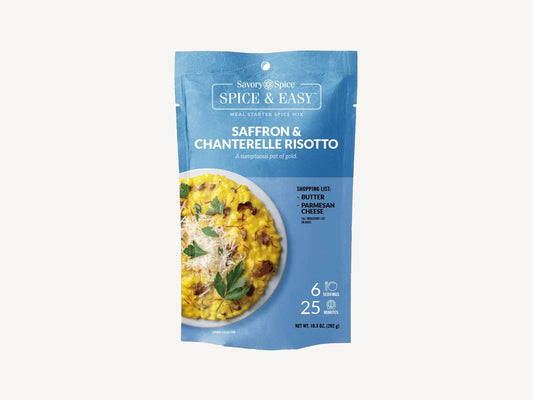
Our Saffron & Chanterelle Risotto Spice & Easy is a Founders' Favorite spice mix that includes Arborio rice, chicken stock, and saffron in one package. Just add water, butter, and Parmesan–that's the recipe. It's a legitimate risotto with the hands-off simplicity of a meal kit, and it's a good entry point for anyone who finds traditional risotto intimidating. What's left over is also worth planning around.
Leftover saffron risotto, whether from our Spice & Easy or made from scratch, is the starting point for "arancini," the crispy Sicilian fried rice balls that are better than the risotto they came from. Our recipe for Saffron and Chanterelle Arancini chills the leftover risotto until firm, rolls it into 1-inch balls, dips them in a flour-and-water slurry, coats in panko, and fries at 375°F until deep golden for about three minutes. The result is crunchy on the outside, creamy in the center, with the concentrated saffron and chanterelle flavor you'd expect from a dish that started with good ingredients. Make a whole package of the Saffron & Chanterelle Risotto specifically to have enough for a party of arancini, or treat it as a deliberate use of leftover risotto.
Saffron and Chanterelle Arancini (Fried Risotto Balls)
Recipe by Dan Baker, Savory Spice Test Kitchen
Risotto is incredible, but these little golden rice balls are pure magic. Crunchy, creamy, and flavorful, these make...
Saffron pairs naturally with cardamom, rose water, vanilla, honey, lemon, and citrus zest—a flavor family that runs through Persian, Moroccan, and Spanish cooking for good reason. These are the flavors that complement saffron's floral and earthy qualities without competing with them.
Cream and egg-based dishes amplify saffron's golden color and give it a smooth canvas. Rice absorbs it. Seafood is one of its most classical pairings. The saffron-and-seafood combination appears in bouillabaisse, paella, and French mussel preparations because the mineral quality of shellfish works with saffron's faint metallic edge in a way that poultry and red meat don't quite replicate.
Saffron also has an affinity with sweetness in savory contexts—corn being one of the more unexpected examples. Our recipe for Saffron & Sweet Corn Risotto uses ½ teaspoon of Spanish Coupe Saffron bloomed into the broth. It's the most generous amount in our recipe lineup, and it earns it: summer corn's natural sweetness holds up against saffron's intensity rather than being overwhelmed by it, and the two flavors read as more complementary than you'd expect. It's a seasonal dish worth making when corn is at its peak and you want a reason to open the saffron jar.
Saffron in dessert is underused in American cooking, but it has a long history in Persian, Moroccan, and Spanish sweets. Persian bastani (saffron and rose water ice cream) may be saffron's finest dessert expression. Saffron and pear is also a particularly elegant combination: the fruit's delicate floral sweetness amplifies saffron's warmth without fighting it.
This recipe for Saffron-Poached Pears combines a pinch of Spanish Coupe Saffronwith cardamom, white wine, sugar, and vanilla in a poaching liquid that turns brilliant gold as the pears cook slowly for about 25 minutes. The poaching liquid is then reduced to a syrup that's poured back over the finished pears, concentrating all of that saffron-and-cardamom flavor into something almost caramel-like. Served with crème fraîche and a sprinkle of Saffron Salt, it's one of those recipes that looks significantly more difficult than it is. The saffron does the visual and flavor work.
The same pairing logic applies beyond the specific recipes: saffron with honey in a glaze for roasted vegetables, saffron with cream in a seafood bisque, saffron with lemon and olive oil in a vinaigrette for grain salads. The spice is more versatile than its reputation suggests. The expensive part is buying it; the hard part is not overdoing it.
Turmeric is the most common suggestion, and it works if your goal is the golden yellow color saffron produces in rice or a casserole. It's earthy, slightly peppery, and entirely different in flavor. It has none of saffron's floral warmth or honeyed quality, but in a dish where the saffron flavor is subtle and the visual effect is what you're after, turmeric handles the color. Use about ¼ teaspoon per pinch of saffron called for.
Safflower, sometimes labeled "Mexican saffron," "American saffron," or azafrán, is the other common substitute.
It's the dried petals of Carthamus tinctorius, a completely different plant, and produces a golden-orange color that's slightly warmer than turmeric's yellow. The flavor is milder and more neutral than real saffron, without the floral or honeyed notes, but it's a closer stand-in than turmeric for general rice dishes. It's sold at many Latin grocery stores and works when color is the priority and the dish isn't built around saffron's specific flavor.
What neither substitute provides: the floral depth, the honeyed warmth, or the faint metallic edge that makes saffron taste like saffron. In dishes where saffron is structural—paella, risotto alla Milanese, Persian rice, a poaching liquid built around those threads—there's no replacement that produces the same result.
It's also worth doing the math on cost: a pinch of 20 threads properly bloomed serves 6-8 people. At typical prices for quality saffron, that's roughly $1-2 per dish. The case for substituting is weaker than the jar price makes it look.
Is there any easier way to cook with saffron?
Yes! Saffron Salt is a blend of kosher salt, vanilla extract, and Spanish Saffron. It's a finishing salt designed to carry saffron's floral warmth in a form that's easy to use and incredibly versatile. The vanilla and saffron are a natural pairing (both appear together in Persian and Moroccan desserts for the same reason they work here), and the salt dissolves and distributes both flavors evenly when used in a brine, a custard, or a finishing sprinkle.
The practical difference from using saffron threads: Saffron Salt is immediate.
There's no blooming time, no grinding, no measuring small quantities of threads. Sprinkle it over a finished dish, dissolve it into a custard base, use it to rim a glass. The flavor is floral and lightly vanilla-forward. It's closer to a fine finishing salt than a saffron substitute, but the saffron note is real and present.
When Saffron Salt in season, the range of applications is wider than most people expect. The simplest is a brine. Our recipe for Saffron-Brined Shrimp dissolves 1 Tbsp of Saffron Salt in cold water and lets the shrimp sit for up to an hour before cooking. You can grill, sauté, or bake from there. The brine does the work. The shrimp will come out with a subtle golden color and a clean saffron-and-vanilla note that plain salted shrimp doesn't have. It's the kind of technique that makes a simple weeknight protein feel restaurant-quality.
For baking, Saffron Salt goes beyond finishing. In our recipe for Golden Saffron French Toast Casserole, 2 tsp are bloomed in warm milk before being whisked into a custard of eggs, heavy cream, brown sugar, and a touch of Ground Turmeric. The brioche soaks overnight and bakes until golden. The salt isn't just seasoning here, it's distributing flavor, with the vanilla and saffron coming through in every layer. It's a weekend brunch dish that reads as considerably more involved than it is.
Our recipe for Honey Rose Saffron Milk steeps Pakistan Rose Petals, cracked Green Cardamom Pods, honey, and Saffron Saltin whole milk over low heat for 30 minutes, then strains it. The result is a warm, golden, deeply aromatic drink. It's floral from the rose and saffron, spiced gently from the cardamom, sweetened with honey. It's rooted in Persian and South Asian traditions of warm spiced milk as a restorative drink, and it's one of the most purely saffron-forward recipes in our collection. Thirty minutes of patient simmering is all it asks.
Many recipes call for a 1/2 teaspoon. Either the Moroccan Saffron or Spanish Coupe Saffron would be great in breads!
Savory Spice 21/06/2023
I want to use saffron with baking bread. What type of saffron do I use, and how much do I use?
julie constenius21/06/2023
Kris – We suggest using it to finish a dish. For example, use it to make a salad dressing, drizzle a bit over soups or other dishes before serving. The flavor is likely to shine in rice and seafood dishes too.
Savory Spice25/02/2022
We were given a bottle of saffron infused oil. What is the best way to use this precious gift?
Kris21/02/2022
Enjoyed the article about
Saffron. We have a family friend from Iran. Brought me a gift of Saffron . I will be stopping in soon to the Littleton store!
Patricia Cocetti17/02/2022
Leave a comment
Join our community
Join our email list and Loyalty Club to earn points and save 10% on your first order!