In virtually every classical French stock, Italian braise, and traditional pickling brine, there's a Bay Leaf.
Bay Leaves build depth rather than deliver a named flavor; they round and support what's around them, which is why they appear in so many foundational preparations across so many different cuisines. It's one of the most consistently used herbs in Western cooking. It's present in French onion soup, Hungarian goulash, a proper tomato sauce–really the entire French mother sauce tradition.
We carry two distinct varieties: mild, floral Turkish Bayand the more assertive California Bay. The difference between them is real, and ultimately depends on what you're cooking.
What is a bay leaf?
Bay Leaves come from the bay laurel tree (Laurus nobilis), an evergreen native to the Mediterranean and southern Europe. They've been part of cooking in that region for thousands of years, and part of the broader culture even longer. The laurels woven into victory wreaths for Greek and Roman athletes, heroes, and scholars came from this same tree, which is why "resting on your laurels" entered the language as a phrase.
In the kitchen, bay leaves are used whole and dried. Fresh bay is significantly more pungent and can veer harsh; drying mellows and concentrates the flavor into something more round and usable. What's in the jar is a whole dried leaf. It's typically 1-3 inches long with a matte olive-green color, and it's meant to be simmered in liquid and then removed before serving.
The flavor profile is genuinely complex for something so quiet: herbal and slightly bitter on the surface, with warm nutmeg and camphor undertones and a mild floral note that comes forward in certain applications. It's not one thing, which is part of why it plays well across so many cuisines and cooking styles.
Most recipes that call for "bay leaves" mean Turkish Bay Leaves (Laurus nobilis)—the mild, aromatic Mediterranean variety that's been the default in European cooking for centuries. It's the version most home cooks are familiar with, and it's the right choice for the widest range of applications.
California Bay Leaves (Umbellularia californica) is a different plant entirely. They're native to the Pacific Coast, significantly more pungent, and with a more assertive eucalyptus and camphor character. They're also larger than Turkish and roughly 2-3x as intense in flavor, which means it earns a different approach in the kitchen.
Bay Leavesdon't make a dish taste like bay leaves. They contribute a low-frequency herbaceous depth that helps the other flavors cohere. Think of the difference between a pot of liquid that tastes like chicken versus a broth that tastes like it has dimension, like something built rather than just boiled. Bay leaves are a part of what creates that second quality.
The reason "do they actually do anything?" skepticism persists is that bay leaves work best as supporting structure rather than a lead flavor. They're doing the same job a good mirepoix does–laying down a foundation that makes the more prominent flavors land better.
If you cook a stock without any aromatics at all, adding bay leaves alone won't rescue it. But in a properly built braise or stock, the absence of bay leaves creates a subtly flatter result that most experienced cooks can identify.
One useful test: next time you're making stock, split a batch in half and add bay leaves to only one. Taste them side by side after straining. The difference isn't dramatic, but it's real. The version with bay has a quality that food writers sometimes call "savory depth" and that cooks just call "tasting right."
A note on freshness: like most dried herbs, bay leaves lose potency as they age. Old bay leaves that have sat in a pantry for two or three years have largely lost the volatile aromatic compounds that make them worth adding. If you can't smell the leaf when you crush it slightly between your fingers, it's time for a new bag.
What is the difference between Turkish and California bay leaves?
This distinction matters more than most people realize, and it's genuinely interesting because the two varieties aren't just different intensities of the same plant. They're different plants entirely.
Turkish Bay Leaves come from Laurus nobilis, the true Mediterranean bay laurel. This is the default variety: what average grocery store brands sell when they just say "bay leaves," what most European and American recipes assume, and the variety that appears in the vast majority of cooking references. The flavor is mild, aromatic, and gently complex. It's floral and herbal with that characteristic warm nutmeg and camphor undertone. It's the bay leaf most people know.
California Bay Leaves come from Umbellularia californica, a native Pacific Coast tree that goes by several names: California laurel, Oregon myrtle, mountain laurel, or pepperwood. It is not the same species as Turkish bay. The flavor difference is substantial. California bay is significantly more pungent and assertive, with more pronounced eucalyptus and camphor notes and an overall intensity that can feel almost medicinal if overused. The leaves are also larger in size.
In practical terms: if a recipe calls for bay leaves and you have Turkish, use 2-3 for a dish serving 4-6 people. If you're using California bay, start with 1. The California variety has roughly 2-3 times the flavor impact per leaf, and earns its more intense profile when used with restraint in the right context, such as deeply flavored braises, bold tomato sauces, pickling brines where you want the bay to assert itself.
One note on fresh vs. dry: if you've ever bought fresh bay leaves at a grocery store or farmers' market, those are almost always California bay. Fresh bay is available in California and the Pacific Northwest because the trees grow there; Turkish bay is primarily imported dried. The flavor of fresh California bay is even more intense than dried, so if you're cooking with fresh leaves specifically, use one where you'd use two or three dried Turkish.
How do you use bay leaves in cooking?
Bay Leaves appear in a few distinct categories of cooking: stocks and broths, long-cooked braises and soups, pickling brines, and–less commonly known but genuinely worth learning-dairy infusions. Each context pulls a different quality out of the leaf.
In stocks and broths. This is the most fundamental use, and the one that matters most for a cook's foundational skill set. A properly built home stock—whether chicken, turkey, or beef—includes Bay Leavesas part of the aromatics: bones, carrot, celery, onion, peppercorns, parsley stems, and bay. The bay is added at the start and removed with everything else when the stock is strained. Our recipe for Slow Cooker Turkey or Chicken Stock actually offers two seasoning options that showcase both varieties side by side.
The first uses Italian Herbs alongside 3 Turkish Bay Leaves for a classic, rounded stock; the second uses Cantanzaro Herbsand 1 California Bay Leaf for a more pronounced herbal character. Making a gallon of good stock and keeping it in the freezer changes how you cook everything downstream—soups, sauces, braises, even rice all benefit. Bay leaf is why homemade stock tastes different from the carton.
In braises and long-cooked soups. This is where bay leaves spend most of their time, working in the background of dishes that cook for an hour or more. The longer the cooking time, the more the leaf has an opportunity to diffuse its aromatics into the liquid. Our recipe for a Classic French Onion Soup with Herbes de Provence is a good illustration of Turkish Bay in a long-caramelized braise. One bay leaf is added during the broth-building stage and removed before serving. The bay isn't the flavor you taste in French onion soup, but it's structural to the broth foundation that makes the dish work.
For a deeper, richer braise, our recipe for authentic Beef Paprikash (Hungarian Goulash) shows why California Bay earns a place in bold, paprika-forward dishes. It's a three-hour Dutch oven braise built around ⅓ cup of Hungarian Paprika, and a single bay leaf provides the herbal backbone without getting lost in that much flavor.
The standard quantity for both soups and braises: 2–3 Turkish bay leaves or 1 California bay leaf for a dish serving 4-6 people. More than that can push a dish toward bitterness, particularly with California bay. Always remove whole bay leaves before serving. They don't soften during cooking and aren't safe to eat.
In pickling brines.Bay Leaves are a traditional pickling spice found in everything from bread-and-butter pickles to dill pickles to quick-pickled vegetables of all kinds. One Turkish bay leaf per jar is standard, where it rounds out the acidity of the brine and contributes a subtle herbal depth alongside the other pickling spices. California bay is particularly well-suited to pickling. Its intensity is tempered by the salt and acid of the brine and releases gradually into whatever is being pickled. Even in a quick brine for watermelon rind, radishes, or carrot ribbons, a single California bay leaf makes a noticeable difference in the final flavor.
Pickling Spice Mix
Recipe by Savory Spice Test Kitchen
Making your own pickling spice blend at home is pretty easy if you want to experiment with taking your pickled goods...
In dairy infusions. This is the one most home cooks don't know about, and it's worth learning. Steeping a bay leaf in warm milk or cream—the classic technique is called an "onion pique" in French cuisine—releases the leaf's aromatic compounds into the fat, producing a subtly flavored dairy with gentle herbal notes and what the California bay product description calls "a hint of melon."
Our recipe for Béchamel Sauceuses this technique exactly as it's been done in French kitchens for centuries: a bay leaf is pierced with whole cloves and pressed into a wedge of onion, then the entire piece is simmered in milk for ten minutes before the milk is strained and used to build the sauce. The result is a béchamel with considerably more depth than one made with plain milk. The same infusion logic applies to cream-based soups and pan sauces, and any recipe that starts by warming dairy is an opportunity to steep a bay leaf in it first.
Béchamel Sauce
Recipe by Ashlee Redger, Savory Spice Test Kitchen
This classic French mother sauce has a delicate sweetness that can be adapted for a wide range of uses. You might...
Ice cream, pudding, and custard is where it gets genuinely unexpected. Steeping 1 California Bay Leaf in warm cream, then straining before churning, produces a base with quiet aromatic complexity. That characteristic hint of melon reads particularly clearly in chilled and frozen preparations, where the dairy fat carries the flavor forward without it becoming assertive. It's a technique used in professional pastry kitchens for exactly this reason, and it translates just as well to a simple homemade custard or no-churn ice cream base at home.
"Janet steeps a [California] bay leaf in milk or cream when she's making custard or pudding, adding a subtle flavor with a hint of melon that works beautifully in desserts." - Mike Johnston, Co-Founder
Do you eat bay leaves?
No, always remove bay leaves before serving. They don't soften or become palatable during cooking the way slow-cooked vegetables do. They remain fibrous and brittle even after hours of simmering, and a piece of leaf is unpleasant to bite into and a minor choking hazard. The standard practice is to count the leaves going in and fish them all out before the dish reaches the table. In a braise or soup where one leaf is easy to miss, a quick visual sweep before ladling is worth the habit.
The same applies to bay leaves in pickling brines. They flavor the liquid during the process but aren't meant to be eaten out of the jar.
One safety note that occasionally comes up: some people worry about whether bay leaves are toxic. Culinary bay laurel (Laurus nobilis) and California bay (Umbellularia californica) are both safe for cooking and have been used in food for millennia. The confusion sometimes arises from other plants called "bay" that are not safe. Mountain laurel (Kalmia latifolia), which is a different plant entirely and is toxic, occasionally causes concern. If you're buying from a reputable spice source, you're getting the right plant.
What can you substitute for bay leaves?
Bay leaves contribute a foundational herbal depth that isn't easily replicated by a single substitute, but these options come closest depending on what you're making.
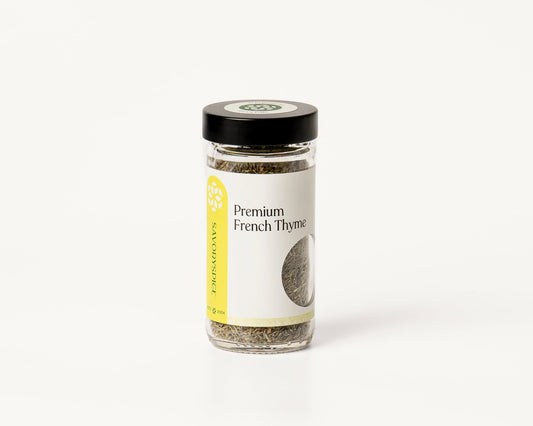
Fresh thyme is the most functionally similar substitute in long-cooked applications. 2-3 sprigs of fresh thyme for every 1-2 bay leaves delivers a similar aromatic, herbaceous background. It doesn't have the camphor notes of bay, but it provides the same foundational quality in stocks and braises. This is particularly effective in French-style preparations where thyme is already a natural part of the flavor profile.
Dried Thyme works for the same purpose at about ¼ teaspoon per bay leaf. It's less fragrant than fresh but a reasonable stand-in when building a stock or a long-cooked soup.
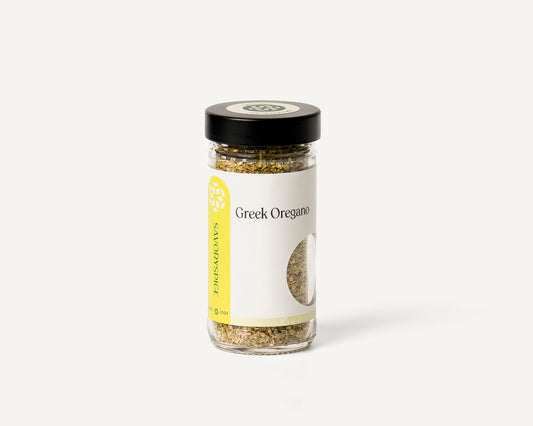
A blend of dried herbs, such as Thyme, a small amount of Oregano, a pinch of Marjoram, comes closer to the full complexity of bay than any single substitute does. Bay's flavor is genuinely multifaceted, with herbal, floral, and slightly spiced notes all contributing, and a small combination of herbs comes nearer to that than one alone.
For pickling brines: Bay is primarily adding aromatic depth to the brine. A combination of coriander seeds, peppercorns, and a pinch of dried thyme will fill a similar background role if bay isn't available.
That said, if you cook stocks and braises with any regularity, bay leaves are worth keeping stocked. They're inexpensive, they last a long time when stored properly in a sealed bag or jar away from light, and there's no exact substitute for what they do in a long-cooked dish.