Rosemary is one of the most assertive herbs in the kitchen. It's piney and aromatic, with a tea-like character that makes it immediately recognizable and a natural partner for fatty proteins, roasted vegetables, and bread. It defines lamb dishes across Mediterranean cuisines, works just as naturally on a potato as on a holiday turkey, and surprises people when it turns up alongside fruit in a galette.
The form matters as much as the amount: Cracked Rosemary and Ground Rosemary behave differently, and knowing which to reach for is how you get the most out of this herb.
What is rosemary?
Rosemary (Salvia rosmarinus, formerly Rosmarinus officinalis) is an herb from the mint family. It's a woody, perennial evergreen shrub native to the Mediterranean coast. The name comes from the Latin ros marinus, meaning "dew of the sea," a nod to its habit of growing on rocky seaside slopes across southern Europe. Today it's produced primarily in France, Spain, and Portugal, though it grows easily in any mild-winter climate.
Dried Rosemaryis the pine needle-like, inch-long leaves stripped from the stem. In flavor, it's distinctively piney and herbal with a resinous, slightly camphor-forward character and a clean tea-like aroma. Its intensity comes from a high concentration of aromatic compounds, which is why a small amount announces itself clearly and why the flavor holds up through long cooking times that would dissipate more delicate herbs entirely.
That robustness is also why rosemary pairs so naturally with fatty proteins. Fat carries its aromatic compounds through the dish and keeps the more intense notes from reading as harsh.
Lamb, pork, chicken, and rabbit are all classic partners.
Beyond meat, dried rosemary pairs beautifully with garlic, lemon, thyme, oregano, lavender, and chives–the foundation of a Mediterranean flavor vocabulary that rosemary essentially anchors.
What is the difference between cracked and ground rosemary?
Both are dried rosemary—the same herb, processed differently—but the form changes how the flavor is released and what applications they're suited for, and this distinction matters more than it might seem.
Cracked Rosemary is whole rosemary needles broken down into roughly ¼-inch pieces. This preserves the leaf's visible texture and allows its aromatic oils to release gradually during cooking, which is exactly what you want when rubbing onto a rack of lamb, tossing with potatoes before roasting, or building a marinade. The pieces distribute evenly across the surface of meat or vegetables, infuse the surrounding fat as the dish cooks, and leave a pleasant herbal presence in the finished dish. It's present without being intrusive.
Ground Rosemary is the same herb milled to a fine powder. Because the surface area is greater, ground rosemary releases its flavor quickly and thoroughly, making it the right choice when you want rosemary fully integrated into a dish rather than visible within it. A sauce, soup, braise, or bread dough doesn't need texture from its herbs. It needs even, seamless distribution. Ground rosemary powder delivers that. It's also worth noting that ground rosemary seasoning is slightly more potent per volume than cracked, consistent with how most ground spices compare to their whole counterparts.
For substituting between them: use about ⅓ the amount of ground rosemary when replacing fresh rosemary in a recipe. When substituting ground for cracked within the same dish, use roughly one-third the amount specified for cracked.
What is the difference between fresh and dried rosemary?
Fresh and dried rosemary are the same herb, but they behave differently enough in the kitchen that swapping one for the other without adjusting isn't always a straight trade.
Fresh Rosemary is brighter, more pungent, and grassier than its dried counterpart. The volatile aromatic compounds haven't had a chance to concentrate and mellow, so the flavor comes in hotter and more green. That's an asset in certain applications, like pressed into a focaccia before baking, stirred into a compound butter, or used as a finishing garnish, fresh rosemary delivers a more immediate, vibrant hit. It's also the right call for quick-cook applications like a pan sauce finished off heat, where dried rosemary wouldn't have enough time to fully bloom. The downside is that fresh rosemary can veer sharp if cooked at high heat for too long. It's the same intensity that makes it good for finishing can make it harsh in a long braise.
Dried Rosemary—cracked or ground—is more concentrated and more forgiving. The drying process drives off water and mellows the sharper edges of the fresh herb, leaving a flavor that's deeper and more even. It's built for long cooking times: roasting, braises, stocks, soups, baking. Most recipes that call for rosemary in a rub, marinade, or oven preparation are expecting dried rosemary, even when they don't specify.
The substitution ratio is the standard rule for most dried herbs: use 1 tsp of dried rosemary for every 1 Tbsp of fresh (a 1:3 ratio). Going the other direction—fresh for dried—use 1 Tbsp of fresh for every 1 tsp dried called for.
When using Ground Rosemary specifically in place of fresh, the ratio is even smaller: about 1 teaspoon ground for every tablespoon of fresh, since ground rosemary releases flavor more completely than cracked.
How do you use rosemary in cooking?
With lamb, pork, chicken, and turkey. This is rosemary's oldest and most established territory. Lamb and rosemary have a natural affinity recognized across Mediterranean cuisines for centuries: the piney, camphor-forward character of the herb cuts through the richness of lamb fat in a way no other herb quite does. Italian abbacchio al forno, French gigot d'agneau, Greek roast lamb—the seasoning logic is nearly identical across all of them: dried rosemary, garlic, olive oil, salt, and acid (lemon juice or wine) applied to the meat before a long, slow roast.
Pork and chicken follow the same reasoning, as these fatty proteins carry rosemary's aromatic compounds well. For holiday turkey, dried rosemary is part of the classic seasoning trio—rosemary, sage, and thyme—that defines the herb profile of traditional American and European poultry seasonings. The combination works because all three herbs are assertive enough to stand up to the size and cooking time of a whole bird, and together they create a layered aromatic quality that no single herb achieves alone.
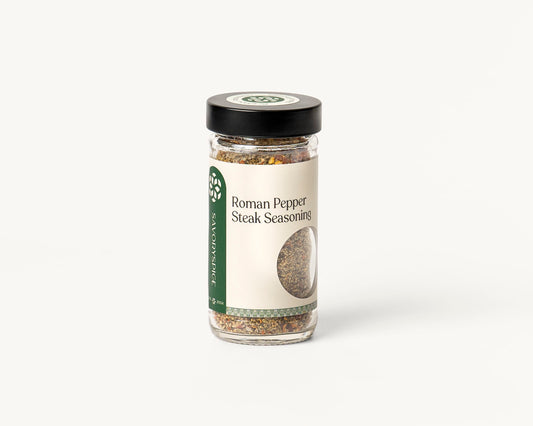
The Italian tradition of pairing rosemary with lemon, garlic, and black pepper for beef is the flavor foundation behind our Roman Pepper Steak Seasoning, inspired by Bistecca alla Fiorentina. It's a rosemary-forward blend worth keeping nearby for steak nights.
With potatoes and roasted vegetables. Rosemary and potatoes are the canonical pairing—piney, aromatic, inseparably linked in European cooking in a way that goes back centuries. The reason it works so consistently is mechanical: rosemary's resinous oils coat the starchy exterior of the potato during roasting, developing a deeper, more caramelized character as the surface browns. The result is a crunch that smells and tastes like something built, not just roasted.
Our recipe for Salt & Vinegar Roasted Potatoes takes that dynamic further, using fingerling potatoes tossed in olive oil, white wine vinegar, Cracked Rosemary, and Maldon Salt, roasted at 450° until browned. The vinegar plays against rosemary's resinous quality in the way acid and herbs generally do: each makes the other taste more distinct. Finish with a second hit of cracked rosemary and extra vinegar straight from the oven.
Salt & Vinegar Roasted Potatoes
Recipe by Savory Spice Test Kitchen
If you love salt & vinegar chips, you'll love these roasted potatoes! Tangy, salty, and delicious.
The same principle applies across other root vegetables—parsnips, beets, carrots, fennel—anywhere you want the herb to meld with a caramelizing surface rather than sit on top of it. Carrots benefit from a slower, lower roast that gives their natural sugars time to develop. The Cracked Rosemary doesn't just season the surface but gradually infuses into the caramelizing exterior as it softens.
Our recipe for Sweet Rosemary Roasted Carrots pairs rainbow carrots with olive oil, brown sugar, and cracked rosemary at 375° for about an hour. Where the potato recipe is tangy and crispy, this one is sweet, aromatic, and rich — two different expressions of the same rosemary-and-roasting principle. The technique works just as well with parsnips, beets, fennel, and turnips anywhere you want the herb to meld with a caramelizing surface rather than sit on top of it.
In soups, sauces, and braises. Ground Rosemary earns its keep in applications where texture from an herb would be distracting. A white bean soup, lamb stew, tomato sauce, or Dutch oven braise benefits from rosemary's flavor distributed evenly through the liquid—¼ to ½ teaspoon stirred in during the building stage, where it develops alongside garlic and other aromatics. It also works well in stuffing, risotto, and grain dishes for the same reason: you want the flavor present and integrated, not in pieces. This is one of the clearest practical distinctions between cracked and ground dried rosemary. Soups and braises are exactly where ground outperforms cracked.
In savory baking. Rosemary in bread dough is a European tradition worth using more. The aromatic compounds distribute evenly through dough during mixing and emerge from the oven with a softened, warmer quality. The piney character mellows slightly under heat and becomes more integrated than rosemary sprinkled on a surface. Our recipe for authentic Irish Soda Bread uses 1 tsp of Cracked Rosemary alongside Caraway Seeds and Parsley in a quick bread that requires no yeast and comes together in about an hour. The three herbs together produce a savory, aromatic crumb that works as well alongside a cheese board as it does with a bowl of soup. The same logic applies to focaccia, rosemary flatbreads, and savory muffins.
In sweet and savory combinations. Rosemary has a particular and underused affinity with sweet fruits, such as apple, pear, fig, grape, where its resinous notes create a contrast that sharpens both the fruit's sweetness and the herb's herbaceousness.
Our recipe for an Apple and Brie Galette builds Ground Rosemary directly into the apple butter base (1½ teaspoons, alongside cinnamon and lemon), then layers that butter beneath thinly sliced apples and brie on a flaky sheet-pan crust. The combination of tart apple, creamy melted brie, and rosemary-spiced apple butter is one of those applications where people taste something they can't quite name. It's the rosemary adding depth and aromatic complexity without stepping forward as the identifiable flavor. Rosemary powder is the right call here specifically because it infuses the apple butter smoothly rather than adding texture to what should be a silky component.
Rosemary's combination of piney, resinous, and camphor-adjacent notes is distinctive enough that no single herb replicates it exactly. These substitutes work in most applications:
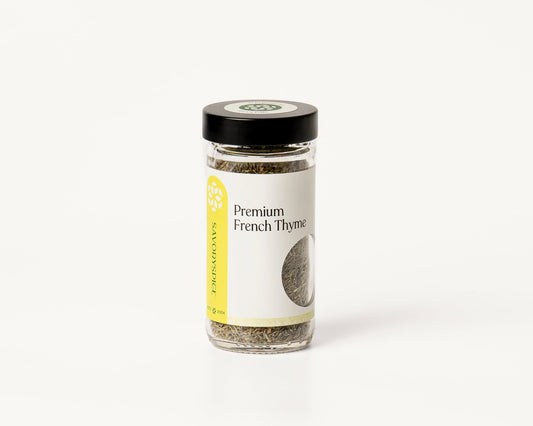
Thyme is the closest and most versatile single-herb swap. It lacks rosemary's pine-forward intensity but delivers the same foundational herbal quality and works in all the same contexts — lamb, chicken, roasted potatoes, bread, long-cooked sauces. Use equal amounts of dried thyme, or about 1½ times the amount of fresh thyme to replace fresh rosemary.
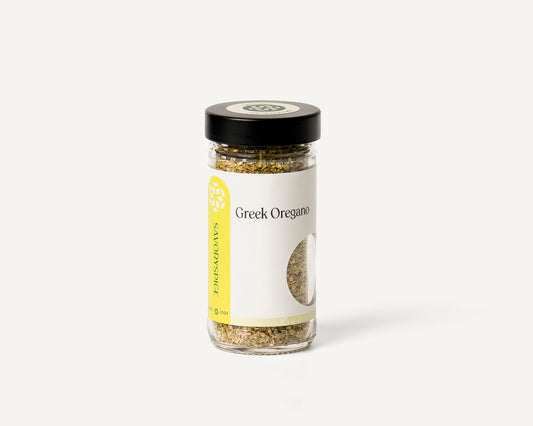
Thyme and oregano together come closer to rosemary's full character than either does alone. Thyme provides the herbal backbone, Oregano adds a slightly more assertive, camphor-adjacent quality. Combine about 2 parts thyme to 1 part oregano for a total quantity matching what the recipe calls for in rosemary.
Sage is a solid substitute specifically in meat applications, particularly with pork and poultry—including turkey, where sage naturally overlaps with the rosemary-sage-thyme combination anyway. It's equally assertive and handles high cooking temperatures well. The flavors differ, though. Sage is earthier where rosemary is piney. But they fill the same functional role in rubs and long-cooked braises.
Marjoram works in gentler applications, like oups, sauces, roasted vegetables, where a more delicate herb is still appropriate. It's in the same botanical family as rosemary and shares some aromatic characteristics, though it's noticeably softer in intensity.
And for baking specifically, Thyme is also the most reliable substitute and will produce a bread or savory baked good with a similar foundational herbal character, if a less distinctly piney one.