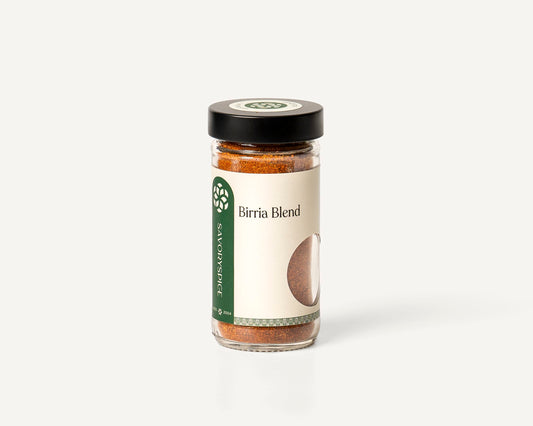
Birria started in Jalisco, Mexico as a way of making goat—a tough, flavorful meat—worth braising for hours in a chile-spiked consommé until it fell completely apart. The dish evolved to include beef, then went viral in taco form: corn tortillas dipped in the rendered fat, crisped on a griddle, stuffed with shredded meat, and served alongside consommé for dipping.
That format is now standard at Mexican street food spots and restaurants everywhere. Our Birria Blend builds the chile-spiced braise base from guajillo and ancho chiles, warm spices, and a touch of vinegar tang—everything the consommé needs, all in one jar.
Birria is a slow-braised meat dish from Jalisco, the western Mexican state whose capital is Guadalajara. The dish developed as a way to make goat—the traditional protein that's abundant in Jalisco, but tough and sometimes pungent—something worth cooking all day. The preparation involves searing the meat, then braising it low and slow in a deeply seasoned liquid of Birria Seasoning (dehydrated dried chiles & spices), vinegar, and aromatics. After several hours, the meat is fall-apart tender, the braising liquid has become a rich, red-tinted consommé, and the fat from the meat has risen to the top.
That consommé is central to birria in a way that makes it different from most braises: you don't discard it or reduce it into a pan sauce. You serve it. Diners dip their tacos in it, drink it from small cups, and use it to reheat leftovers. The broth is part of the dish.
The taco format that made birria famous outside of Jalisco—now often called "quesabirria"—took hold largely through Mexican food trucks in Los Angeles starting around 2017. The defining technique is dipping the corn tortilla into the rendered fat skimmed from the top of the consommé before placing it on a hot griddle. The fat crisps the tortilla and stains it a deep orange-red; the cheese melts inside; the tortilla is served folded, with a cup of the broth alongside for dunking.
That visual—the red-orange taco held over a cup of amber consommé—is what spread everywhere online and turned birria into a mainstream craving.
Today the birria flavor profile appears in ramen, quesadillas, nachos, burritos, and dishes like pizza and pot pie that have no connection to Jalisco at all. What connects them is the deep, chile-forward, faintly tangy braise flavor that birria is built around.
What is in birria seasoning?
Traditional birria starts with whole dried chiles—most commonly guajillo and ancho—that are toasted, rehydrated, and blended with spices into a paste or sauce. It's a process that produces extraordinary flavor but takes real time and effort. Our Birria Seasoning builds that same flavor foundation in dry form, so the seasoning goes directly into the broth.
Guajillo Chile Powder is the primary flavor. Guajillo chiles have a bright, fruity heat with a thin dried-fruit-like quality and moderate spice. They form most of the deep red color and tangy chile backbone of a birria consommé. Ancho Chile Powder (dried poblano) adds depth underneath the guajillo: richer, darker, sweeter, with echoes of dried fruit and cocoa and very mild heat. Together the two chiles create the layered, fruity-earthy heat that defines birria's flavor.
Cumin provides the earthy anchor that keeps the chile flavors grounded. Mexican Oregano—more citrusy and floral than the Mediterranean variety, with less of the piney quality—adds an herbal lift that's characteristic of northern and western Mexican cooking. Cinnamon and Allspice supply the warm-spice depth that bridges the blend's flavor from purely savory into something more complex and aromatic. Smoked Paprika adds a layer of smokiness without adding more chile heat.
The ingredient that makes our blend distinctly birria rather than a generic chile seasoning is white wine vinegar powder. Acid is traditional in birria—vinegar or citrus was used historically to help tenderize the goat and balance the richness of the fat. That touch of tang is what separates a properly made birria consommé from a regular chile broth; it cuts through the richness and keeps the broth tasting bright over a long braise.
At 2 Tbsp of Birria Blend per pound of meat, the blend seasons the meat and builds the consommé simultaneously.
How do you make birria tacos?
The technique has three stages: the braise, the shred, and the taco assembly. Each stage matters for the final result.
The braise. Start by searing your meat (goat or beef) aggressively on all sides—color on the meat adds depth to the broth. Our recipe for The Best Birria Tacos uses a combination of beef chuck roast (3-5 lbs.) and bone-in short ribs (1 lb.), which provides both the lean shredded meat and the bone-and-fat richness that makes the consommé worth drinking. After searing, the base builds fast: sauté diced onion, then add garlic and crushed tomatoes, then pour in 6 cups of beef broth and 8 Tbsp of Birria Blend.
Blend the whole mixture until smooth. This step ensures the chile seasoning fully integrates into the broth rather than sitting at the bottom. Return the meat to the pot, bring to a simmer, cover, and braise in a 300°F oven for 4 hours. The result is fork-tender meat swimming in a deeply red, aromatic consommé.
The shred and skim. Remove the meat and shred it with two forks, then return it to the broth. Critically, skim the fat that has risen to the top and reserve it separately. This is what you'll use to crisp the tortillas. Don't discard it.
The taco assembly. Dip a corn tortilla in the reserved fat and place it on a medium-heat skillet or griddle. Add shredded birria meat and Oaxaca cheese, fold the tortilla in half, and crisp for about 10 minutes, flipping halfway.
The fat stains and crisps the tortilla in a way that no oil substitute quite replicates. Serve with diced white onion, chopped cilantro, lime wedges, and a small bowl of the consommé alongside for dipping. The dipping broth isn't a garnish. It's structural to the experience.
Making it ahead and using leftovers. Birria is one of the best make-ahead dishes in this format: the braise actually improves overnight as the flavors meld, and the shredded meat keeps well in its consommé for several days. The leftover application that works best is our recipe for Birria Pot Pie: shredded birria meat and braised Yukon gold potatoes and carrots, filled into a cast iron skillet or mini cast iron pots with birria broth ladled over the top, then covered with pie crust and baked at 350°F for 30-35 minutes until bubbling and golden.
The consommé replaces chicken broth in the filling; the guajillo and ancho depth transforms the familiar comfort food structure into something distinctly its own. Individual mini pots make a strong dinner party presentation. The same leftover meat works in ramen (add consommé to ramen broth, top with soft-cooked eggs and crispy tortilla strips), birria quesadillas, or loaded nachos with cotija and pickled jalapeños.
What meat can you use for birria?
Goat is the traditional and original protein. Jalisco has a long history of goat herding, and birria was developed specifically around chivo (goat), whose tough meat and pronounced flavor needed a preparation method that could tenderize it and round out its gaminess over a long braise. Bone-in goat leg or shoulder is the traditional cut. Goat isn't always easy to find at standard grocery stores, but Latin markets, halal butchers, and specialty butcher shops typically carry it; if you can find it, the flavor is worth it. It's arthier and more intensely savory than beef, with a quality the chile-and-vinegar braise complements particularly well. Use the same method and 2 Tbsp of Birria Blend per pound of goat meat.
Beef is the most accessible standard and what our recipe uses. Chuck roast is ideal for braising. It's well-marbled, relatively inexpensive, and it shreds cleanly after several hours. Bone-in short ribs alongside the chuck add collagen and fat that enriches the consommé. Oxtail is another excellent beef option: more collagen than short ribs, making for an even richer, more gelatinous broth. Brisket works but is leaner and requires attention to moisture during the braise.
Lamb is the best substitute if you want to stay close to the goat tradition. Bone-in lamb shoulder or leg has a similar richness and depth to goat, braises in roughly the same time, and pairs equally well with the guajillo-ancho flavor profile. It's often easier to source than goat and produces a birria that reads as closer to the traditional dish than beef does.
Chicken works as a weeknight-friendly version, though the braise time drops significantly. Chicken thighs are done in about 1.5 hours, and the consommé will be lighter in body than a beef or goat version. The flavor is good; it's just a different dish.
Plant-based. Young jackfruit in brine (not syrup) shreds in a way that mimics pulled meat and absorbs the birria braising liquid well. King oyster mushrooms, torn into large pieces and braised in the consommé, also work. They won't provide the same body as a bone-in braise, so enriching the broth with a splash of soy sauce helps compensate. Both options are worth pairing with a bean-based filling in the tacos (black beans or pinto) to add substance.
On building the braise without the blend: the core flavor comes from soaking and blending 2-3 dried guajillo chiles and 1-2 dried ancho chiles (toasted, seeds removed) with cumin, Mexican oregano, garlic, black pepper, and a splash of apple cider vinegar. It's a longer process than reaching for the blend, but it produces the same flavor architecture.