Onion is used as a seasoning in virtually every cuisine in the world. It shows up as the first ingredient in the pan, the base of the sauce, the backbone of the rub, the depth in the dip. Most people know fresh onion and assume dried onion is just a substitute for when you run out.
It isn't. Dried onion forms do things fresh onion can't, and choosing the right one changes the flavor of the dish in ways that matter. Once you understand what each form does, you'll stop treating them as interchangeable.
What is granulated onion, and how is it different from onion powder?
Granulated Onion is dehydrated white onion ground to a coarse granule. It's finer than minced onion flakes, but coarser than a true powder. The practical difference between granulated and powder is texture and integration speed: powder dissolves almost instantly into wet ingredients, while granules take a bit longer to hydrate. In terms of flavor, they're equivalent. If a recipe calls for onion powder and you have granulated, it works the same way.
We carry two forms of plain dehydrated white onion: Granulated Onion (finer, all-purpose) and Minced Onion (larger pieces with recognizable texture).
Both are single-ingredient: dehydrated white onion, no added salt, sugar, or garlic. Granulated Onion can go directly into dry rubs, marinades, soups, and sauces without any prep; the dish provides the moisture to hydrate it.
Minced Onion works the same way in longer-cooking applications, but can also be soaked in water for 15-20 minutes to reconstitute into pieces that behave more like fresh chopped onion. When you reconstitute, save the soaking liquid. It's concentrated onion broth that can go straight into soups, stocks, or sauces.
What is the difference between granulated onion and toasted onion?
This is the most important flavor distinction in the lineup. Granulated Toasted Onion takes an extra step: the white onions are roasted until golden brown before dehydrating, which triggers the Maillard reaction and converts some of the sharp sulfur compounds into sweeter, more caramelized flavors. The result tastes less like raw onion and more like onion that's been sautéed low and slow. It's mellow, slightly sweet, and nutty, with none of the bite.
The practical difference: reach for Granulated Toasted Onion instead of regular when you want depth and sweetness. Use it as a finishing sprinkle, in a rub where you want caramelized character without browning time, or anywhere you'd normally spend 40 minutes caramelizing onions on the stovetop. The two work well in combination: granulated for the base note, toasted for the sweet finish.
When does dried onion work better than fresh onion in cooking?
Several specific situations where dried onion isn't just a substitute but the better choice:
Dry rubs: Fresh onion has too much moisture to work in a rub. It clumps, won't coat evenly, and causes the surface to steam rather than sear. Granulated or toasted onion distributes evenly, adheres to the surface, and builds a proper crust.
Meatloaf, meatballs, and burgers: Fresh diced onion releases water during cooking, which can make ground meat mixtures dense or soggy. Dried minced onion integrates into the mix without adding moisture, reconstituting from the fat and liquid already in the meat. The flavor distributes evenly through every bite instead of concentrating in visible chunks.
Spice blends and homemade seasoning mixes: Dried onion has a long shelf life and consistent flavor. Fresh onion would make any homemade blend perishable within days.
Long-cooked dishes: In soups, stews, and braises where everything is cooking for an hour or more, dried and fresh onion reach a similar end result. Dried is simply more convenient. No chopping, no mess, stable on the shelf.
When fresh is better: Any application where onion texture is part of the dish. A crisp raw bite in a salad, a fresh salsa, or dishes where properly caramelized onions with their softened texture are the actual point.
How do you substitute dried onion for fresh onion?
1 tablespoon Minced Onion = approximately ¼ cup fresh (larger pieces, so slightly less surface area)
20 teaspoons Minced Onion = approximately 1 whole fresh onion
For Granulated Toasted Onion, the conversion is the same as granulated, but expect a sweeter, more caramelized flavor rather than raw onion sharpness.
One note on concentration: dried onion is more potent than the conversion suggests in quick-cooked dishes, because fresh onion mellows significantly when sweated or caramelized and dried onion doesn't always get the same opportunity. In a dish that cooks for less than 20 minutes, start with slightly less than the conversion calls for and taste as you go. In longer applications, the conversion holds reliably.
How do you use onion and garlic as a seasoning blend?
Onion and garlic are the most common pairing in savory cooking–together they build the aromatic base of nearly every global cuisine. As dried seasonings, both concentrate significantly: the sharp raw notes mellow into deep savory flavor as they cook, and a small amount goes further than you'd expect.
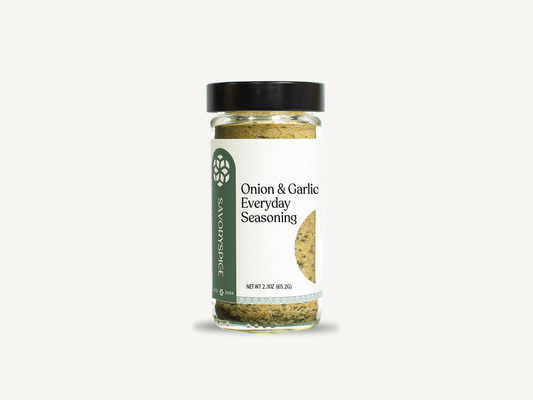
Our Onion & Garlic Everyday Seasoning blends white onion, roasted garlic, and minced green onion–plus, it's salt-free and sugar-free. The roasted garlic brings caramelized depth; the green onion adds a mild, fresh lift that keeps the blend from reading as heavy. Because it's salt-free, it can be used generously without worrying about overseasoning. Season the dish with this blend first, then add salt separately to taste.
The most useful framing: an onion and garlic blend functions as a flavor foundation, not a finishing note. It goes in early, when you're building the base of a dish. Add it to a red sauce, mashed potatoes, roasted vegetables, scrambled eggs, marinades, or a simple compound butter. It also works as a low-sodium alternative to seasoning salts. Substitute ⅛ teaspoon of this blend for ½ teaspoon of salt to get savory depth without the sodium.
What is a good onion-based dry rub for grilling?
A good onion rub delivers concentrated onion flavor and uses that base to carry other aromatics into the crust. Mt. Hood Toasted Onion Rub is built on this principle. It uses both granulated onion and toasted minced onion alongside Alderwood Smoked Sea Salt, brown mustard, black pepper, fennel, tarragon, and parsley. The name comes from Mt. Hood, Oregon's highest peak; the Pacific Northwest is one of the leading onion-producing regions in the country.
The toasted onion base means the rub starts with already-caramelized flavor that deepens further on the grill or under the broiler. Alderwood salt adds low, clean smokiness. The brown mustard acts as a natural binding agent that helps the rub adhere to the surface and adds a subtle tang. Fennel and tarragon give the blend a slightly herbaceous, almost French-inspired character that makes it especially good on fish. Mt. Hood on salmon or trout is one of the better applications in the lineup.
Beyond proteins, it works well on vegetables before roasting, and stirred into sour cream it becomes a quick dip or condiment. Our recipe forHerb-Infused Olive Oil Bread Dip uses Mt. Hoodas one of the oil flavor base(s). It's a simple, sharp demonstration of how much a well-built onion rub can do with just a few ingredients.
Shallots fall between onion and garlic: sweeter and milder than a white onion, with a gentle garlicky undertone that makes them a staple in French cooking. They add aromatic complexity without sharpness, which is why they show up in vinaigrettes, pan sauces, cream reductions, and butter-based preparations. Our Freeze Dried Shallots can be used as-is in longer-cooking recipes or reconstituted in equal parts water before use. They're particularly well-suited to applications where fresh shallots would be ideal but aren't worth buying a whole bag–stirred into a risotto, folded into a salad dressing, or cooked down into a quick pan sauce, they deliver the same layered flavor.
Our recipe for a homemade Shallot Herb Dip pairs them alongside Freeze Dried Chives in a sour cream base. It's a good illustration of how shallot and chive together cover different parts of the allium range in a single preparation.
Shallot Herb Dip
Recipe by Savory Spice Test Kitchen
This tangy, herby dip comes together quickly and can be made a day ahead. Made to pair with our
Chives are the smallest and most delicate family member. The flavor is mild onion with just a hint of garlic. It's less a building block for cooking and more a finishing element. Freeze Dried Chives can substitute for fresh in equal amounts and belong at the end of cooking, not the beginning. Stir them into cream cheese, sour cream, softened butter, or fold into eggs just before serving. They add gentle flavor and a hint of color without the assertiveness of onion or the weight of garlic.
If alliums of any kind aren't an option–for dietary or digestive reasons–Asafetida (also called hing) mimics the flavor of onion and garlic when cooked, from a completely different plant. It's the standard substitute in Indian cooking for those who don't eat alliums, and a small pinch goes a long way.
What ready-to-cook onion products are worth having?
We carry three delicious Spice & Easy products built around onion as the primary flavor:
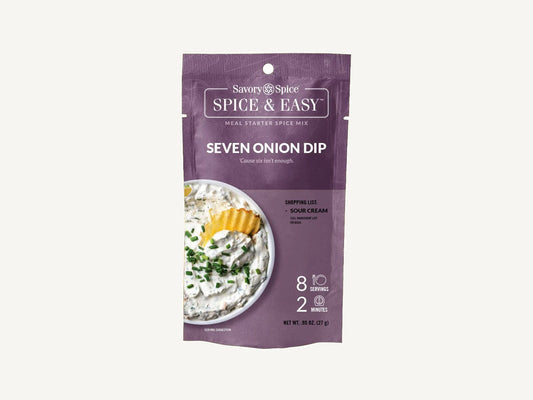
Seven Onion Dip Mix draws on seven allium-family ingredients—onion, shallot, green onion, chives, roasted garlic, and more—blended into a single packet. Stir into 2 cups of sour cream, chill for 30 minutes, and serve with chips or vegetables. It was the product that launched our Spice & Easy line, and the depth of flavor shows why. This reads nothing like a standard packet dip. The same mix stirred into mashed potatoes is quietly one of the best applications for it.
Seven Onion BBQ Meatloaf takes the same allium foundation and pairs it with a full meal kit: the seasoning mix plus a small bottle of Midwestern Sweet Barbecue Sauce for the glaze. The onion flavor carries through the entire loaf rather than sitting on the surface, and the BBQ glaze adds a sweet, smoky finish in the last 10 minutes of baking. For 2 lbs of ground beef, everything goes together in one bowl, baked at 350°F for about an hour. A genuinely convenient weeknight dinner that tastes like significantly more effort than it is.
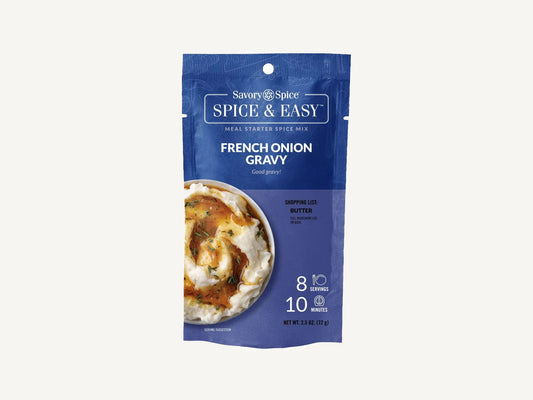
French Onion Gravy builds on caramelized onion, mushroom, garlic, thyme, and a touch of balsamic vinegar. It all comes together in 10 minutes with butter and water or broth. Goes over mashed potatoes, turkey, steak, biscuits, or roasted vegetables. The balsamic and mushroom give it a depth that standard packet gravies don't have, and the onion base means it reads as a sauce as much as a gravy.