Black pepper is the most traded spice in the world, and the one most people treat as an afterthought. But "pepper" covers far more than just that dusty old shaker on your table. The same Piper nigrum vine produces whole peppercorns, white pepper, and every grind in between, each behaving differently in the kitchen.
Then there are the botanical relatives, like Szechuan peppercorns and grains of paradise, that go by "pepper" but come from entirely different plant families. This guide on pepper covers every form we carry: what makes each one distinct, when to reach for it, and what it's actually built for.
What Are the Different Types of Black Peppercorns?
All true black peppercorns come from Piper nigrum, a tropical vine native to the Malabar Coast of India. What differentiates the varieties is where they're grown, when they're harvested, and how long the berries stay on the vine before picking.
Black Malabar Peppercorns are the standard by which all others are measured. The bold, familiar, slightly fruity heat you recognize from essentially every restaurant pepper grinder in the world. Grown on the Malabar Coast of southern India, they're the everyday workhorse: well-rounded, moderately hot, reliable.
Grind them fresh over finished dishes, crack them coarsely for marinades and dry rubs, or add whole to stocks and soups where you'll strain them out before serving.
Black Tellicherry Peppercorns (Extra Bold)come from the same Malabar Coast but are left on the vine longer than standard Malabar peppercorns to fully mature. The result is a larger berry with more developed, complex & bolder flavor. It's deeper and earthier, with a fruity top note that emerges clearly when freshly ground. The heat is there, but it's more rounded, less sharp.
Tellicherry is considered the premium-grade peppercorn by cooks who notice the difference, and the difference is most apparent when pepper is the main event rather than a background seasoning.
Lampong Peppercorns take the opposite approach: harvested young, before they fully mature on the vine, in the Lampung region of Sumatra, Indonesia. The result is a smaller, sharper, more intensely hot berry with a bright citrus and pine note underneath the heat.
Where Malabar is balanced and Tellicherry is complex, Lampong is direct and forceful. It's a peppercorn that announces itself. Use it when you want pepper to be a primary flavor rather than seasoning support, or wherever a sharper, more pungent bite is the point.
What Is the Best Grind of Black Pepper for Cooking?
The grind size changes how pepper works in a dish more than most people realize, not just for texture, but for when the heat releases and how pepper integrates with everything around it. Our ground black peppers are all milled from Malabar peppercorns, starting with whole berries and grinding to each specific mesh.
Fine Black Malabar Pepper is the everyday ground pepper that belongs in the pantry. The fine grind integrates seamlessly into anything: sauces, soups, pasta, eggs, dressings, spice rubs. The finer the grind, the faster piperine (the compound responsible for pepper's heat) releases, so fine ground pepper delivers its heat quickly and distributes evenly through a dish. This is the grind for anything where you want pepper flavor throughout rather than in individual bites.
Coarse Black Malabar Pepper is the step up. It's a chunky, irregular grind that releases flavor more slowly and holds up in longer-cooked preparations. Use it on the grill, cracked over vegetables before roasting, stirred into a braise, or worked into a burger patty. The larger pieces give you pepper presence that doesn't disappear into the background during cooking.
Extra Coarse Black Malabar Pepper is cut specifically for BBQ rubs and dry rubs. The large, irregular pieces create the visible, textural pepper crust you associate with great smoked meat. It creates the kind of bark that looks as aggressive as it tastes. Press it into a steak before a hard sear, pack it into a dry rub for ribs, or apply it to a brisket that's going on a pellet grill.
Whiskey Barrel Smoked Black Pepper starts as cracked black peppercorns and gets slow-smoked by hand for two full days using staves from used whiskey barrels. The result is categorically different from plain cracked pepper: rich oak smoke, charred whiskey barrel aromatics, and a deep finish that builds slowly. Use it wherever a smoked, wood-fired character makes the dish, from finishing steaks to dry rubs for oven-roasted meats, or anywhere you want depth without adding liquid smoke. A Founders' Favorite.
Whiskey Barrel Smoked Black Pepper the answer to "how do I add smoke flavor when I'm not cooking over fire?"
What Is White Pepper and How Is It Different from Black Pepper?
White pepper and black pepper come from the same plant and the same berries. The difference is entirely in the processing.
Black peppercorns are picked while still green and unripe, then sun-dried until the outer skin shrivels and turns dark. White peppercorns are allowed to ripen fully on the vine, then soaked in water until the outer skin softens and can be removed, leaving just the bare inner seed. Same Piper nigrum berry. Different stage of ripeness, different processing.
Removing the outer layer changes the flavor meaningfully. The skin contributes some of black pepper's complexity and dark, slightly resinous aromatics. Without it, white pepper is sharper and more direct. It's hotter and more pungent, with an earthy, almost fermented quality that differs noticeably from black.
The most practical reason to use white pepper, though, is the obvious visual one: no black flecks. White pepper brings full peppery heat to cream sauces, béchamel, pale soups, mashed potatoes, white gravies, mac & cheese, and pale batters without altering the color.
Our White Sarawak Peppercorns come from Sarawak, Malaysia. They're large, robust berries with a characteristically strong, pungent, earthy flavor. Add whole to a dedicated white pepper mill, or steep whole in cream sauces and clear broths and strain before serving. White pepper is a staple in French, Chinese, and Southeast Asian cuisines, especially in preparations where a clean, cream-colored dish still needs genuine pepper heat.
Fine White Sarawak Pepper is the working version. They're the same Sarawak peppercorns freshly ground to a fine powder, ready to measure into cream sauces, white gravies, and any preparation where you want pepper's warmth without the visual disruption of black specks.
A peppercorn medley brings together multiple pepper varieties in one blend for both flavor complexity and the visual impact of a rainbow of colors in the grinder.
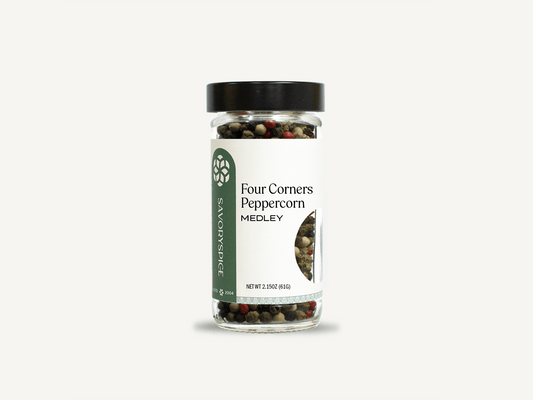
Our Four Corners Peppercorn Medley is our most popular peppercorn blend, and the most requested by customers who want a single grinder that does more than standard black.
Black Malabar for the bold, familiar foundation; White Sarawak for sharper, more pungent heat; Green Mysore peppercorns (unripe Piper nigrum berries) for fresher, slightly herbal notes; and Pink Reunion Island peppercorns for a floral, almost fruity finish.
A note on the pink: despite the name, pink "peppercorns" are not true peppercorns but berries from a Brazilian pepper tree. They're aromatic and mildly sweet, not hot. They're what give peppercorn medleys their brightness. Because of their plant family, the Four Corners blend contains a tree nut allergen from the pink peppercorns—worth noting if you're cooking for guests with tree nut sensitivities.
The overall effect is peppery, fruity, floral, and nutty in a way that plain black pepper isn't. This is the blend to use when pepper is the star rather than a background seasoning. And nothing makes that case more clearly than a dish built entirely around it.
Szechuan Peppercorns are called peppercorns and used like one, but really aren't related to black pepper at all. It comes from the dried berries of Zanthoxylum, the Chinese prickly ash tree, and what makes it unlike anything else in the spice world is a compound called hydroxy-alpha-sanshool, which triggers a buzzing, numbing, tingling sensation on the tongue and lips. No other spice does this.
The flavor beneath the tingle is citrusy and woody with a bright, almost lemony freshness. The numbing effect itself isn't unpleasant. It actually seems to amplify the perception of other flavors, which is why Szechuan pepper is central to the "mala" (numbing + spicy) flavor profile in Sichuan cuisine, where it's paired with dried chiles to create complex layered heat.
On its own, Szechuan pepper is aromatic and fragrant; combined with heat, it creates something genuinely electric.
How to Use Szechuan: Dry-roast the whole berries in a dry pan over medium heat for 3–4 minutes until fragrant, then cool before grinding. This step is essential. It wakes up the aromatics and reduces any woody bitterness. Use in stir-fries, spice rubs for grilled chicken or pork, roasted vegetables, and any dish where you'd reach for black pepper but want a more complex, tingling heat.
Grains of Paradise(Aframomum melegueta) come from the same botanical family as ginger and cardamom, not from Piper nigrum. They're native to West Africa's coast from Liberia to Nigeria. Yet they've been used as a pepper substitute since at least medieval times, when they were one of the most important spices in European cooking before black pepper became readily available via established trade routes.
The flavor has a genuine peppery heat, but underneath it there are jasmine, hazelnut, and citrus notes that black pepper doesn't have. It's more aromatic, more complex, with a floral warmth that lingers.
Sometimes called "Alligator Pepper" or "Melegueta pepper," grains of paradise are showing up again in fine dining and in craft brewing, where several styles use them for peppery, floral bitterness.
Use them as a finishing pepper wherever black pepper would work, but where you want something more interesting: ground over lamb, roasted potatoes, eggplant, grilled fish, or anything where you'd normally reach for a pepper mill. They also work as a partial substitute for cardamom in sweet preparations like apple pie. Load them into a dedicated pepper mill for tableside use, and let people try to figure out what makes the pepper taste so much better.
Honey Rose Apple Pie
Recipe by Adapted from Noodle & Pie in New Orleans
Add a unique touch to your traditional holiday apple pie. The subtle flavors in this easy-to-make dessert are sure...
Beyond peppercorns and straight ground pepper, pepper is the main character in several of our most-used seasoning blends.
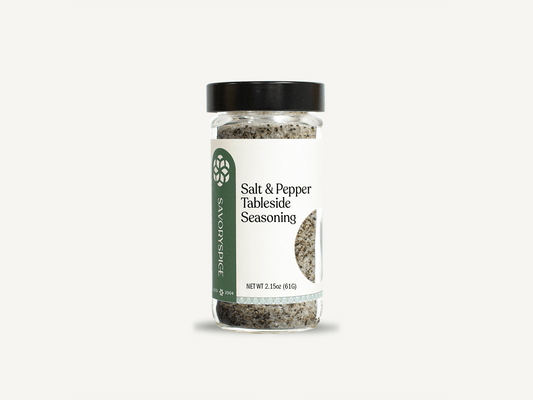
Salt & Pepper Tableside Seasoning is the simplest thing we make. It's a perfectly balanced blend of kosher salt and coarse black pepper at the ideal everyday ratio (75% salt, 25% pepper). It's a best-seller and a Founders' Favorite because sometimes the most useful tool is the simplest one. Keep it on the dinner table for finishing everything from eggs to steak, or use it as the start of a dry rub.
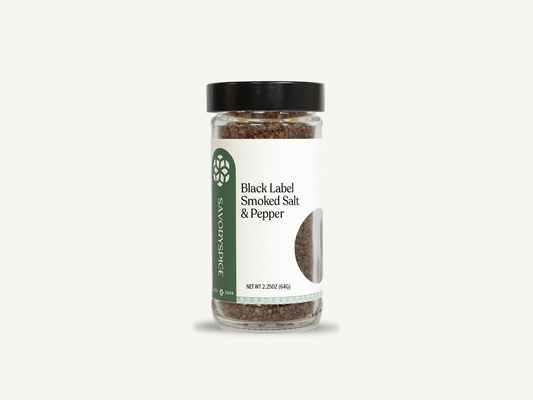
Black Label Smoked Salt & Pepper is the elevated version: smoked hickory sea salt cold-smoked alongside our Whiskey Barrel Smoked Black Pepper over oak whiskey barrel staves and sweet hickory splits. The resulting blend has the depth of the whiskey barrel smoke, the minerality of the brine salt, and a firm pepper bite—all three building on each other. Use it as a finishing seasoning on proteins, bruschetta, eggs, or a cheese board. A Top Rated product.
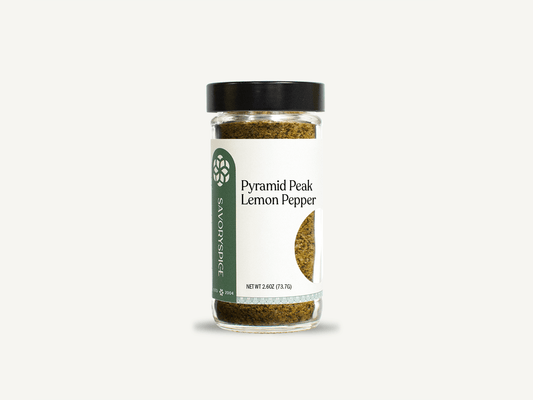
Pyramid Peak Lemon Pepper is our classic lemon pepper blend. Bright lemon peel and black pepper up front, rounded out by garlic, fenugreek, turmeric, and warming spices that make it considerably more interesting than a standard grocery store lemon-pepper seasoning. Tart, peppery, and aromatic, it holds up equally on wings, seafood, and roasted vegetables.
Citrus Pepper Seasoning (Salt-Free) brings orange peel alongside lemon, with smoked paprika adding a subtle smokiness that Pyramid Peak doesn't have. It's our salt-free lemon pepper seasoning. It's brighter, slightly smokier, and completely sodium-free, making it a reliable choice for anyone managing their salt intake.
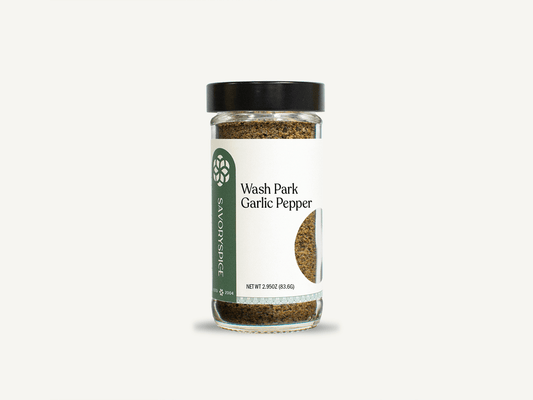
Wash Park Garlic Pepper is built on a black pepper and garlic foundation with shallots, lemon peel, and bell peppers. It's one of our most versatile all-purpose blends and a Founders' Favorite that earns permanent placement next to the stove.
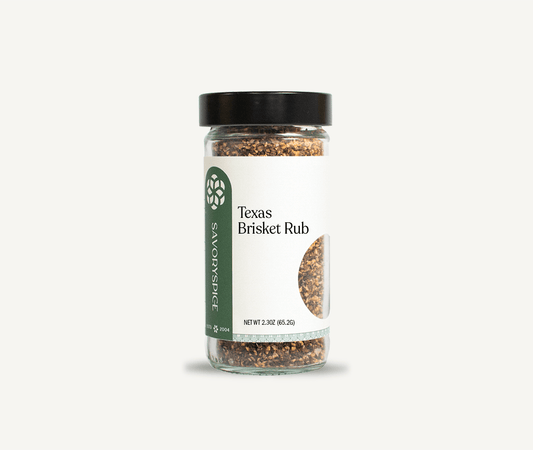
Texas Brisket Rub is a new addition built specifically for smoking brisket, and extra coarse black pepper is the foundation of the formula. Central Texas barbecue is defined by its bark: the thick, dark, peppery crust that forms during a long smoke. This rub provides that crust: pepper and salt up front, with garlic, onion, paprika, and a touch of sweetness and celery seed balanced underneath. Use it on full packer briskets, beef short ribs, burnt ends, or any low-and-slow cut where you want bark.
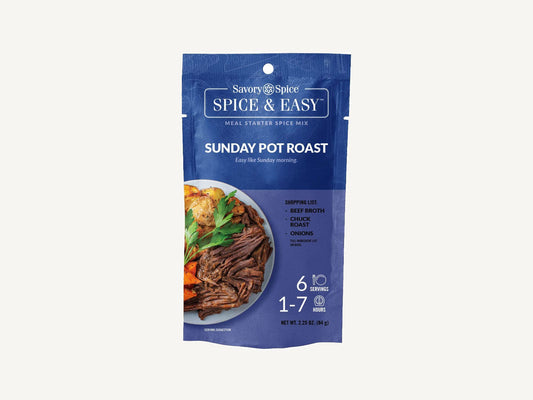
Sunday Pot Roast Spice & Easy Meal Starter is a slow cooker packet, and one of the most peppery we make. The formula layers pepper with Worcestershire powder, rosemary, paprika, garlic, and aromatics to build a deeply savory, warming braise. Drop it in a slow cooker with a chuck roast, onions, and beef broth and cook on low for seven hours. The pepper works with all the other aromatics to create the kind of pot roast that makes Sunday worth staying home for.
Grind it fresh when it matters. Black pepper begins losing its volatile aromatic compounds as soon as it's cracked–not dramatically, but noticeably when pepper is the main event. Pre-ground is fine for everyday seasoning where pepper is background flavor. When pepper is the star–like in Cacio e Pepe, a peppercorn crust, or finishing over a finished steak–freshly cracked from whole peppercorns is meaningfully different.
Add it early for depth, late for brightness. Pepper added at the beginning of cooking integrates into the dish and becomes part of its underlying flavor. It's present but hard to trace. Added at the end, it reads as a distinct, fresh peppery note on the surface. Both approaches are useful; the timing depends on the effect you want.
Fat carries pepper flavor. Piperine, the compound responsible for pepper's heat, is fat-soluble. A dish cooked in butter or oil will carry pepper's heat through the entire preparation; a lean broth needs more pepper to achieve the same presence.
Toast whole peppercorns before grinding. A 30-second dry toast in a skillet brightens the aromatics significantly. The same logic that applies to cumin, coriander, and any other whole spice.
Don't confuse grind sizes. Extra coarse pepper on a brisket bark and fine ground pepper in a cream sauce are doing entirely different things. On a BBQ crust, the whole point is the physical bite of the pepper piece , which fine ground can't replicate that, and substituting it collapses the result.
What Can You Substitute for Black Pepper?
White pepper is technically the closest 1:1 substitute. It's the same piperine heat source, no black color, but it is slightly more pungent in flavor. Use it whenever visual black specks are a problem in your finished recipe.
Grains of Paradise work well as a finishing substitute in recipes where you want aromatic complexity–peppery heat with jasmine and citrus notes underneath. They won't create bark on a brisket, but ground over a finished lamb chop or roasted potato, they're arguably better than black pepper.
Szechuan Peppercorns can substitute in Asian preparations where the numbing tingle is welcome, though the character is completely different. Use the same amount and adjust to taste.
For whole peppercorns in a brine or stock, any whole variety substitutes directly– Tellicherry, Lampong, or the Four Corners medley all work interchangeably in a liquid preparation.
Peppercorn-to-ground conversion: Approximately 8 whole black peppercorns equals ¼ teaspoon of ground black pepper. Crack whole peppercorns in a zip-top bag under a heavy pan, or run them briefly in any spice grinder, if you need a ground substitute and have only whole on hand.