The word "vanilla" has become shorthand for ordinary. That's a branding problem, not a flavor problem.
Vanilla is the fruit of a tropical orchid, native to Mexico, and the second most expensive spice in the world after saffron. A single bean contains about 300 distinct flavor compounds. Most home bakers reach for whatever bottle is cheapest on the grocery store shelf. It's probably the last ingredient they're thinking critically about–and one of the first they should be.
What is vanilla, and where does it come from?
Vanilla pods are fruits from the genus Vanilla—a tropical orchid, not a legume. The "bean" name is a misnomer; what you're holding is a seed pod from a climbing orchid that grows 30 feet or more up a host tree. The flowers bloom for a single day and must be pollinated by hand in commercial production, which is a significant reason why pure vanilla is so expensive.
Vanilla is native to Central America and Mexico. The Spanish brought it to Europe in the 16th century, and cultivation spread to other tropical regions from there. Today, roughly 80% of the world's vanilla supply comes from Madagascar, which has an ideal growing climate and long-established farming infrastructure. Tahiti, Uganda, Mexico, and regions across the South Pacific, Africa, and Central America produce the rest.
One more thing worth knowing: "Bourbon vanilla" has nothing to do with whiskey. It refers to the Bourbon Islands–now called Réunion–where the Vanilla planifolia species was first cultivated outside of the Americas. Madagascar Vanilla, Mexican Vanilla, and Ugandan Vanilla all come from this same species and all carry the Bourbon designation. Tahitian Vanilla is a different species entirely.
What does vanilla taste like, and how does it differ by origin?
Vanilla has a creamy, sweet warmth with floral depth, but that description barely covers the range. Flavor varies significantly by where the orchid is grown, because the same species of plant produces different flavor compounds in different soils and climates. Terroir works the same way here as it does in wine.
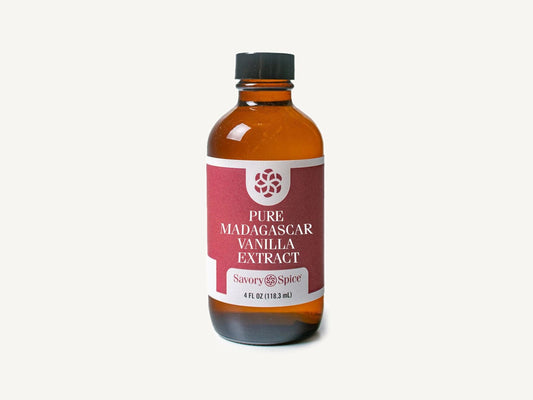
Madagascar Vanilla is the benchmark: rich, smooth, and classically vanilla. There are subtle tobacco-like undertones and sweet, prune-like notes in the background, but the foreground is the creamy, rounded flavor most people recognize from good vanilla ice cream. Madagascar beans account for roughly two-thirds of global vanilla production and are the variety called for in most baking recipes.
MexicanVanilla comes from the same Vanilla planifolia species as Madagascar but has a noticeably different flavor. It's mellow and smooth, with spicy, woody undertones and a distinctive cinnamon quality. It pairs well with warming spices: chocolate, cloves, cardamom, cinnamon. It also does something unexpected in tomato sauce, cutting acidity and adding depth in a way that surprises people the first time they try it.
UgandanVanilla is Vanilla planifolia grown in Kampala, Uganda. What distinguishes it is a higher-than-average vanillin content and notably rich cocoa notes with dried fruit character. It's sweeter and more chocolatey than a typical Madagascar bean. Uganda has two growing seasons per year rather than one, which means fresher beans and more reliable supply. Our Ugandan Vanilla Beans are sourced directly from over 700 local farmers who are compensated fairly, with many of those workers being women and some the sole breadwinners in their households.
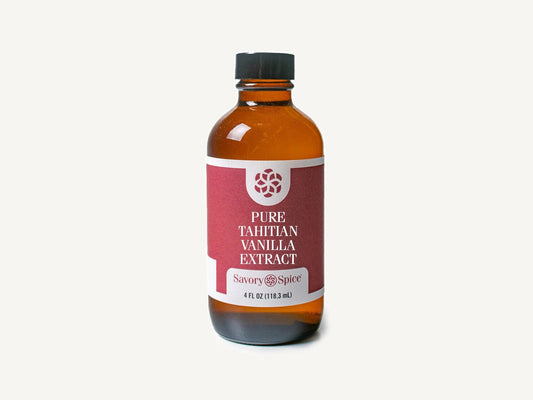
TahitianVanilla is a different species entirely (Vanilla tahitensis). It's a natural hybrid grown primarily on the island of Taha'a in French Polynesia, only 35 square miles. The flavor is fruity and floral, with citrus, bergamot, and candy-like notes. It's the most distinct from the classic vanilla profile and is at its best in fruit-based desserts or any application where you want the vanilla to stand out on its own.
What is the difference between vanilla beans, extract, paste, and powder?
Vanilla comes in four main forms. They're interchangeable in terms of flavor concentration, but each has strengths depending on what you're making.
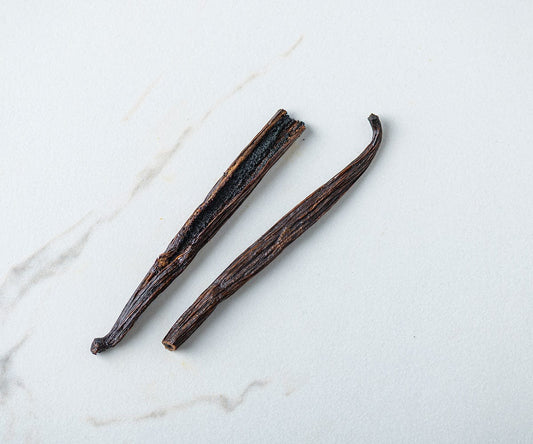
Whole Vanilla Beans are the most intense form and require the most work. You split the pod and scrape out the seeds, called vanilla caviar, and use them directly. Beans are ideal when you want visible flecks in the finished dish (custard, ice cream, whipped cream, frosting) or when you're infusing flavor into a liquid like cream or milk for custard. Don't discard the spent pod: it still carries flavor and can infuse a jar of sugar or a pot of coffee grounds with gentle vanilla warmth.
Vanilla Extract is the default for most baking. It disperses evenly through batters and doughs, holds up through oven heat, and brings vanilla's characteristic balancing effect to the whole dish–the way salt balances savory food, vanilla balances sweet. One teaspoon changes the flavor of an entire batch of cookies.
"[Pure Madagascar Vanilla Extract] is my go-to for baking. It deepens the flavor of brown butter chocolate chip cookies and adds a smooth, fragrant touch to homemade cinnamon rolls." - Janet Johnston, Co-Founder
It's also the extract in our recipe for Espresso Ice Cream. Vanilla is what gives it a proper bottom note that keeps it from tasting like coffee flavoring rather than actual ice cream.
Espresso Ice Cream
Recipe by Savory Spice Test Kitchen
A five-minute espresso bloom with espresso brittle shards and a tableside affogato pour creates a sweet-and-savory dessert moment.
Vanilla Bean Paste is the middle ground between extract and beans: full liquid concentration with real vanilla seeds suspended in it. It's alcohol-free, swaps 1:1 for extract, and gives you the flavor of extract plus the visual appeal of bean flecks. Best used in vanilla recipes when the flecks matter, such as crème brûlée, panna cotta, vanilla buttercream, homemade ice cream.
This recipe for Banana Cream Pie with Salted Bourbon Whipped Cream uses the paste in both the custard filling and the whipped cream, which shows off what it does in a dairy-forward dessert where those flecks are visible in every component.
Banana Cream Pie with Salted Bourbon Whipped Cream
Recipe by Savory Spice Test Kitchen
Classic banana cream pie with a graham cracker crust and a kick of Bourbon Barrel Smoked Salt adds warm depth. The...
Vanilla Bean Powder is vanilla extracted from Madagascar beans and dried. It's sugar-free and alcohol-free, making it the right choice for dry applications: homemade baking mixes, spice rubs, latte powders. It also dissolves easily into coffee and tea. Use the same amount as you would extract. Our recipe for Cookies & Cream Brigadeiros uses the vanilla powder alongside black cocoa. It blends evenly into the chocolate base without adding any liquid to a recipe that needs to stay firm enough to roll.
The standard vanilla substitution ratio: 1 vanilla bean = 1 Tbsp extract = 1 Tbsp paste = 1 tsp powder.
If you run out of vanilla entirely, almond extract or maple syrup can approximate the balancing effect in baking, though neither replicates the specific flavor. Other extracts– Almond, Orange, Hazelnut–each bring their own direction rather than substituting for vanilla directly.
What is the difference between pure vanilla, natural vanilla flavor, and double-strength vanilla?
Pure Vanilla Extract is defined by the FDA: at least 35% alcohol and at least 100 grams of vanilla beans per liter, with no other flavorings. Those standards exist to protect the name. Pure vanilla is expensive because vanilla beans are expensive, and a quality pure extract reflects that cost in the flavor.
Natural Vanilla Flavor sits just below that threshold. It contains vanilla beans plus other plant-based natural flavors and propylene glycol, which helps the oil-soluble flavor compounds disperse evenly in liquid. It's not "pure" by the FDA definition, but it's all-natural and genuinely good for everyday baking. It's a reasonable choice when you're making large batches of cookies, quick breads, or pancakes where the vanilla is a supporting note rather than the star.
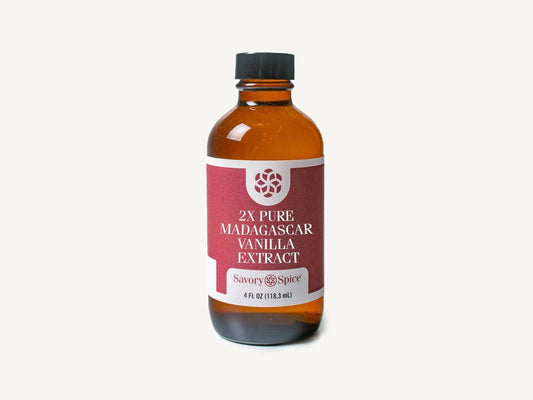
2X Pure Madagascar Vanilla Extract uses twice the vanilla beans of a standard single-strength extract, producing double the concentration. If a recipe calls for one teaspoon, use half. Or go the full amount when you want the vanilla to be unmistakable, like meringues, vanilla custards, vanilla cakes, frostings where vanilla is the featured flavor. It's also useful when you need maximum flavor without adding extra liquid to a recipe.
Our recipe for Choose-a-Flavor Meringue Cookies uses double-fold vanilla, and meringue is a good test case for extract quality because there's nothing to hide behind.
Choose-a-Flavor Meringue Cookies
Recipe by Ashlee Redger, Savory Spice Test Kitchen
Can you add your own flavor to meringue cookies? You sure can. These flavored meringue cookies are sweet,...
How we make our extracts differently: Most commercial vanilla production uses heat to speed up extraction, which damages delicate flavor compounds and often requires adding sugar to compensate. Our process uses cold extraction and slow percolation over nearly a month–no heat, no pressure, no added sugar. A vanilla bean holds about 300 flavor compounds; cold extraction preserves as many of them as possible.
How does vanilla extract change the flavor of cookies and ice cream?
It's the most common question about vanilla: does a teaspoon in a big batch of dough actually matter? It does, but not in the way most people expect. In cookies, vanilla doesn't usually read as a distinct flavor. It works on the fat-soluble flavor compounds from butter and eggs, deepening and rounding what's already there. You don't notice vanilla when it's present; you notice something flat when it's missing.
Brown butter and vanilla are a particularly effective combination. When butter browns, it produces caramel and toasted notes. It's the same aromatic direction that high-quality vanilla extract already carries. Put both in the same dough and you get layered complexity: the vanilla isn't competing with the browned butter, it's amplifying it.
For ice cream, vanilla is often the entire flavor, which means there's nowhere for a flat extract to hide. The form you choose matters here: for churned ice cream made with whole vanilla beans or paste, the visible flecks and concentrated flavor are part of the experience. For no-churn ice cream, extract is actually the better call. The alcohol lowers the freezing point slightly, which reduces ice crystal formation and keeps the texture smooth and scoopable without a machine.
Split the bean lengthwise down the center using a sharp paring knife, leaving the tips intact. Use the back of your knife, not the blade, to scrape the seeds from the pod, running from top to bottom in one clean motion. Those dark seeds are the vanilla caviar: concentrated flavor in visible form.
Once scraped, the pod still has plenty of life left. Common uses for spent pods: drop one into a jar of sugar and leave it for a week (this is how vanilla-infused sugar is made at home), add it to your coffee grounds before brewing, steep it in warm cream or milk when making custard, or add it to a bottle of vodka to start a homemade extract.
Storage rules: keep whole beans in an airtight container away from heat and sunlight. Never refrigerate or freeze vanilla beans. Cold temperatures kill the flavor enzymes in the bean, causing it to dry out and lose its aromatic character. Properly stored, Grade A beans stay pliable and fragrant for months.
For a recipe to use them in, try our Cinnamon Vanilla Crunch Ice Cream. It's a good example of the steeping technique. Whole Madagascar Vanilla Beans infuse the cream base before churning, and Spiced Vanilla Bean Sugar gets baked into a cinnamon brittle crunch that folds in at the end.
What is vanilla bean sugar, and what can you use it for?
Vanilla bean sugar is sugar infused with real vanilla–vanilla beans plus vanilla extract–slowly dehydrated so the flavor fully absorbs and the sugar dries back to its normal consistency. It has a woody, floral sweetness that plain white sugar doesn't have, and it carries that quality into everything you use it for.
The most versatile application is coffee. Vanilla Bean Sugaras a sweetener replaces both the sugar and any flavored syrup in one step, without artificial flavoring or excessive sweetness. It works equally well for rimming cocktail glasses, caramelizing the top of crème brûlée, sprinkling on fresh fruit, or dusting the tops of cookies and scones before they go in the oven. Swap it for plain white sugar in any baking recipe and the vanilla note carries through the whole thing.
Spiced Vanilla Bean Sugar starts with the vanilla sugar base and adds cinnamon, allspice, mace, and cardamo–we call it cinnamon sugar all grown up. It's better in coffee than standard cinnamon sugar, better on toast, better on oatmeal. Use it in apple cake, banana bread, pumpkin muffins, or any recipe where warm spices and vanilla belong together. Substitute it 1:1 anywhere plain sugar is called for.
Yes. The process is fairly simple and the result is genuinely good. Split 5-7 vanilla beans lengthwise and submerge them in 12 ounces of your chosen spirit in a sealed glass jar. Set it somewhere cool and dark. Shake gently once a week.
The minimum steeping time is one month, which produces a usable extract. At three to six months it's noticeably better. At a year it's excellent. As you use the extract, top it off with more spirit. The flavor keeps developing as long as the beans are submerged.
Your choice of spirit shapes the final flavor. Vodka is the most neutral, letting the vanilla come through cleanly. Bourbon adds barrel notes–caramel, oak, baking spice–that complement vanilla's natural richness. Dark rum adds warmth and a hint of sweetness.
A good starting point for pairings: Tahitian beans in vodka, Madagascar in bourbon, Mexican in dark rum.
Homemade extract won't reach the concentration of a cold-extracted commercial pure vanilla, but it works well in most baking applications and makes a thoughtful gift. The full step-by-step guide, including container selection, bean ratios, and how to strain and label, can be found here in our DIY Vanilla Extract tutorial.