Most kitchens keep a single jar labeled "Oregano."
It does fine for pizza and pasta, then quietly falls flat in chili, tacos, and anything built around cumin–because those dishes are calling for a completely different herb.
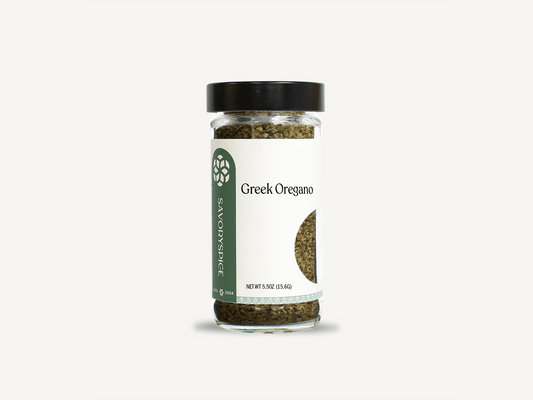
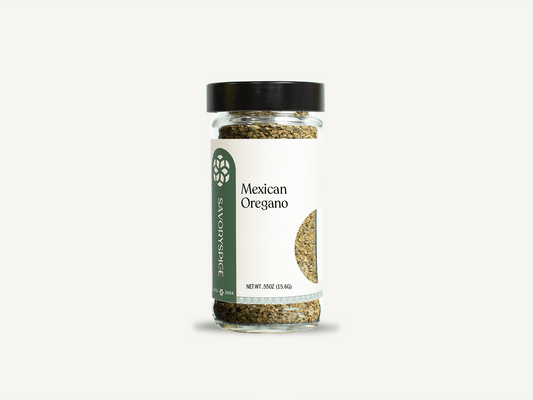
Greek Oregano and Mexican Oreganoshare a name and a general appearance, but they come from different plant families and behave much differently in cooking applications. Knowing which one to reach for in a specific recipe changes the flavor of what ends up on the plate.
What is the difference between Greek Oregano and Mexican Oregano?
They share a name, but not a family. Greek Oregano (Origanum vulgare) belongs to the mint family. It's he same broad family as basil, thyme, rosemary, and marjoram. Mexican Oregano (Lippia graveolens) comes from the verbena family, more closely related to lemon verbena. But the flavor overlap is real–both are aromatic, earthy, and used to season savory dishes– yet the botanical difference shows up clearly on the palate.
Greek Oregano is milder, sweeter, and more familiar to most American home cooks. It's the herb in the pizza spice shaker, in Italian herb blends, and in most Mediterranean cooking. Mexican Oregano is bolder and more complex: earthier, slightly citrusy with an almost lime-adjacent quality, less bitter, and stronger overall. It's a key component in chili powder, Taco Seasoning, and authentic Southwestern cooking, where its brightness cuts through fat and heat in a way that Greek oregano simply doesn't.
The confusion is understandable. Most grocery stores carry a single "oregano" without specifying the variety, and it's almost always Greek.
Many home cooks have used it for everything, including Mexican and Southwestern dishes, without knowing they were working against the recipe.
What does Greek Oregano taste like?
Greek Oregano is earthy and aromatic, with mild sweetness and a light citrus note. It's pungent without being too sharp. It's the kind of herb that deepens a dish rather than announcing itself. When you smell a good pizza or a slow-simmered tomato sauce, you're largely smelling Greek oregano.
What is Greek Oregano best used for?
Greek Oregano performs best in tomato-based applications: pasta sauces, pizza, shakshuka, braised tomatoes. It blooms quickly in olive oil and adds warm, herbal background to anything with garlic and tomatoes. It also holds up well as a dry rub or marinade component. Oregano, olive oil, and lemon is one of the simplest and most reliable flavor combinations in the Mediterranean tradition, particularly on chicken and lamb.
This herb is also a primary component in three of our Italian seasoning blends: Italian Herbs, Pizza Herb Topper, and Cantanzaro Herbs–all of which use it to anchor their broader Mediterranean profile.
One practical note: when substituting dried Greek oregano for fresh, use ⅓ the amount. Dried herbs are more concentrated, and Greek oregano in particular can become bitter in large quantities.
Mexican Oregano is bolder and more complex in flavor than Greek. It's earthy and robust, with a distinct citrusy note that reads almost like lime. It's less bitter and stronger overall, and it asserts itself in a dish rather than blending into the background. This is actually the variety that's technically not oregano at all: Mexican oregano is from the verbena family, and "oregano" here really refers to the flavor, not the plant genus.
"I love [Mexican Oregano]… even though it's not technically oregano! The spice world is full of surprises, but what matters most is flavor. I'll swap it in for Greek when it makes sense, like in chili recipes. It's also one of my top three favorite aromas: earthy, citrusy, almost lime-like, and totally unmistakable." - Mike Johnston, - Co-Founder
What is Mexican Oregano best used for?
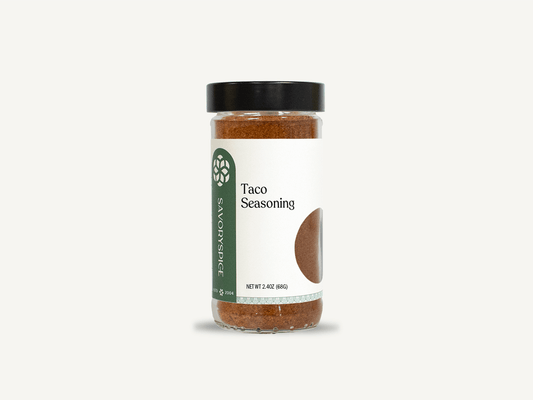
Mexican Oregano has earthiness and citrus that make it a natural flavor partner for cumin, chile powders, and dried chiles–which is why it's a key ingredient in Chili Powder and Taco Seasoning, not Greek oregano.
It belongs in any Mexican or Southwestern application: chili, tacos, enchiladas, black beans, pozole, salsas, roasted meats. Our recipe for Green Chile Sauce builds Mexican oregano into the sauce base alongside toasted cumin seeds and Hatch Green Chile Powder.
It's what gives the sauce its Southwestern character. Our recipe for authentic Colorado Green Chili uses a full tablespoon of it in the pork braise, and our recipe for Family Style Fajitascarry it in the marinade alongside the fajita seasoning.
When a recipe says "oregano," which should you use?
If a recipe just says "oregano" without specifying, use Greek.
It's the default in American, European, and Italian cooking–the pantry standard that most recipes are written against. Pasta sauces, pizza, Mediterranean marinades, and roasted vegetables all call for the Greek version when they say "oregano."
The exception is Mexican, Tex-Mex, and Southwestern cooking. If a chili or taco recipe calls for oregano, it almost certainly means Mexican.
Those recipes were written for the verbena-family herb, and Greek oregano in their place will produce a noticeably milder, flatter result without the citrus-and-earth character that defines the cuisine.
A note on Italian oregano, which comes up frequently: it's actually a hybrid of oregano andMarjoram. It's milder and slightly sweeter than Greek oregano. You can replicate it by combining Greek oregano and marjoram. For most purposes, Greek oregano is the more versatile pantry choice between the two.
Can you substitute Greek Oregano for Mexican Oregano?
In a pinch, yes–with the understanding that the flavor will shift.
Greek Oregano is milder and sweeter, so using it in place of Mexican Oregano will produce a softer, less assertive result. In a chili or taco seasoning where Mexican oregano's boldness is doing meaningful flavor work, the substitution is noticeable. In a soup or stew where oregano is one of many background ingredients, it's less significant.
Going the other direction–substituting Mexican oregano in place of Greek–tends to read much bolder in flavor than expected. The dish won't be wrong, but it will land as earthier and more assertive than a Mediterranean recipe intends.
The closest neutral substitute for either is Marjoram, which is botanically close to both and is sometimes called "wild marjoram" as an alternate name for Greek oregano. It's the most flavor-consistent swap across applications. For Mexican oregano specifically, a small amount of dried Thyme can also help bridge the citrusy-herb gap if that's what you have available.