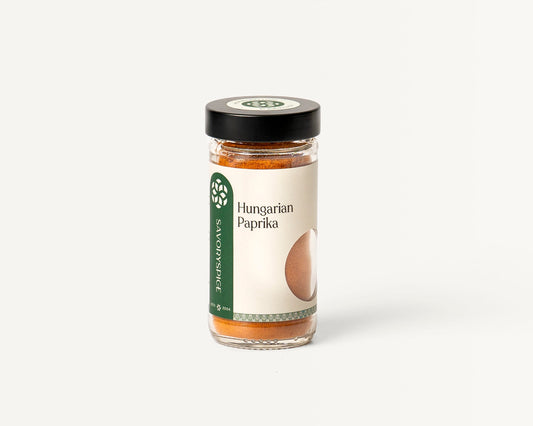
Most people have a jar of paprika in their pantry that they're not quite sure what to do with (beyond sprinkling it on deviled eggs and potato salad). But paprika deserves better. It's a ground spice made from dried red peppers, ranging from sweet and mild varieties similar to bell peppers to smoky and spicy ones depending on origin and variety.
It's foundational to Hungarian, Spanish, and American BBQ cooking, and a building block in hundreds of seasoning blends. The type of paprika you use matters: each variety has its own distinct character, and knowing the difference changes how you cook with it.
What Is Paprika Made From?
Paprika is made by drying and grinding fully ripened red peppers. Specifically varieties of Capsicum annuum, the same species that gives us bell peppers, cayenne, and most of the chiles in your spice rack. What separates paprika from chili powder or cayenne is the variety of pepper used: paprika starts with sweeter, milder, fleshy peppers rather than intensely hot ones.
The flavor differences between paprika types come largely from "terroir," which is the same concept used in wine to describe how a plant's environment, climate, and soil shape its final taste. Hungarian paprika, California paprika, and Spanish paprika are all made from different pepper varieties grown in different climates, and each develops its own distinct character as a result. The region matters as much as the pepper itself.
What Are the Different Types of Paprika?
There are several types worth knowing, each suited to different uses.
Hungarian Paprika is the classic. It's the one most Americans picture when they think of paprika. We carry Kulonleges grade, one of the highest classifications available, with a sweet, slightly fruity flavor and a gentle lingering warmth. This is the paprika for Hungarian goulash, chicken paprikash, and all-purpose seasoning blends where you want depth without heat. In Hungary, some families keep paprika on the table alongside salt instead of black pepper. That's how central it is to the cuisine.
California Paprika is made from a hybrid pepper variety indigenous to California. It has a more vibrant red color, slightly more heat than Hungarian, and a bolder flavor with a mild bitterness and peppery finish. It's the right choice for Southwestern dishes, BBQ rubs, and chili powder blends where you want more presence of paprika flavor.
Smoked Spanish Sweet Paprika (or Pimentón de la Vera Dulce) is made by smoking the peppers over oak before grinding, which is what gives it that deep, rich smokiness rather than the heat from hot peppers. It's what makes Spanish chorizo taste like chorizo, and what gives patatas bravas their distinctive character. The underlying sweetness of the pepper is still there, but smoke leads.
Smoked Spanish Hot Paprika follows the same oak-smoking process but starts with a hotter pepper variety. Smoky and genuinely spicy (unlike other paprika), with a flavor profile similar to chorizo. It's rich, bold, and building. If you want smokiness and real heat in one spice, this is it.
It ultimately depends almost entirely on which type you're using.
Hungarian Paprika is sweet, slightly fruity, and warm. It's similar in character to a ripe red bell pepper but more concentrated.
California Paprika is bolder, with more noticeable heat and a mild bitterness on the finish.
Sweet Smoked Spanish Paprika is rich and lingering, with smoke as the dominant note and sweetness underneath.
Hot Smoked Spanish Paprika adds heat to that smoky profile, with a chorizo-like richness that builds on the palate.
One universal rule: fresh paprika has real flavor, and old grocery store paprika typically doesn't. We've genuinely been asked whether paprika has any taste at all. It does, but only if it's fresh enough to prove it. If your jar smells like nothing when you open it, it won't taste like anything either. Time for a fresh jar.
Is Paprika Spicy?
Most paprika isn't, or barely so. Hungarian and California paprika are both mild. They add flavor and color without meaningful heat. Sweet Smoked Spanish paprika is also mild. Our spicier option is Hot Smoked Spanish Paprika, which delivers genuine heat. If you're looking for more spice, sprinkle in a little Cayenne Chile Powder.
If a recipe simply says "paprika" without specifying which kind, it almost always means the mild sweet variety. When smoked or hot paprika is intended, recipes will typically call it out by name.
Paprika is one of the most versatile spices in the kitchen. A few of its most important roles:
As a seasoning base. Paprika is the unsung hero in hundreds of spice blends. From BBQ rubs, Cajun seasoning, and fajita blends, to Moroccan spice mixes and Indian tandoori rubs. It contributes color, mild sweetness, and body without overpowering other spices. Most seasoning blends that are red or orange in color have paprika as a primary ingredient.
In Hungarian and Eastern European cooking. Beef paprikash, chicken paprikash, and Hungarian goulash are all built around sweet paprika. It's not a background spice here. It's the main flavor event, added in quantity to build the characteristic deep red sauce.
In Spanish and Mediterranean cooking. Smoked paprika is essential to patatas bravas, romesco sauce, and dishes that need smoky depth without a fire. A drizzle of good olive oil and smoked paprika over hummus is one of the simplest and most rewarding things you can do with the spice.
In BBQ rubs. California paprika especially holds up well in dry rubs, adding vibrant color and mild sweetness that caramelizes beautifully over direct heat. Smoked paprika can deliver smoky flavor in indoor cooking where a grill or smoker isn't an option.
As a finishing garnish. The deviled egg and potato salad sprinkle isn't wrong. As long as the paprika is fresh enough to contribute real flavor and not just color. A jar that's been open for two years won't do much with flavor or color either way.
How to Cook With Paprika
Add it early for depth, late for brightness. Paprika bloomed in oil or fat at the start of cooking contributes to the underlying flavor of the whole dish. Added at the end, it gives a fresher, more distinct pepper note.
Don't burn it. Paprika scorches quickly in dry heat and turns bitter fast. If you're blooming it in a pan, use moderate heat and don't let it sit dry for more than 30-60 seconds. Always add it to fat or liquid before it has a chance to burn.
Fat helps. The fat in meat and dairy balances paprika's natural bitterness and carries its flavor through a dish. In a low-fat preparation, use a lighter hand and taste as you go.
How much to use. Paprika is mild enough that the range is wide. In a dry rub, 1-2 tablespoons per pound of protein is standard. In a sauce or stew, start with 1 teaspoon and adjust. As a garnish, a light dusting is enough.
What Can You Substitute for Paprika?
The right substitute depends on what you need paprika to do.
For color and mild flavor in a rub or seasoning, Ancho Chile Powder is the closest match. It's mild, slightly fruity, and it won't add significant heat. The flavor leans a little more toward dried raisin than fresh pepper, but it works well in most applications.
For paprika in a BBQ rub, your favorite BBQ seasoning blend can substitute here, as most of them already include paprika as a primary ingredient, like Kansas City BBQ Rub.
For paprika in a sauce or stew, pureed roasted red peppers are your best swap. They bring the same sweet, mild pepper character in a different form. Reduce the liquid in your recipe slightly to compensate.
Not effectively. Paprika is sweet and mildly fruity; cumin is earthy, warm, and pungent. They're not in the same flavor family. Better cumin substitutes include caraway seeds, coriander, or chili powder (which contains cumin as a primary ingredient).
Can you substitute paprika with chili powder?
Not on its own. Chili powder is a blend that includes paprika but also cumin, garlic, and Mexican oregano. In a pinch, you can build a rough equivalent by combining paprika with cumin, garlic powder, and dried oregano in roughly equal parts.