Ask ten people what's in chili powder and you'll get ten different answers, most of them incomplete.
The typical blend for chili powder is five ingredients: dried chile peppers, garlic, cumin, paprika, and Mexican oregano.
Pure chile powder (note the 'e' instead of the 'i') is something different: it's a single dried chile variety, ground: ancho, guajillo, jalapeño, and Hatch green for example. We carry the full range of both, and knowing which to reach for changes what ends up in your bowl.
What is Chili Powder?
The name goes back further than most people realize. Chiles were a foundational crop of the Aztec empire, and when Spanish explorers encountered them through the Columbian exchange, they took the name directly from Nahuatl, the language of the Aztecs.
The spelling evolved from there: British English kept "chilli" (two l's), Spanish-speaking regions settled on "chile," and Americans shortened it to "chili." The Southwest, with its strong Spanish influence, held onto "chile," which is why you'll still see both spellings on spice labels today, and why we think the distinction is worth making.
Chili powder (the blend) emerged as a convenient, pre-measured seasoning for chili con carne in the American Southwest and Texas in the late 1800s, and the five-ingredient formula it settled on has remained the template ever since. Ancho Chile Powder is the base, as it's the sweetest and most mild dried chile, contributing color and depth without pushing the heat. Garlic and Cumin layer in savory warmth.Paprika (itself a mild, sweet chile) adds more color and a touch of sweetness. Mexican Oregano, which is woodier and more citrusy than the Mediterranean variety, provides the herbal finish. The five ingredients work as a unit; take any one away and the blend reads as incomplete.
Mild Chili Powder (Salt-Free) is our most accessible entry point: earthy, garlicky, bittersweet, and savory with gentle warmth. No added salt, no onion. Ingredients: chile peppers, garlic, cumin, California paprika, and Mexican oregano. It's the base for our Award-Winning Chili recipe that layers smoked paprika, cumin, coriander seeds, and cayenne on top of the blend, using the chili powder as a foundation rather than a shortcut.
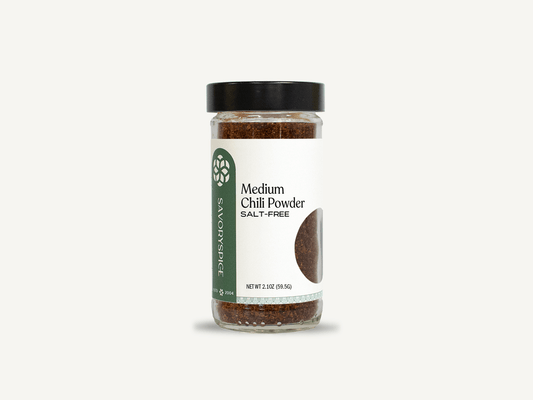
Medium Chili Powder (Salt-Free) is our top-selling chili powder, and uses the same base as the Mild, but adds more cayenne–bringing the heat to a moderate level without altering the overall character. It's the more versatile everyday option.
Chili powder is earthy, savory, and deeply garlicky. Its flavor isn't dominated by heat the way some people expect. The cumin and garlic are doing as much work as the chile peppers; together they create a rich, layered base that reads as warm and complex rather than simply spicy. The paprika contributes a subtle sweetness and additional red color, while the Mexican oregano adds a dry, slightly herbal finish.
What chili powder is primarily about is depth. A bowl of chili seasoned with it should taste rich, full, and multidimensional, with heat as one element rather than the whole story. The mild version has some warmth that's noticeable but not distracting; the medium version brings a kick that builds and lingers without overtaking the dish.
One useful thing to know: the flavor of chili powder improves with time in the pot. Flavors meld and deepen significantly after 30-45 minutes of simmering, and even more noticeably by the next day. If you're making chili for a crowd or a cook-off, making it a day ahead isn't just convenient. It's the technique and gives you deeper flavor.
What Are the Different Types of Chile Blends?
Pure chile powders are single dried chiles, ground — no garlic, no cumin, no oregano. They're used as standalone ingredients and as building blocks for custom chili blends. Here's how the ones we carry differ.
Red Dried Chiles
Ancho Chile Powder is the base of most commercial chili powder blends, and one of the most widely used chiles in Mexican cooking. Made from dried poblano peppers, it's the sweetest and mildest of all dried chiles. It's fruity with plum and raisin notes, and about a 1 out of 10 in heat. Its dark, rich color and mild flavor make it a natural thickener for moles, enchilada sauces, and long-simmered chilis.
It appears in our Whatcha' Got Chili Potrecipe, which is a the customer award-winning dish from our previous Portland-Sellwood spice shop location's 2016 cook-off. It's used alongside mild chili powder, chipotle powder, and smoked paprika in a four-meat, three-bean chili with a built-in sweet molasses sauce.
Whatcha’ Got Chili Pot
Recipe by Bunnie Pollock, Savory Spice - Sellwood/Portland, OR customer
This was the customer award-winning chili recipe from the Savory Spice Sellwood/Portland, OR store's 2016 chili...
Guajillo Chile Powder is tangy and pleasantly sharp, with a distinctive berry-and-pine flavor that sets it apart from the sweeter ancho. Mild-to-medium in heat at a 3-4 out of 10. In Mexico, guajillo is the second most commonly used dried chile after ancho, and it shows up in pozole, enchilada sauce, and braised meats as much as in chili. The flavor is more assertive, a little goes a long way.
Mild Red New Mexican Chile Powder comes from chiles grown in and around Chimayo, New Mexico. The seeds and stems are removed before grinding, producing a slightly sweeter and smoother flavor than most red chile powders. It's earthy, has a gentle heat, around 3-4 out of 10 in heat level.
Hot Red New Mexican Chile Powder is the same Chimayo variety, but hotter–about a 6-7 out of 10–while retaining the slightly sweet, smooth character of the mild version. It anchors our recipe for Southern Gold Pork Chili, a pork and black bean chili built around our Southern Gold Barbecue Sauce, where the chile's heat balances the tangy sweetness of the mustard-based sauce.
Hatch Green Chile Powder is made from authentic green chiles harvested in New Mexico's Hatch Valley, the "Green Chile Capital of the World." Before they ripen to red, they are dehydrated at their peak flavor. Rich and earthy with a roasted quality, it rates a 6-7 out of 10 in heat level. The harvest season for fresh Hatch green chiles lasts only a few weeks at the end of every summer, so having the powder in your pantry means that green chile flavor is available year-round.
It's the featured ingredient in our authentic Colorado Green Chili recipe. A slow-simmered pork and tomatillo chili with cumin and Mexican oregano that's a Colorado classic.
Jalapeño Chile Powder is made from dehydrated jalapeños, native to Mexico and named after Jalapa, the capital of Veracruz. Fruity and medium-hot at a 4-5 out of 10, with the familiar jalapeño flavor in shelf-stable powder form. Use it anywhere you want jalapeño heat without the fresh pepper: salsas, cornbread batter, taco meat, dips, or any chili that needs a punch of bright green chile heat.
Cayenne Chile Powder is the heat-adjustment tool. At 40,000 Scoville units, it sits at about a 4-5 out of 10. Significantly hotter than either chili powder blend and has a zesty, direct heat character without contributing much additional flavor. Use it to dial up the heat in any recipe without changing the blend's profile: stir a pinch into any chili powder blend to get it spicier, or add it incrementally to a pot of chili once everything is in.
Add it early. Chili powder releases its full flavor as it cooks. Unlike finishing spices, it needs time in fat and liquid to integrate. In a chili or stew, it goes in before the tomatoes and broth, once the meat and aromatics have some color. A brief 30-60 seconds in hot fat before liquid is added makes the flavor noticeably more developed and evenly distributed. Added late to a sauce, the blend tastes flat and powdery.
How much: 2-4 tablespoons per quart of chili is the starting point; adjust to taste after the first 30 minutes. As a dry rub component, start with a 2:1:1 ratio of chili powder, cumin, and garlic powder, then add smoked paprika and brown sugar to complete the base.
The chili cook-off record. We've accumulated quite a few competition winners over the years, and the recipe collection shows how much range chili powder can anchor.
Our Award-Winning Chili recipe is our most essential starting point. Ground beef, fire-roasted tomatoes, two types of beans, and mild or medium chili powder. The recipe builds the spice layer on top of the chili powder with separate additions of smoked paprika, cumin, coriander, and cayenne rather than relying on the blend alone.
Chili Recipes
3 Bean Chuck Eye Chili won the 6th Annual Cook-Off in 2018 at our old Portland-Sellwood spice shop location. It uses ¼ cup Medium Chili Powder, amplified by fresh jalapeños and two cans of diced green chiles. Slow cooker, four hours, serves eight.
South End Brewski Chiliis the most unexpected entry: a low-sodium, Charlotte, NC–inspired beer chili built around 4 tablespoons of Mild Chili Powder and a full bottle of light or amber beer in the braising liquid. The beer adds a malty background note that deepens the chili powder's earthiness.
South End Brewski Chili
Recipe by Abbey Cochran
This low-sodium, flavor-packed chili is inspired by the South End neighborhood in Charlotte, NC, which is...
Smoky Turkey Chili is the perfect weeknight recipe for a bowl of chili. Made in just under 30 minutes with Mild Chili Powder plus Red Rocks Hickory Smoke Seasoning, ground turkey, pinto beans, and Tomato Powder for body. The smoke seasoning does the work of a long simmer in a fraction of the time.
For fall chili season, Pumpkin Pie Spice Chili pairs 2 tablespoons of chili powder with 1 tablespoon of Pumpkin Pie Spice, a blend of cinnamon, allspice, and cloves working alongside the chili powder's earthy savory character. It sounds unusual, but it works remarkably well. And if you've dipped a cinnamon roll into a bowl of chili, you'll understand what we're talking about!
Pumpkin Pie Spice Chili
Recipe by Suzanne Klein, Savory Spice Test Kitchen
Pumpkin Pie Spice isn't just for sweets! The warming flavor of cinnamon, allspice, and cloves are perfect for an...
Chili is the obvious application, but chili powder is built to handle anything in the earthy, savory Tex-Mex register.
As a dry rub: Chili powder is one of the primary ingredients in Tex-Mex and Texas-style BBQ rubs. It brings the earthy color and depth that brown sugar and smoked paprika alone can't quite provide. Mix it with cumin, garlic powder, smoked paprika, and a little brown sugar for an all-purpose rub that works on brisket, pork shoulder, ribs, and chicken.
On beans: 1-2 tablespoons of chili powder into a pot of dried or canned beans, simmered in from the start, is one of the simplest and most flavorful applications of chili powder there is. It's the foundation of charro beans, refried beans, and seasoned black beans. The beans absorb the blend over time the same way a chili pot does.
In dips and sauces: Stir chili powder into sour cream or Greek yogurt for a quick chile crema. Blend it into mayonnaise with lime juice for a Tex-Mex style aioli. Or, add it to queso for earthy depth alongside cayenne. Even small amounts, from ¼ to ½ teaspoon, are noticeable.
On vegetables: Chili powder on roasted sweet potatoes, corn, zucchini, or cauliflower adds warmth and color. It's particularly good with a squeeze of lime and a small drizzle of honey to balance the earthiness. The sweet-acid-earthy combination is a reliable fall-back for any roasted vegetable that needs direction.
What Can You Substitute for Chili Powder?
The most practical DIY substitute is a quick blend from pantry staples: 2 parts ground ancho chiles (or another mild dried chile), 1 part cumin, 1 part garlic powder, ½ part paprika, and ¼ part Mexican oregano. A small pinch of cayenne adds heat. This gets close to our blends in flavor without requiring anything unusual.
If you have individual chile powders but not a blend, start with ancho as your base. It's the foundation of most chili powder blends, then add cumin and garlic. Guajillo gives it a tangier edge; cayenne handles heat. The Mexican oregano is the most irreplaceable component; without it, the blend reads as earthier and flatter than the real thing.
For a complete breakdown of how to swap products within the category: from when to reach for pure chile powders vs. blends, which chiles substitute for which, and how to build heat without overpowering a dish . It's all covered in our Spice Swap: Chili Powder guide.