Grilling a great steak isn't complicated, but it does reward attention to a few fundamentals: the right cut for the right method, seasoning that builds a proper crust, and the discipline to pull the steak at the right temperature and actually let it rest. Get those three things right, and everything else is flavor preference.
This guide covers the full range: from the fundamentals of a searing-hot cast iron and butter baste to the patience of a reverse sear on a thick bone-in ribeye, from a 20-minute citrus marinade to a long-weekend carne asada. Along the way, we've mapped our steak-specific seasonings and rubs to the cuts and methods where they work best, and pulled in the recipes from our Test Kitchen that prove each approach actually delivers.
Whether you're cooking for two on a weeknight or running a full steakhouse-style spread for a dinner party, this is the reference to come back to.
Steak Cuts: What You're Working With and How to Cook It
The biggest variable in steak isn't seasoning or technique—it's the cut. Different muscles have different fat content, fiber structure, and ideal thickness, which means they respond differently to heat. Matching the right method to the right cut is the foundation everything else builds on.
Ribeye
Ribeye is the most forgiving steak on the grill. The heavy intramuscular fat bastes the meat from the inside as it cooks, which means it stays juicy even if you pull it slightly past your target temp. For boneless ribeye, cook it over high direct heat. For a bone-in or tomahawk cut, use a reverse sear. Season your ribeye generously—it can handle big flavors without being overwhelmed.
New York Strip
New York Strip is a leaner cut than ribeye with a tighter grain and a more pronounced beefy flavor. It responds well to a high-heat sear and a butter baste. The fat cap on the edge should be rendered before slicing. Press the steak onto its side against the pan or grate for 30-60 seconds to crisp it up.
Sirloin
Sirloin is the everyday workhorse cut of steak: lean, affordable, and adaptable. It benefits from a marinade to add moisture and flavor before hitting the grill, keeping it juicy. It's the cut of choice for steak kebabs where it's cut into cubes and cooked over direct heat.
Tri-Tip
Tri-Tip is a West Coast staple that's underutilized everywhere else. It's a triangular cut from the bottom sirloin with a pronounced grain that runs in two directions. It must be sliced correctly or it gets tough. Santa Maria BBQ tradition calls for a simple rub, medium-high heat, and slicing against the grain across both sections. It's one of the most flavorful cuts on the animal at its price point.
Skirt, Hanger and Flank Steak
Skirt, Hanger, and Flank Steak are thin, long cuts with a coarse, open grain that absorbs marinades exceptionally well. Both should be grilled fast over very high heat, around 4 to 8 minutes per side, and sliced thin across the grain immediately after resting. These are the best cuts for carne asada, steak tacos, churrasco, and any recipe where the steak gets sliced and served with sauces or toppings.
Tenderloin / Filet Mignon
Tenderloin or Filet Mignon are the leanest cut, with virtually no fat. Because it can't self-baste, it benefits more than any other cut from a compound butter finish and careful temperature control. Pull it at an internal temperature of 125-30°F for medium-rare; it will dry out quickly past that point.
Wagyu and American Wagyu
Wagyu and American Wagyu operate by a different set of rules than every other cut of steak on this list. True Wagyu—whether Japanese A5 or American Wagyu crossbreeds—has marbling levels so extreme that the fat renders at a lower temperature than commodity beef, and the flavor is so rich that aggressive seasoning actively competes with it rather than enhancing it. The instinct to season generously works against you here.
A light hand with a simple seasoning like Salt & Pepper Tableside Seasoning, Black Label Smoked Salt & Pepper, or a lighter application of Hudson Bay Beef Spice, is the right approach. Cook over moderate heat rather than screaming-hot heat so the fat renders slowly rather than flaring. Pull it early, around 120-125°F for medium-rare, and slice it thin. With A5 especially, a 6-8 oz. portion is typically enough; the richness is cumulative in a way that a standard ribeye isn't.
The Sear: High Heat, Butter Baste, and a Proper Crust
For most steaks up to about 1½ inches thick, the best method is also the most direct: ripping hot pan, minimal oil, frequent flips, and a butter baste in the final minutes.
This is the technique behind our recipe for The Essential Seared Steak, and it works on ribeye, New York strip, sirloin, and any well-marbled cut where you want maximum crust and a juicy interior.
The Keys to a Proper Sear
Pat the steak completely dry before it goes in the pan. Moisture is the enemy of browning. A paper towel and 30 seconds of drying does more for your crust than almost anything else.
Season the steak the night before if you can. Rub both sides with your seasoning of choice, set it uncovered on a rack in the fridge, and let the seasoning penetrate overnight. If you don't have the time, season at least 45 minutes before cooking. *Seasoning right before the steak hits the pan pulls moisture to the surface and can inhibit crust formation.
For the best sear, use a cast iron skillet or carbon steel pan over medium-high heat. Let it get genuinely hot—right to the point of smoking—before the steak goes in. Add just enough high smoke-point oil (canola, avocado, or grapeseed) to coat the bottom of the pan without pooling.
Flip every 30 to 45 seconds. This sounds counterintuitive, but frequent flipping produces a more even interior cook and builds the crust more evenly than a single long sear per side.
In the final 2-3 minutes, reduce heat to medium-low, add 2 tablespoons of unsalted butter with some fresh herbs and aromatics like garlic, thyme or rosemary, and tilt the pan so the butter pools. Baste continuously—use a spoon to repeatedly pour the foaming butter over the top of the steak with every flip.
Use a thermometer to check your internal temperature. For medium-rare, pull at 130-135°F. The steak will continue to rise a few degrees during rest.
The Essential Seared Steak
Recipe by Michael Kimball, Savory Spice Test Kitchen
Look no further for your go-to steak method. This simple pan-sear with a butter baste results in perfectly tender and...
This is our foundational method for the best sear: a well-marbled ribeye or New York strip seasoned with Hudson Bay Beef Spice,Guard and Grace Steak Rub, or your steak seasoning of choice, seared in a ripping-hot cast iron and finished with a continuous butter baste. The overnight seasoning step is optional but noticeably improves the result—the rub penetrates the meat rather than just coating the surface. Let your steak rest 10 minutes before slicing.
For steaks 1½ inches or thicker, like bone-in ribeye, tomahawk, and other thick-cut strips, the reverse sear gives you more control and a better result than a straight high-heat sear alone.
The idea is simple: cook the steak low and slow first to bring the interior to within 15-20°F of your target temperature, then finish it over high heat to build the crust. Because the interior is already at temperature, you can sear aggressively without overcooking the center.
How to Reverse Sear
Set your oven (or the cool side of a two-zone grill) to 225-250°F. Place the steak on a rack over a sheet pan and cook until the internal temperature reaches 15-20°F below your target. For medium-rare, pull it when the thermometer reads 115-120°F. Depending on thickness, this usually takes anywhere between 25-45 minutes.
Remove the steak and let it rest on the counter for 5-10 minutes while you preheat your grill or cast iron to the highest heat possible. You want it to be screaming hot—this is where the crust happens.
Sear the steak 1-2 minutes per side. Because the exterior has dried out during the oven phase, it will crust faster and more evenly than a cold steak would. Finish with a butter baste in the pan if using cast iron.
Let it rest 5-10 minutes before slicing. For a tomahawk or bone-in ribeye, carve along the bone before slicing.
The best seasonings for reverse sear: Guard and Grace Steak Rub is purpose-built for this method. The sumac and peppercorn notes come through cleanly in the crust without burning during the high-heat finish. Coffee seasonings for steak like Black Dust Cowboy Coffee Rub are the other move here—coffee and chile on a thick seared steak creates a dark, intensely savory crust that's hard to replicate any other way.
When the steak comes off the heat and goes onto a cutting board is when a lot of otherwise good steaks get ruined by impatience. Resting is not optional. A steak cut immediately off the grill loses most of its juices onto the board; the same steak rested 5-10 minutes redistributes those juices back into the muscle. For most steaks, 5 minutes is enough. For a thick bone-in ribeye or a reverse-seared tomahawk, give it 10.
Compound butter is the upgrade that turns a home-grilled steak into something that's steakhouse restaurant-quality. The butter melts into the crust as the steak rests and adds a richness that amplifies everything the seasoning did during the cook.
Hudson Bay Steak Butter
Recipe by Ashlee Redger, Savory Spice Test Kitchen
Great on a steak or a loaf of bread. An easy way to take your meal to the next level.
The simplest compound butter you'll make: one stick of softened unsalted butter combined with 2 teaspoons of Hudson Bay Beef Spice. Roll it in wax paper into a log, chill, and slice off rounds as needed. It keeps in the refrigerator for up to three weeks—make it once and use it all summer. Great on steak, but equally good spread on grilled bread, corn, or a baked potato.
For a pan sauce, don't discard the fond left in a cast iron after the sear. Deglaze with a splash of red wine or beef broth, scrape up the browned bits, and finish with a knob of Hudson Bay Steak Butter for an instant sauce.
If you want something more structured, a batch of our Rich Umami Steak Sauce is worth keeping on hand. This recipe is bold enough to stand up to a heavily seasoned crust without competing with it.
Marinades: When to Use Them and How to Do It Right
Marinades serve two purposes: flavor and, for tougher cuts, tenderization. The acid in a marinade (citrus, vinegar, wine) breaks down surface proteins and allows the flavors to penetrate deeper into the meat. For tender cuts like ribeye and tenderloin, marinades are optional as the fat does the work. For leaner, tougher cuts like sirloin, flank, and skirt steak, a marinade is often what makes the dish work and the steak juicy and flavorful.
A few ground rules, though: do not over-marinate steak. Thin cuts like skirt steak only need 20-30 minutes, not overnight. Marinating too long in an acidic marinade can cause the proteins break down past tenderness into mush. Thicker cuts can go longer, up to 8 hours in the fridge, but rarely benefit from more than that. And always pat your steak dry before it hits the grill. Excess marinade on the surface steams instead of searing.
Roman Pepper Steak Marinade
Recipe by Savory Spice Test Kitchen
While this is the perfect marinade for steak, it's also lovely for infusing Italian flavors into chicken, meaty...
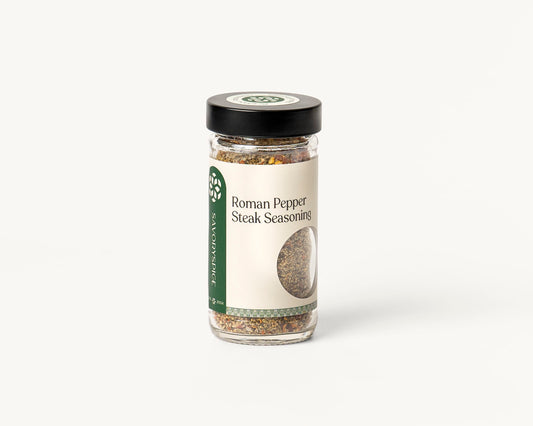
This steak marinade is Italian in flavor profile–white wine vinegar, lemon juice, olive oil, and Roman Pepper Steak Seasoning, which brings black pepper, garlic, and rosemary into the blend. Use this marinade for 20-30 minutes. This is a quick-marinate recipe designed for good-quality steak where you want a distinct flavor layer without masking the beef. This marinade works best on ribeye, strip, and sirloin, and the recipe note is worth paying attention to: it's equally good on chicken, meaty white fish, or grilled vegetables if you're building a mixed grill spread.
Kansas City Steak Marinade
Recipe by Savory Spice Test Kitchen
Fire up the grill with this irresistible, flavor-packed marinade. It’s a go-to for juicy cuts of steak, but don't...
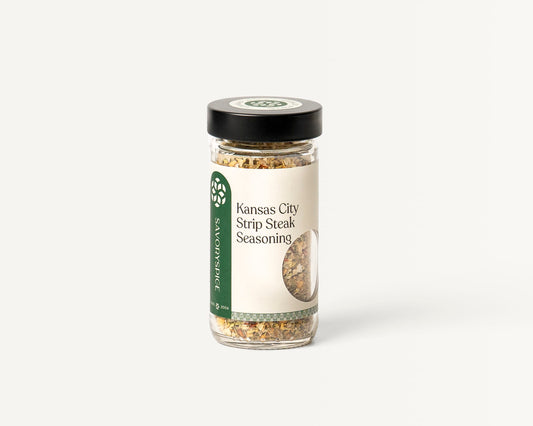
This marinade is the American-style counterpart–red wine vinegar, orange juice, olive oil, a hit of Worcestershire Sauce, and Kansas City Strip Steak Seasoning. Marinate 30 minutes to an hour, wipe off the excess before grilling, and hit the steak with a pinch more of the seasoning right before it goes on the grate to build char. The recipe note is useful: save some leftover marinade and whisk in ¼ cup of mayo for a creamy dipping sauce for grilled vegetables on the side.
Skewers & Other Formats: Steak on the Grill in a Different Form
Not every steak dinner is a whole muscle cut. Skewers, kebabs, steak tips, and cutlet-style preparations open up different cuts and different flavor profiles. Plus, they're often better suited for feeding a crowd or running multiple proteins at once.
Santa Maria BBQ is a Central California tradition built around open-flame cooking, simple seasoning, and cuts like tri-tip and sirloin. These skewers—cubed sirloin that's marinated in Santa Maria Butcher's Rub, threaded with par-cooked potatoes and mushrooms, and finished with a Santa Maria butter baste—is something you can run on any backyard grill. The key technique: par-cook the potatoes first so they're tender enough to eat but still hold on the skewer, then brush with the seasoned butter halfway through grilling for a glazed finish.
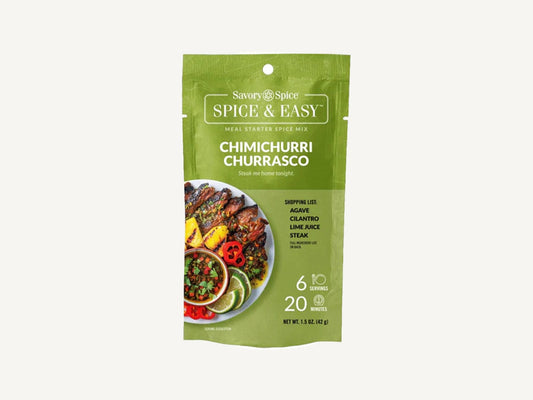
The Argentinian take: cubed steak marinated in a Chimichurri Churrasco sauce built with cilantro, lime, agave, and olive oil, then threaded with pineapple and red bell pepper and grilled over high heat. The reserved sauce serves double duty as a finishing drizzle. The pineapple is doing more than adding sweetness. The acidity and sugar caramelize against the grill and cut through the richness of the beef. Serve with rice and the reserved chimichurri sauce for an impressive, full churrasco-style presentation.
For a simpler take on the skewer format, the Grilled Pepper Steak Kebabs use sirloin or ribeye cubed and marinated in a lemon-soy-Worcestershire base with Hudson Bay Beef Spiceor Santa Maria Butcher's Rub, threaded with peppers and onion, and grilled 5-7 minutes total. A good weeknight option when you want grilled steak without committing to a whole cut.
Grilled Pepper Steak Kebabs
Recipe by Savory Spice Test Kitchen
A choice of BBQ rubs elevates simple and summery steak kebabs without any extra effort!
Carne Asada: Skirt Steak, High Heat, and the Best Steak Tacos You'll Make at Home
Carne asada—which literally translates to "grilled meat" in Spanish—is one of the highest-leverage steak preparations on the grill. Skirt or flank steak marinated in a citrus-heavy blend, cooked fast over flaming-hot direct heat, rested briefly, and sliced thin across the grain. The open grain of these cuts soaks up the marinade in 20-30 minutes, and the thin profile means a 4-8 minute cook time per side.
It's fast, it's affordable, and when it's done right, it beats almost anything on the grill for flavor per dollar.
The technique is worth nailing down: the grill needs to be at maximum heat before the steak goes on. You want char on the exterior before the interior overcooks. That's what gives carne asada its characteristic smoky, slightly caramelized surface. Skirt steak especially has a short window: 125°F for rare, up to 145°F for medium. Past that and the thin cut dries out quickly.
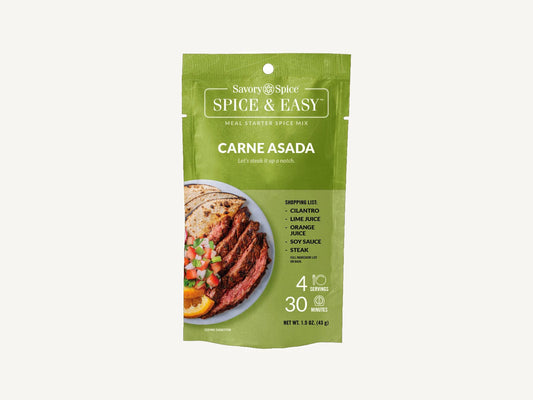
The fastest path to great carne asada is using our Carne Asada Spice & Easy dry marinade: combine the packet with orange juice, lime juice, cilantro, canola oil, and soy sauce, marinate skirt or flank steak for 20 minutes, and grill. This blend has smoky chiles, cumin, oregano, garlic, citrus and is built to replicate the flavor of the bitter/sour oranges used in traditional Mexican carne asada marinades. Serve in tacos, over rice and beans, or sliced on a board. If there's any steak leftover, it's excellent to use for Carne Asada Fries or Steak Sheet Pan Nachos to eat the next day.
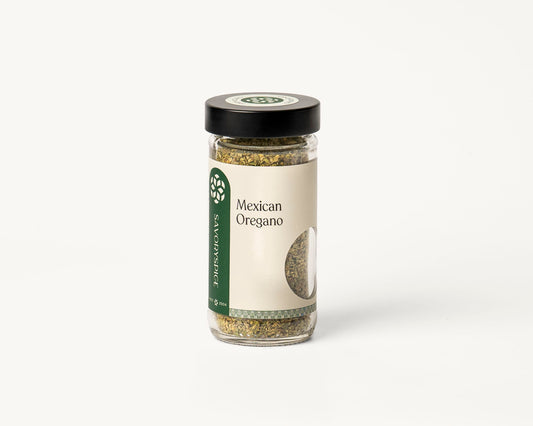
This recipe works perfectly with the Carne Asada Spice & Easy. But, if you want to build the marinade from scratch using individual spices, this is the recipe: skirt steak marinated in a house blend of Chipotle Chiles in Adobo, lime, garlic, cumin, paprika, and Mexican Oregano, grilled to temp, sliced into strips, and loaded into street taco-sized tortillas with pico de gallo, cotija, and the reserved marinade as sauce. The key move here is reserving half the marinade before the steak goes in. It becomes the table sauce, and it's the best thing on the plate.
Nine seasonings, each built for a different cut, method, or flavor direction. Here's how they map:
Guard and Grace Steak Rub: A chef-collaboration blend named after the 5-star steakhouse. Salty, savory, and built around sumac and peppercorn. The sumac brings a gentle brightness that lifts the crust without competing with the beef. The go-to when you want a steak that stands on its own.
BEST ON: Ribeye, Strip Steak, Thick Cuts That Need a Reverse Sear
Kansas City Strip Steak Seasoning: The classic American steakhouse profile: salt, pepper, garlic, a touch of sweetness. Purpose-built for New York strip, but excellent on sirloin and as the base of a marinade. Versatile and crowd-friendly.
BEST ON: New York Strip, Sirloin
Hudson Bay Beef Spice: A Founders' Favorite with a salty, peppery profile and no sugar, which means it won't burn on high heat. Works on virtually every cut and method: rub for the sear, base for the compound butter, seasoning for steak kebabs. The true all-purpose beef seasoning in the lineup.
BEST ON: Any Cut
Roman Pepper Steak Seasoning: Italian in profile: black pepper, garlic, rosemary. Best used as a marinade base for ribeye, strip, or any cut where you want a distinct herbaceous note. Also works as a dry rub on grilled chicken or fish.
BEST ON: Ribeye, New York Strip
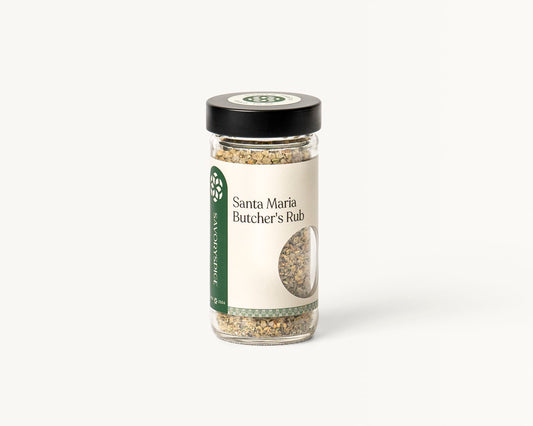
Santa Maria Butcher's Rub: Another Founders' Favorite built around the Central California tradition of simply seasoned, open-flame beef. Salt, pepper, garlic, herbs. The rub for tri-tip, but equally at home on sirloin skewers, kebabs, or any grilled cut where you want clean, classic flavors without distraction.
BEST ON: Tri-Tip, Sirloin
Black Dust Cowboy Coffee Rub: Ground coffee and chiles come together in a rub that builds one of the darkest, most intensely savory crusts you can put on a steak. Best on thick cuts where the reverse sear gives the coffee time to bloom without burning. The bitterness of the coffee rounds out the richness of well-marbled beef in a way that's hard to replicate with anything else.
BEST ON: Ribeye, New York Strip, Tomahawk, Thick Cuts
Chimichurri Churrasco: The Argentinian-inspired Spice & Easy seasoning mix for authentic chimichurri and churrasco. Mix with cilantro, lime, agave, and olive oil for a marinade and finishing sauce that works on steak, chicken, pork, or vegetables. The herbaceous-citrus profile is a natural counterpoint to charred meat.
BEST ON: Flank Steak, Skirt Steak, Hanger Steak
Carne Asada: The Spice & Easy for traditional Mexican grilled steak. Smoky chiles, cumin, oregano, citrus, garlic combine with OJ, lime, cilantro, canola, and soy sauce for a 20-minute marinade that works on skirt, flank, or flap meat. One of the best-selling Spice & Easy blends for good reason: the flavor profile is specific, the method is fast, and the results are consistently excellent.
The difference between a great steakhouse dinner and a good backyard steak comes down to a few things that are entirely replicable at home: a proper crust from a fiery-hot pan, a rest before slicing, a compound butter or pan sauce, and at least one good side that holds its own.
A few combinations that work:
The Classic Steakhouse Night: Reverse-seared bone-in ribeye with Guard and Grace Steak Rub, finished with Hudson Bay Steak Butter. Roasted potatoes on the side. Open a bottle of red wine while the steak comes to temp.
The Grill Spread: Santa Maria Steak & Potato Skewers as the main + Chimichurri Skewers as a second protein for variety. Both work over the same grill at the same time. The chimichurri sauce pulls double duty as a condiment for both.
Taco Night on the Grill: Carne Asada Tacos from skirt steak and the Carne Asada Spice & Easy, a cast iron of grilled corn on the side, and the reserved marinade as the table sauce. Fast, feeds a crowd, and scales easily.
The Coffee-Crusted Showstopper: Tomahawk ribeye through the reverse sear with Black Dust Cowboy Coffee Rub. Sear hard in cast iron at the end. Slice at the table. This one earns the occasion.
The Umami-Forward Dinner: Kansas City Strip Steak Marinade on a New York strip, grilled direct, finished with the Rich Umami Steak Sauce. Use any leftovers to make a delicious grilled steak salad the next day.
Grilled Steak Salad
Recipe by Savory Spice Test Kitchen
This rustic grilled salad is great for a backyard BBQ party or campfire meal.
The right seasoning is what takes a steak from good to the kind of thing you talk about afterward. Whether you're building a full reverse-sear setup or just want to fire up the grill on a weekday, our collection of Beef & Steak seasonings has everything you need—all handcrafted in small batches in Denver, built for the way serious home chefs actually cook.