Thyme is a fragrant herb with an earthy, slightly peppery flavor commonly used in vegetables, meats, and sauces. Native to the Mediterranean, it’s a staple in many cuisines and can be used fresh or dried in cooking.
Here’s what thyme is, what it tastes like, how to use it, and when know how to choose between fresh vs. dried in your recipes.
What is Thyme?
Thyme is a leafy herb that is part of the mint family and related to oregano, both of which are natural complements and are often times used together in cooking applications. It is believed to first have been cultivated by the ancient Egyptians.
Unlike many spices, herbs like thyme can grow in a wider range of climates. As a perennial plant, thyme grows year-after-year in warm locations with rocky soil. For this reason, you’ll find it in a variety of European cuisines.
Thyme is an essential herb to keep in your spice collection. The leafy herb can be used fresh or dried when cooking vegetables or proteins.
Here's a quick overview of thyme and its main characteristics:
Flavor: Earthy, slightly peppery, subtle mint
Best used with: Roasted vegetables, meats, soups, stews, sauces
Fresh vs. Dried: Fresh is brighter; dried is more concentrated & earthy
Thyme grows in small clusters of tiny green leaves along thin, woody stems. The leaves are oval-shaped and closely spaced, giving the plant a dense, slightly bushy appearance.
Fresh thyme is typically sold in sprigs, while dried thyme appears as small, flaked leaves. Another way to distinguish thyme is that it also has a distinct aroma—earthy, slightly minty, and warm—which contributes to its flavor in cooking.
What Types of Thyme Are There?
While there are many different varieties of thyme, most can be used interchangeably in cooking. Their main differences lie in subtle variations between aroma and flavor.
Some commonly known varieties of thyme also include:
Common Thyme
Mediterranean Thyme
German Thyme
Lemon Thyme
Creeping Thyme
Wooly Thyme
Mother of Thyme.
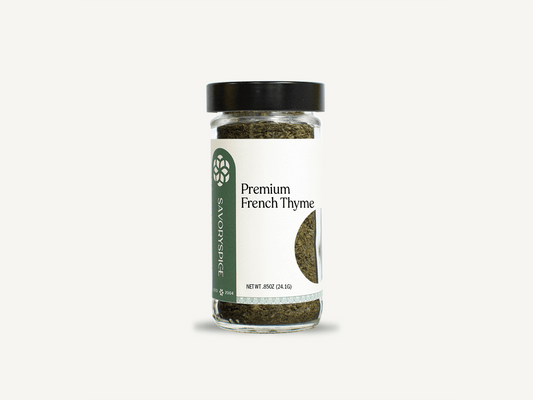
Our personal favorite is our blend of Premium French Thyme, which can be bought in our online spice store, or at a local spice shop.
What's the Difference Between Thyme & French Thyme?
Traditional (or standard) thyme is pale green in color. As it grows, it develops a sharp flavor.
French thyme however has darker green leaves and a stronger aroma, along with a more concentrated flavor often with slightly bitter notes.
What Does Thyme Taste Like?
Thyme has a warm, earthy flavor with slightly peppery and minty notes.
It's subtle, but adds depths of flavor to dishes without overpowering any other ingredients. This depth of flavor makes it an incredibly versatile herb that pairs well with many other spices and ingredients.
Fresh thyme tends to have a bright and peppery flavor, while dried thyme is more earthy due to its dehydrated consistency.
The variety can alter the taste as well, and the name of the thyme typically reflects the flavor profile of the herb.
What Are the Health Benefits of Thyme?
Besides seasoning your food, thyme can also be super beneficial to your health. The thyme herb has been known to help lower blood pressure, prevent bacterial infections, fight acne, and alleviate coughs. The tasty herb is great to add to your diet to absorb the health benefits.
Like mint, thyme leaves can be steeped in hot water to make a delicious cup of tea.
Drinking thyme tea is reported to be an excellent way to absorb all of the nutrients of the herb and soak up the health benefits. Some say drinking thyme tea can help as a traditional remedy for digestion, calming the nervous system, and soothing a sore throat. Plus, it is an antioxidant and contains vitamins A, C, and K.
Where Can I Buy Thyme?
Thyme is one of the most common herbs used in cooking and is widely available in most grocery stores, supermarkets, farmers' markets, and spice stores.
Fresh thyme can be found in your local market in the produce aisle. It is typically sold in sprigs by the stem. You’ll also find it in a mix of fresh poultry herbs, as well as in some of our seasoning blends like our Poultry Seasoning.
We carry quality Premium French Thyme in our online spice store. This variety of thyme is earthier than the common blend, is slightly bitter in flavor.
The number of ways you can use thyme in cooking has no limit. When using fresh thyme, it is best to pick the leaves from the sprig and finely chop them. If using thyme herb in a marinade or when roasting meat, the whole sprig can be thrown into the recipe.
Dried thyme can be used right from the jar. The herb, along with salt and pepper, is a great basic seasoning mix.
When it comes to cooking, thyme adds an earthy flavor to whatever you are cooking. The herb is great to use both in its fresh and dried form. The herb can be used to season meats, stocks, soups, and more.
Not a lot of thyme (or time) is needed to elevate vegetables to the next level. A simple sprinkling while roasting or is enough to make the vegetables stand out on their own. It can even be used when baking by adding the herb into doughs and batters.
When to Use Thyme: Roasting vegetables or meats, soups or stews, sauces or marinades, or as a garnish
What to Use Instead of Thyme?
If you find yourself out of thyme and need to substitute it quickly, there are many spices and herbs that will work in its place. Oregano is perhaps the closest you will get to the original herb. While the two herbs are closely related, oregano is slightly sweeter and not as earthy, so some adjustments may need to be made.
Other substitutes that could work for thyme include herbs like mint, marjoram, parsley, basil, rosemary, or tarragon. All of these herbs are leafy greens with similar flavor profiles. The best one to use will depend on what you’re cooking and what flavor notes you want to bring out. Some have sweeter or sharper notes, so make sure to taste for seasoning when using these as a substitute.
If you need to replace your jar of dried thyme at home with something else alreadyin your pantry, you have a few options. Consider what dish or cuisine you're using it in and then swap out for something like Italian Herbs, Za’atar, Herbes de Provence, or even Poultry Seasoning. These spice blends all contain thyme and share similar profiles and will help you reach your seasoning goals.
What Other Spices, Seasonings, and Flavors Pair Well with Thyme?
When it comes to thyme, the herb is really good at making friends in the kitchen. Thyme is an excellent herb to pair with lots of other leafy herbs. Mixing it with basil and rosemary is always a good idea and great for a last minute seasoning for proteins or vegetables. Surprisingly, thyme also pairs well with other spices and ingredients like allspice, nutmeg, cloves, as well as garlic and lemon peel.
Thyme-Forward Seasonings
If you don’t want to mix up your own spice blends, you can taste these flavorful pairings for yourself with many seasoning blends. Pizza Herb Topper, Za’atar, and Herbes de Provence are just a few that feature the herby, earthy flavor of Premium French Thyme.
There are so many different ways to use thyme when cooking. Below you’ll find some of our favorite ways to highlight the herb.
Main Courses: Thyme is one of those herbs that always has a place in a main course. Use the dried herb to accentuate the flavor of meat, highlight freshness, and bring the whole plate together.
Saffron & Squash Risotto
Recipe by Savory Spice Test Kitchen
Saffron shines beside sweet roasted butternut squash in this silky risotto that's sure to satisfy.
Soups, Stews, and Sauces: Use dried thyme to bring the flavors together in one pot. The thyme works alongside other herbs and spices to create a balanced flavor profile.
Golden Beet and Parsnip Soup: Dried thyme cooks alongside golden beets and parsnip to create a warming soup that is great for any time of the year.
Baharat Lentil Stew: Bring the best Middle Eastern flavors to the table with this hearty stew. The thyme pairs with Baharat to make a meal with knockout flavors.
Sauce Tomat: Use dried thyme to bring this French mother sauce to life. Once you nail this sauce, you’ll understand why it is used over and over again.
Baking: Herbs are not always the first thing you think of when baking. However, thyme adds a flavor to breads and dough that is earthy and balanced. Try it out for yourself and watch your tastebuds fall in love.
Herbed Honey Wheat Bread: You’ll easily forget about plain old bread once you take a bite of this herbed honey wheat bread. Thyme pairs alongside Marjoram, Rubbed Sage, Mayan Sea Salt, and honey to make a loaf of bread bursting with flavors.
Seasoning Mixes: If you can’t find a recipe or mix that will work for your flavor profile, make your own! Thyme is excellent to combine with other spices and herbs to make outstanding marinades and rubs.
Homemade Seasonings: Follow this guide to make a blend of homemade seasonings that will work for you when cooking proteins and vegetables.
For 4-5 T of Mediterranean Herb Mix: Crack 1 Tbsp fennel seeds and mix with 1 Tbsp each of dried savory and thyme, 1 1/2 tsp each of dried cracked rosemary and lavender, 1 tsp each of dried marjoram and basil, and 1/2 tsp dried tarragon.
Explore the world of thyme and many other herbs by going Behind the Seasoning including more classic cooking seasonings, like Coriander & Cilantro, Cumin Seeds, and Cardamom.