Italian Seasoning has been riding the back of every pasta night for decades, and most people couldn't tell you what's actually in it.
Italian seasoning contains six herbs: French thyme, Greek oregano, California basil, marjoram, rosemary, and European basil. Dried, not fresh–dehydration concentrates flavor and makes the blend forgiving in long simmers.
Our Italian Herbs blend is the classic all-herb version; Cantanzaro Herbs accentuates those herbs with added garlic and lemon; and Pizza Herb Topper is built specifically for pizza. Which one ends up in your pantry (if not all of them) depends on what you're cooking.
What Is Italian Seasoning?
Italian seasoning is a dried herb blend designed to capture the aromatic profile of Mediterranean and Southern Italian cooking. These are the herbs that Italian cooks would have grown fresh and used liberally in sauces, on meats, and in bread. Having them dried and pre-combined makes those flavors accessible year-round, and in a kitchen context, dried herbs in a long-simmered sauce often outperform fresh because they integrate fully into the dish over heat.
The core formula in our Italian Herbs blend is six herbs, each contributing something distinct:
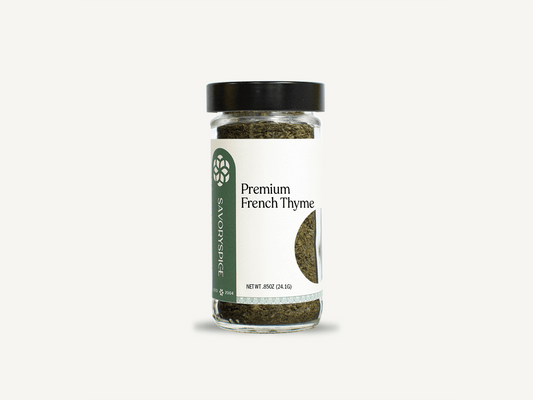
Premium French Thyme brings a warm, earthy backbone. It's darker in color and stronger in aroma than standard Mediterranean thyme. It's the herb that gives Italian seasoning its savory depth and holds everything together.
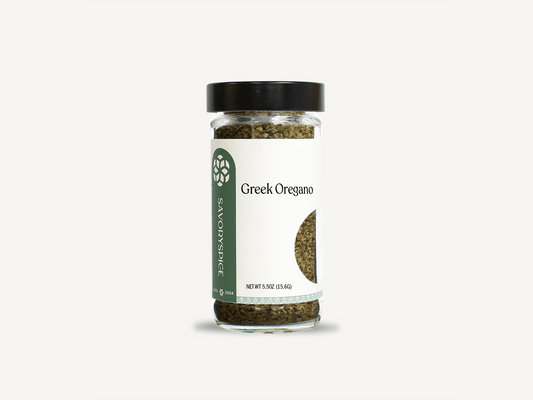
Greek Oregano is mild and sweet with a touch of citrus. Despite its Greek designation, it's the oregano most widely used in Italian cooking. It's more fragrant and slightly less bitter than Mexican oregano. Oregano actually means "marjoram" in Spanish, which speaks to how closely the two herbs are related.
Marjoram is the unsung herb of the blend. It's sweet, light, and delicate in a way that smooths out the sharper edges of the thyme and oregano. Many people can't identify it individually, but take it out and the blend reads as thinner.
Cracked Rosemary contributes a piney, herbal, almost tea-like quality. The cracked format releases flavor more readily than whole needles and works better in oil-based applications like bread dips and sautéed vegetables.
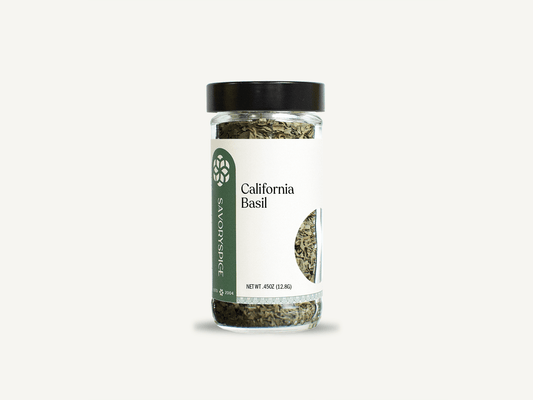
California Basil adds sweetness with a subtle anise note. It's widely considered among the best dried basil available, owing to California's advanced dehydration process that preserves the essential oils at peak potency.
European Basil is milder than California basil with the same anise notes. Its gentler character balances the stronger California variety and gives the blend a rounded sweetness overall.
We use the finest dried herbs with the highest oil content available for each herb variety within our Italian Herbs blend. The higher oil content means more volatile aroma compounds, which means a blend that smells and tastes like something rather than like faint hay, grass, or sawdust.
What Does Italian Seasoning Taste Like?
Italian herbs is sweet-herbed and peppery, with the oregano and thyme pulling toward savory and the basil contributing a floral sweetness. The rosemary adds a piney brightness, marjoram softens everything, and together the six herbs produce a flavor that reads as distinctly Italian without any single herb dominating.
One thing that distinguishes good Italian seasoning from store-bought generic blends: the ratio.
Too much rosemary and the blend tastes medicinal. Too much oregano and it turns bitter. Too little basil and it loses its sweetness.
The balance is what makes it work as a flexible, all-purpose seasoning rather than a single-note shortcut.
Which Italian Herb Blend Should I Use?
We make three distinct blends in the Italian herb family. They share the same core herbs but differ in what's added, which changes when each one is most useful.
Italian Herbs is the straight herb blend: thyme, oregano, basil (both California and European), marjoram, and rosemary. No garlic, no salt, no added ingredients. It's the right choice when you want to season a dish to your own spec, when you're adding your own garlic separately, building a sauce from scratch, or using it as an ingredient alongside other seasonings. It's what goes into pasta sauces, onto eggplant parmesan, into sausage mixes, and on garlic bread before it goes under the broiler.
However, Cantanzaro Herbs is our Italian seasoning blend, but accentued with garlic, lemon peel, and a touch of pepper. It's inspired by the flavor profile of the capital of Calabria in southern Italy. The garlic and lemon make it more self-sufficient as a seasoning: where Italian Herbs needs garlic added separately, Cantanzaro Herbs arrives already layered.
It's the more all-purpose choice for everyday cooking. It's perfect for pasta sauces, pizza, grilled vegetables, poultry, fish, and eggs. It's also the better choice for olive oil dips, where the garlic-and-lemon combination in oil is the whole point. Trust us, people will be asking what you did differently when you use this blend instead of Italian.
Pizza Herb Topper is a more focused version: European basil, Mediterranean thyme, Greek oregano, California basil, and garlic. Plus, it's also handcrafted specifically for sprinkling on pizza slices or adding to pasta. Less complex than Cantanzaro, and more garlic-forward, it's designed to be used as a finishing sprinkle as much as a cooking ingredient. Shake it directly onto a slice before baking, into a jarred or homemade sauce, or onto garlic bread with olive oil and butter.
Quick guide: if you're building a sauce from scratch and adding your own garlic, reach for Italian Herbs. If you want an all-in-one seasoning for most Italian dishes, Cantanzaro Herbs is the everyday choice. If pizza is the primary use case, Pizza Herb Topper is purpose-built for it.
How Do You Cook with Italian Seasoning?
In pasta sauces. Italian seasoning goes in early, as it needs heat and time to bloom. Stir it into olive oil with garlic before adding tomatoes, or add it at the beginning of a long-simmered sauce. Our Classic Marinara Sauce Spice & Easy is our simplest path to an authentic red sauce to make at home. The onion, tomato, garlic, fennel, basil, marjoram, thyme, oregano, and rosemary are pre-measured, and it's easy to simmerswith a can of diced tomatoes for 10 minutes. It produces a sauce that works for pasta, pizza, or chicken parmesan.
On pizza. Italian Herbs goes into the sauce; Pizza Herb Topper goes on top. Combine them and you're seasoning at two stages, which is what the better pizzerias do. Our Sausage & Peppers Pizza recipe uses Italian Herbs in the pizza sauce and layers Italian sausage, peppers, and mushrooms over fresh mozzarella. The recipe for Spicy Margherita Flatbread uses Pizza Herb Topper over cherry tomatoes and fresh mozzarella on flatbread. It's a 20-minute version of a classic. And last but not least, our recipe for classic Chicago-Style Deep Dish Pizzauses Cantanzaro Herbs in a tomato sauce that simmers for 30 minutes, then layered over Italian sausage and a full cast-iron's worth of mozzarella.
For garlic bread and bread dips.Cantanzaro Herbs stirred into high-quality olive oil is one of the simplest things to have in your kitchen back pocket. Let it sit for 15 minutes before serving so the flavors combine. The Herb-Infused Olive Oil Bread Dip recipe is the blueprint: one tablespoon of Cantanzaro Herbs to half a cup of good olive oil, with salt to taste.
On chicken. Italian seasoning is one of the most underused chicken seasonings. Stir it into breadcrumbs for chicken parmesan, mix it into the coating for baked chicken thighs, or combine it with lemon juice and olive oil for a simple marinade. The individual herb contributions all work really well with chicken's mild flavor and blank canvas.
For pesto, Parmesan Pesto Seasoning is a shortcut that tastes like the real thing: Parmesan and Romano cheese dried with California basil and garlic. Stir a few tablespoons into cream sauce for a Parmesan pesto pasta sauce.
Brush it on a baguette with olive oil for Warm Pesto Bread, or use it to make a homemade Parmesan Pesto that comes together in 10 minutes and works on crostini or pasta. The Pesto Spaghetti Carbonara, a recipe by our Founders, combines Parmesan Pesto Seasoning with Italian Herbs, bacon or pancetta, and green peas in a carbonara built around the pesto rather than heavy cream.
For pasta salad. Our recipe for Cantanzaro Pesto Pasta Salad uses the her blend combined with basil, spinach, pine nuts, and olive oil to make a fresh pesto for fusilli. Castelvetrano olives, mozzarella pearls, and cherry tomatoes finish it. It's a fresh pasta salad that works for picnics, potlucks, and summer entertaining.
Cantanzaro Pesto Pasta Salad
Recipe by Savory Spice Test Kitchen
An easy pasta salad that's elevated by a fresh pesto featuring our Cantanzaro Herbs blend. Great for spring and...
What Other Italian Spices and Seasonings Are Worth Having?
The herb blends cover most Italian cooking, but a few more specific products round out the pantry.
Italian Dressing Mix moves beyond herb blends into full vinaigrette territory: sugar, red bell peppers, basil, onion, garlic, black pepper, oregano, thyme, rosemary, turmeric, and lemon peel. To make classic Italian vinaigrette: 1 cup olive oil, ½ cup vinegar, 1–2 tablespoons of the mix. For creamy Italian dressing: equal parts mayo and sour cream, thinned with vinegar. It also works as a marinade and dry seasoning for chicken, fish, or pork.
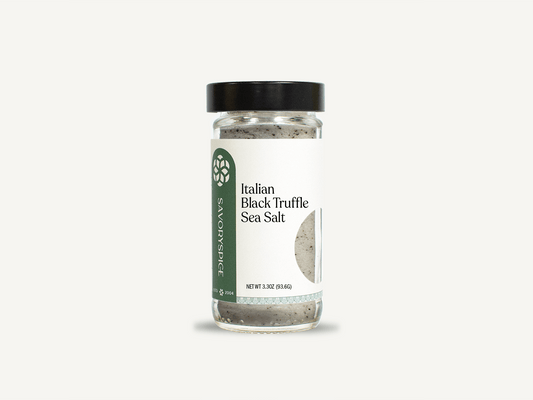
Italian Black Truffle Sea Salt is the indulgence addition. Italian black truffles–some of the most prized in the world, largely foraged from the wild–bound with pure Pacific sea salt for a finishing salt that elevates almost anything. It's extraordinary on our Salted Caprese Salad recipe, with just tomatoes, fresh mozzarella, basil, olive oil, and a drizzle of balsamic, elevated by the truffle salt at the finish. Use it to finish Cacio e Pepe, pasta, eggs, or roasted potatoes. The earthy mushroom character of the truffle deepens anything savory without announcing itself.
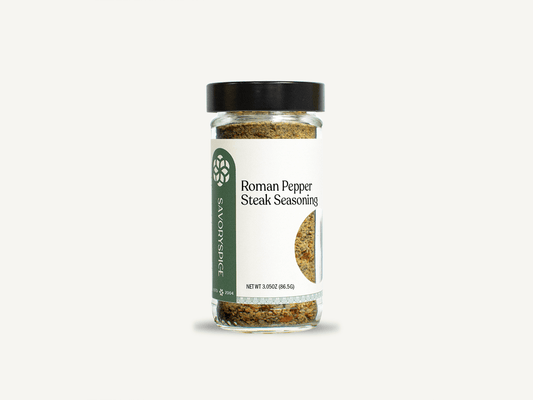
Roman Pepper Steak Seasoning is the Italian answer to a great seasoned steak. Inspired by Bistecca alla Fiorentina, the classic Italian steak preparation. Sea salt, black pepper, white pepper, garlic, crushed red pepper, lemon peel, rosemary, and basil in a blend that's salty, peppery, and citrus-forward. As a marinade: 2 tablespoons mixed with ¼ cup white wine vinegar, ¼ cup lemon juice, and ½ cup olive oil — marinate for 20–30 minutes.
Roman Pepper Steak Marinade
Recipe by Savory Spice Test Kitchen
While this is the perfect marinade for steak, it's also lovely for infusing Italian flavors into chicken, meaty...
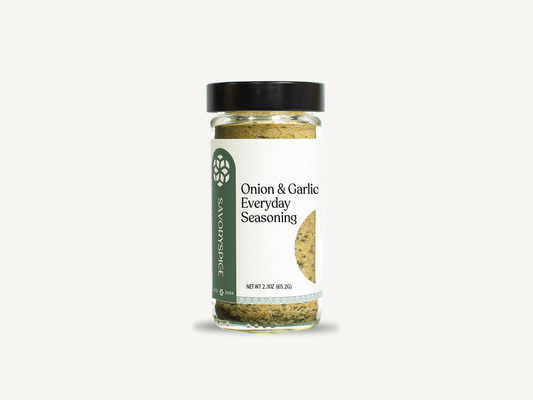
Onion & Garlic Everyday Seasoning is the Italian cook's tableside companion. It needs to always be kept within reach! White onion, roasted garlic, and green onion without salt, designed to stay within reach at the stove. Most Italian cooking starts with garlic; having it balanced with onion in a pre-measured shake eliminates one step. Use it to season the base of any sauce, on pasta directly, or stirred into mashed potatoes, eggs, or vegetables.
Building a DIY blend from pantry herbs. If you don't have Italian seasoning on hand, equal parts dried Basil, dried Oregano, and dried Thyme get you most of the way there. Add Rosemary at roughly half the amount of the other herbs. A pinch of Marjoram rounds it out, though most pantries don't have it; skip it if needed. The result won't be identical to our blend, as we source specific varieties for oil content, and higher oil content means more volatile aroma. But it will capture the essential character for a sauce, marinade, or bread dip.
If you only have one or two herbs. Dried basil and dried oregano together are the backbone of Italian seasoning's flavor. If that's all you have, use equal parts and lean a little more heavily than you would with a full blend, since there's less complexity to build depth. A small pinch of garlic powder compensates for some of the missing savory notes.
Substituting for Cantanzaro. Start with Italian seasoning (store-bought or DIY), then add Garlic Powder and a small amount of dried Minced Lemon Zest. A squeeze of fresh lemon juice will also work in a pinch. The garlic-and-lemon combination is what distinguishes Cantanzaro from a plain herb blend.
Substituting for Pizza Herb Topper. Italian seasoning plus a bit more garlic powder and dried oregano approximates this blend's garlic-forward character. Since this is often used as a finishing sprinkle rather than a cooking ingredient, the substitution works best if you also sprinkle it on after cooking rather than stirring it in.
What about Herbes de Provence? It's not a true substitute, do not use. The lavender and fennel give it a floral, distinctly French character that reads differently in most Italian dishes. In a big pinch, it can work in oil-based applications where a slightly more aromatic quality is fine. For a tomato-based sauce, the lavender becomes more noticeable and pulls the dish away from Italian territory. Stick to the herb-based DIY blend or just using basil and oregano if you're making anything with tomatoes.