Whole and ground spices aren't just two forms of the same thing.
They behave differently in cooking, degrade at different rates, and belong in different situations. Knowing when to reach for each one, and why, makes a real difference in what your food tastes like. This covers the practical distinction between the two, when each form has the advantage, and how to get the most out of both.
What is the difference between whole and ground spices?
The difference comes down to cell structure. A whole spice, like a peppercorn, a cumin seed, a cardamom pod, a cinnamon stick, has its aromatic oils locked inside an intact cellular structure. That structure acts as a barrier between the volatile compounds and the air, light, and moisture that break them down. As long as the cell walls are unbroken, those oils stay where they are.
Grinding destroys that barrier. The moment a spice is cracked or milled, the cell structure opens and the aromatic oils are exposed. Some volatilize immediately. That's the rush of fragrance you get when you crack a peppercorn or grind a cardamom seed. From that moment forward, the ground spice is losing flavor to the air. The process is gradual, but it's continuous and irreversible.
Black Malabar Peppercorns are the bold, familiar standard for everyday cooking. They're fruity, sharp, and full-flavored, best cracked or ground fresh in a mill so you control the grind. Whole, they give you the most flexibility: crack them coarse for a steak crust, finer for a sauce, or anywhere in between. Fine Black Malabar Pepper is pre-ground to a fine powder, and ready to go for rubs, brines, and seasoning blends when you want Malabar's character without the extra step.
White Sarawak Peppercorns come from the same plant as black pepper but are processed differently. The dark outer husk is removed, leaving a smaller, hotter peppercorn with a clean, sharp heat and a distinctly earthy, musky quality. Whole, they're the choice wherever you want pepper's bite without black specks in the finished dish, such as cream sauces, pale soups, French and Southeast Asian cooking. Ground into Fine White Sarawak Pepper, they deliver the same heat and complexity while disappearing into the dish entirely.
This is a perfect example as to why ground spices are more immediately potent than whole. All that surface area means flavor releases faster into food, but it's also why they have a shorter useful life. Whole spices are slower to release and slower to fade. The tradeoff between the two forms is essentially a tradeoff between convenience and longevity.
Do whole spices taste better than ground?
The short answer is: a freshly ground spice is the most flavorful form that a spice can take, but the key word is freshly. Pre-ground spice that was milled recently, from a quality source, is at peak flavor.
The comparison that actually matters isn't whole vs. ground. It's fresh vs. stale.
The ground spices that give pre-ground a bad reputation are the ones that have been sitting in a supply chain, in a warehouse, or on a store shelf for 1-2 years. That's the gap worth talking about, not whether a spice arrived at your kitchen as a seed or a powder. All of our blends are always freshly ground in small batches, which means they have the same volatile oil content, the same aromatic complexity, and the same impact on a dish as spices you'd grind yourself.
You don't need to order whole and grind at home to get fresh flavor.
Where whole spice genuinely earns its place is in specific situations, like when you want to control the grind size yourself, when you're toasting whole seeds before grinding for a spice rub, or when the moment of grinding is part of the cooking.
Nutmeg is the clearest example of that last one: grating Whole Nutmeg fresh has an immediacy and warmth that's hard to describe until you've tried it. But it's not because our Ground Nutmeg lacks quality, it's because grating it at the exact moment of use means zero time between grinding and the dish.
Freshness matters more than the form it takes. A quality ground spice in good condition (like ours) is excellent. The choice between whole and ground comes down to what the cooking calls for, not a flavor hierarchy.
When should you use whole spices instead of ground?
Whole spices have a clear advantage in a few specific situations:
Long-cooked dishes. Whole spices infuse liquid slowly over time, such as a Bay Leaf in a braise, Cardamom Pods in rice, a Cinnamon Stickin a mulled drink. They release flavor gradually without the risk of over-spicing or the gritty texture that ground spice can add to a long simmer. They're also easy to remove before serving. Ground spice in the same application can become muddy and indistinct as it cooks down.
Blooming in oil. Whole seeds that are dropped into hot fat, like Cumin Seeds, Mustard Seeds, Coriander, and Fennel, pop and sizzle and release their oils into the cooking medium in a way ground spice can't replicate. The fat then carries those flavor compounds through everything else cooked in it. Blooming whole spices in oilis one of the most effective ways to build flavor from the start of a dish.
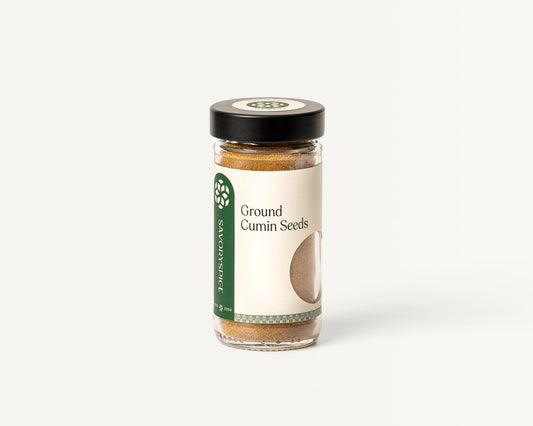
Cumin seeds dropped into hot fat release a deep, earthy, slightly smoky fragrance almost immediately. They're more vibrant and alive than anything pre-ground cumin powder can produce in that moment. The whole seed is essential for blooming. Ground cumin is the go-to for everything else: chili, curry, taco seasoning, spice blends. It distributes evenly and doesn't need activation.
Coriander Seeds are lighter and more citrusy than cumin, with a floral, almost lemony quality in whole form. They bloom beautifully in oil, make a great crust for pan-roasted fish or vegetables, and are a classic in pickling brines. Ground Coriander powder turns warmer and slightly more savory. It's the standard form for curries, marinades, and spice blends where you want it distributed evenly through the dish.
Toasting before grinding. If you're grinding your own spice, buying whole and toasting first gives you the most aromatic, complex result. The dry heat of a skillet opens the cell structure and activates additional flavor compounds before you grind — producing a spice powder that's meaningfully more complex than pre-ground.
Pickling and curing. Whole spices are standard in pickling brines because they release flavor slowly during the cure without turning the liquid cloudy or gritty.
Ground spice has the advantage everywhere else: dry rubs, quick-cooked dishes, baking, anything where you need flavor distributed evenly and immediately. You're not going to grind whole spice for a spice rub you're applying to a steak ten minutes before grilling. Pre-ground is the right tool there.
How do you grind whole spices at home?
An electric spice grinder (or a dedicated coffee grinder) is the most practical option for regular use. It grinds quickly, produces a consistent fine powder, and handles hard spices like peppercorns and dried chiles without effort. Keep it separate from your coffee grinder, as the spice oils transfer and don't come out fully. Clean it between different spice batches by grinding a small amount of uncooked white rice to absorb residual oils, then wiping out with a dry cloth.
Mortar and pestle gives you more control over texture and is better for small quantities or for grinding to a coarse, uneven result that some dishes benefit from. It's slower and more physical than an electric grinder, but the process lets you feel when a spice is ready. For something like a rough paste or a coarsely cracked pepper, it's the better tool.
High-powered blenders work for large batches of dried chiles or spice blends where you're making enough volume for the blades to catch everything. Less practical for small amounts, as too much spice ends up on the walls of the jar and doesn't make it into the blade path.
Madagascar Cloves are one of the most intensely aromatic whole spices you can grind at home. Whole, a small handful perfumes an entire pot of mulled wine, stock, or spiced broth. They're used in braised meats, rice, hot drinks, and anywhere flavor needs to infuse slowly. Their volatile oils are highly concentrated and start fading quickly once ground, which is why freshly-ground cloves have a sharpness and warmth that most pre-ground versions can't match.
Jamaican Allspice Berries taste like a combination of cinnamon, clove, ginger, and nutmeg all from a single berry, which is where the name comes from. Whole berries are essential in Jerk Seasoning, Caribbean and Latin cooking, and pickling brines, where they release flavor gradually over time. Ground Allspice powder is the form used in baking, mole, and spice rubs. Similar to cloves, grinding fresh from whole berries produces a noticeably more complex result than reaching for a pre-ground jar.
A few practical notes: grind only as much as you'll use within a few weeks.
The whole point of grinding fresh is capturing volatile oils at their peak. Grinding a large quantity and storing it will defeat that purpose. Let freshly ground spice cool for a minute before transferring to a jar; grinding generates heat that can cause condensation and clumping if sealed immediately.
How much whole spice equals ground?
There's no single conversion that works for everything, because spices vary significantly in how much their volume changes when ground.
A general starting point: ½ tsp of most ground spices equals roughly 1 tsp of the equivalent whole spice before grinding. But keep in mind that this is a rough guide, not a precise formula.
Some specific conversions that come up often:
Whole peppercorns to ground pepper: about ½ tsp ground per 1 tsp whole
Cumin seeds to ground cumin: about ½ tsp ground per 1 tsp whole
Coriander seeds to ground coriander: about ½ tsp ground per 1 tsp whole
Cardamom pods to ground cardamom: 10 pods yield ~1½ tsp ground (once seeds are removed from husks)
Cinnamon stick to ground cinnamon: (1) 3-inch stick yields ~1 tsp ground, but cinnamon varies a lot
Green Cardamom Podscontain intensely aromatic seeds inside a papery husk. The pod protects those volatile oils during long cooking, which is why whole pods go into chai, spiced rice, and braised meat. Our Ground Inner Cardamom Seeds are milled from the seeds only, without the husk, for a cleaner and more concentrated flavor. That's the standard form for baking, coffee, and curry, where you want the floral intensity of cardamom distributed evenly through the dish.
Indonesian Cinnamon Sticks are the thick, hard cassia-type cinnamon most common in American kitchens. It's bold, spicy-sweet, and best used whole for steeping in liquids like cider, mulled wine, or hot chocolate, where they infuse slowly without turning things cloudy or gritty. Our Ground Indonesian Cinnamon powder is the familiar baking standard: assertive, warm, and dominant in snickerdoodles, coffee cake, and anything that calls for a strong cinnamon presence.
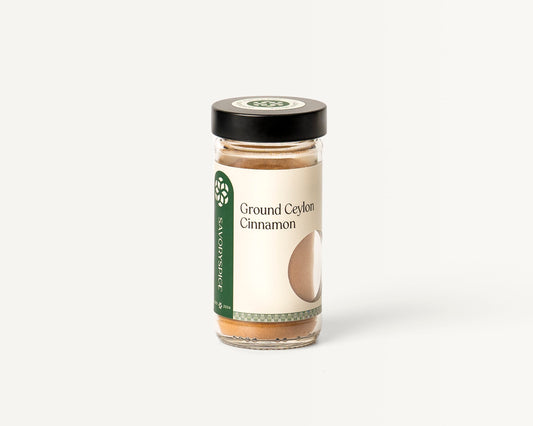
Ceylon Cinnamon, often called "true cinnamon," has thinner, more delicate sticks with a sweeter and more nuanced flavor than the Indonesian variety. Whole sticks steep into a softer, more complex cinnamon flavor. Ground Ceylon Cinnamon powder is the better choice when you want cinnamon as a background note rather than the dominant one. It's less sharp, more subtle, and more interesting in spice blends and delicately flavored baked goods.
When substituting whole for ground in a recipe that was written around pre-ground, these numbers get you close, but tasting as you go matters more than hitting an exact ratio.
Freshly ground whole spices are often more potent than the equivalent quantity of pre-ground, especially if the pre-ground has been sitting for a while. Start a little under the recipe amount and adjust.