After more than twenty years in the spice business, I can tell you that’s a harder question to answer than you might think.
For many of us in America, curry probably first meant a jar of yellow curry powder. And as I often heard in our shops, “I don’t like curry. It’s too hot for me.” But curry isn’t one spice, one blend, one heat level, or even one particular style of cooking. In fact, the word itself likely comes from the Tamil word kari, referring to a sauce or saucy dish. British colonists eventually adopted the word and used “curry” much more broadly for the many different spiced dishes they encountered throughout India.
And that’s where things start getting interesting.
From India to Thailand
Travel around India and you’ll encounter countless masalas, spice combinations, and regional dishes that we might broadly think of as curries, but there isn’t one universal Indian “curry powder” tying them all together. What goes into the pot changes from region to region, household to household, and dish to dish.
Move east into Thailand and curry changes again. Instead of starting primarily with dry spices, many Thai curries begin with a paste made from chiles and fresh aromatics like lemongrass, galangal, makrut lime, shallots, and garlic. Coconut milk often enters the picture, and suddenly we’re in a completely different flavor world.
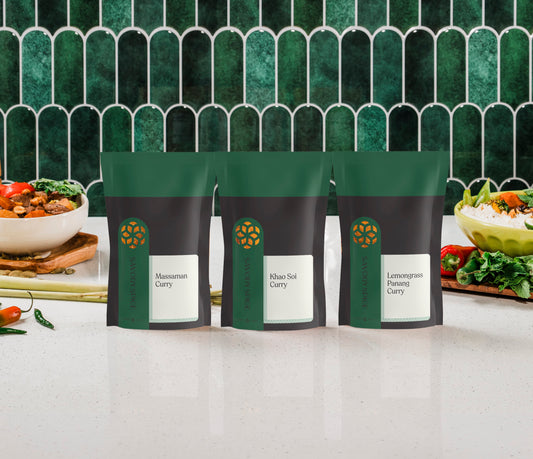
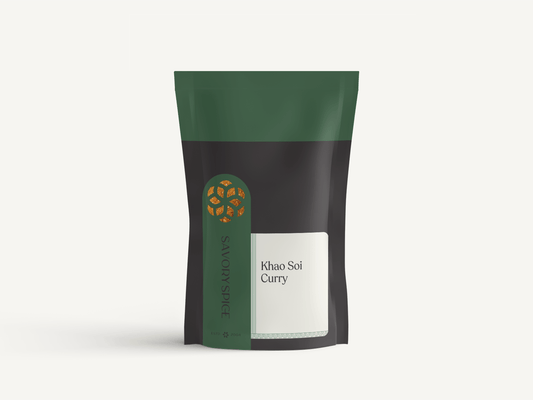
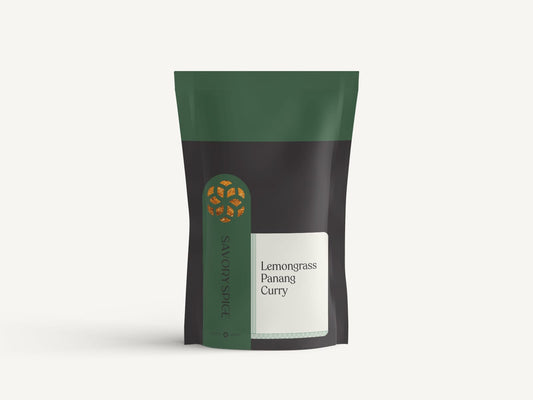
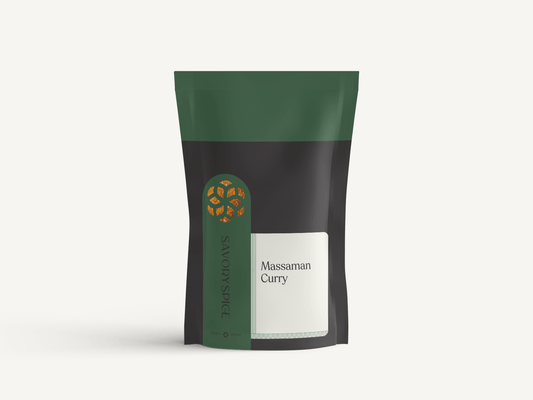
Even within Thailand, there’s no single curry personality. Panang brings rich coconut and peanut flavors. Massaman folds warm spices like cardamom, cinnamon, cloves, and nutmeg into the Thai flavor vocabulary. And in northern Thailand, Khao Soiturns curry into an aromatic broth filled with noodles and finished with an assortment of fresh, pickled, spicy, and crispy toppings. Find more on these three Thai favorites below.
And we haven’t even touched on the classic Red and Green Thai curries.
Vietnam developed its own curry tradition, influenced by India but adapted over time to Vietnamese ingredients and tastes. Our Vietnamese Sweet Lemon Curry is a good example of just how different that can become, combining traditional curry spices with lemongrass and sugar for a sweeter, citrusy take on curry.
Then there’s Vadouvan, where the curry trail takes an unexpected turn toward France. Vadouvan grew from the meeting of South Indian cooking and French influence around Pondicherry, resulting in a curry tradition with an especially aromatic emphasis on ingredients like shallots, onions, and garlic that are roasted or charred.
Curry’s travels don’t stop in Asia. Zanzibar, off the coast of East Africa, spent centuries at the crossroads of the spice trade, where African, Indian, Arab, and other culinary traditions met. We actually brought our Zanzibar Curry back as a Savory Reserve after hearing from customers who missed it. To me, that’s another reminder of just how many different expressions of curry have found a home at Savory.
And then there’s Morocco.
I wouldn’t technically call Ras el Hanout a curry, but put the spices on the table and you’ll certainly see some family resemblance. Cumin, coriander, turmeric, ginger, cardamom, cinnamon, nutmeg, cloves, and chile can all appear in Ras el Hanout as well as in Indian curry blends. Its name roughly translates to “head of the shop,” reflecting the tradition of a spice merchant creating their own signature mixture from some of the best spices they had to offer. In that way, it’s not so different from India, where families and cooks can adjust their spice combinations to their own tastes, traditions, and the dish they’re making.
So where does curry end and another regional spice tradition begin?
I’m not sure there’s a clean line, and that’s part of what I’ve always loved about exploring the world through spices. Ingredients travel. People travel. Cooking techniques travel. Along the way, flavors get adopted, adapted, combined, and eventually become traditions of their own.
Our shelves at Savory tell a little of that worldwide story, with curries and masalas inspired by India, Thailand, Vietnam, Africa, and France, ranging from mild and aromatic to rich and warm-spiced to seriously hot. Speaking of seriously hot, we may have to bring our Ghost Curry back as a Savory Reserve sometime soon…
Some of the best versions of a dish I’ve ever eaten have turned up in places I never expected to find them.
Years ago, while traveling in Jamaica, I had carbonara for the first time. Italian cooks would come to the island during the long European holiday season and open restaurants catering to Italian travelers, bringing many of their ingredients and traditions with them. I fell hard for carbonara on that trip. I think I ate it almost every night I wasn’t eating jerk chicken, and after years of ordering it in restaurants and making it myself at home, that first version in Jamaica is still one of the best I’ve ever had.
Panang curry has a similar place in my food memory.
You might expect my favorite Panang story to come from Thailand, and I’ve certainly eaten plenty of wonderful curry there. But one of the best Panang curries I can remember was in Amsterdam. We were only there for a day or two, and I couldn’t tell you the name of the restaurant today. What I do remember is the curry.
It was rich and aromatic, with the coconut, chile, citrus, and warm spices all coming together in that balance that makes a great Panang so satisfying. The experience stuck with me, and when we later developed Lemongrass Panang Curry for our Spice & Easy line, I’m sure that bowl in Amsterdam was somewhere in the back of my mind.
Food has a funny way of doing that. A dish can belong to one place, travel halfway around the world, and become part of your own food story somewhere completely unexpected.
There are certain flavors that tell me fall has arrived before the weather ever does. Cardamom, cinnamon, nutmeg, cloves and mace start finding their way back into my cooking, along with squashes, yams and sweet potatoes and the richer, slower-cooked dishes I tend to crave once October rolls around.
Which might explain why I’ve always thought of Massaman as my fall curry.
You can certainly eat it any time of year, but something about a warm bowl of Massaman Curry just feels right when the days start getting shorter and the temperatures begin to drop. Coconut milk, sweet potato, peanuts and those warm spices come together in a dish that’s comforting and familiar, while still unmistakably Thai.
There’s actually a fascinating reason Massaman tastes so different from many of the other curries of Thailand. Even its name is believed to come from an old Thai word for “Muslim,” reflecting the influence of Muslim traders who brought spices and cooking traditions from Persia, India and other parts of the region into Siam centuries ago. Those influences introduced warm spices like cardamom, cinnamon, cloves, cumin and nutmeg into a Thai curry tradition built around ingredients like chiles, lemongrass, galangal and makrut lime.
That meeting of flavors is what makes Massaman so interesting to me.
When we originally created our Massaman Curry for the Spice ‘n Easy line, we approached it in much the same way we did our Panang Curry. We started with our Red Thai Curry and layered in tamarind, cumin, cardamom, cinnamon, nutmeg, cloves and mace to create that distinctive warm-spiced flavor.
To turn it into dinner, coconut milk and chicken broth create the base, while chicken, sweet potato, vegetables and peanuts make it a meal. Brown sugar rounds things out, tamarind in the seasoning brings a little tang, and fresh lime at the end brightens the finished curry.
So, while October might have you thinking about chili, stew or a pot roast simmering away, I’d suggest making room for another kind of comfort food this fall. Put a pot of Massaman Curry on the stove.
Every so often, a customer walks into one of our stores and asks, “Do you still make Zanzibar Curry Powder?” It’s one of those blends that quietly developed a loyal following before disappearing from our shelves years ago. Judging by how often we’ve been asked to bring it back, it clearly left an impression.
As the fourth release in our Savory Reserve series, Zanzibar Curry Powder returns for a limited time. Inspired by a breakfast curry from the island of Zanzibar, it combines warm spices, subtle sweetness, and a medium-hot finish that’s unlike most curry powders you’ll find today. Brown sugar and mustard are the two defining ingredients, creating a blend that’s rich, aromatic, and remarkably well balanced, even as the heat builds.
Its return couldn’t come at a better time. As the weather cools, curry naturally finds its way back into the kitchen. Sweet potatoes, squash, carrots, pumpkin, and other autumn favorites seem made for its warm spices, whether you’re preparing a hearty curry, roasting vegetables, or simmering a pot of soup.
To celebrate its return, we’ve developed two recipes that showcase the blend in very different ways: Zanzibar Sweet Potato Bisque and Zanzibar Coconut Chicken Curry. We hope you’ll give both a try while this Savory Reserve release is still available.
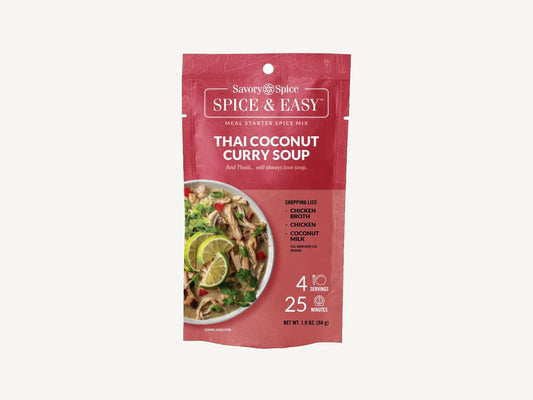
Whether curry to you means a fiery Vindaloo, a comforting bowl of Thai Coconut Curry Soup, a warm-spiced Massaman, or that familiar yellow curry powder mixed into chicken salad that started this whole conversation, there’s always another version to discover.