The assumption that fresh is always better gets herbs wrong in both directions.
Dried Oregano is more potent than fresh and performs better in almost every cooked application. Dried Bay Leaves have a complexity that fresh bay doesn't reliably deliver. And Ground Ginger isn't a diluted version of fresh ginger; they contain different chemical compounds and belong to different dishes entirely.
Treating dried as a fallback, or fresh as inherently superior, misses what each form actually does. Sometimes the substitution runs the other way, and the recipe was built on the dried version all along.
So here is the whole picture: why the two forms differ, the conversion charts for herbs and for aromatics like garlic and ginger, which herbs are genuinely better dried, which are worth buying fresh, and the timing rules that matter more than any ratio.
Are fresh and dried herbs the same thing?
Not really, and the difference goes deeper than moisture content.
Fresh herbs are roughly 80 to 90 percent water. Remove that water and the herb shrinks dramatically, so the flavor compounds left behind are far more concentrated by volume. That's the whole basis of the standard conversion: dried herbs carry roughly three times more flavor per teaspoon than fresh.
But concentration isn't the whole story.
Drying changes flavor character, not just intensity. Some of a fresh herb's most distinctive volatile compounds evaporate during drying, and others transform into new compounds through reactions that happen as the herb dries. The result is that many dried herbs don't taste like a stronger version of fresh. They taste genuinely different. Dried basil isn't concentrated fresh basil; it's closer to a different herb with a different profile.
So the fresh-or-dried decision isn't really about convenience or availability. It's about which form's flavor fits what you're making.
What is the fresh to dried herb ratio?
Start with 3:1.
1 Tbsp of fresh chopped herbs equals about 1 tsp of dried. If a recipe gives you a fresh amount, divide by three.
Then adjust for grind. Dried leaf herbs, like the oregano or basil in most jars, follow that 3:1 rule. Ground herbs are finer, pack more densely into a spoon, and are stronger still, so use about half as much ground as you would dried leaf. That matters most with rosemary, where cracked and ground versions behave very differently in the same measuring spoon.
HERB
FRESH
DRIED EQUIVALENT
Basil
1 Tbsp chopped
1 tsp
Oregano
1 Tbsp chopped
1 tsp
Thyme
1 Tbsp leaves
1 tsp
Rosemary (cracked)
1 Tbsp chopped
1 tsp
Rosemary (ground)
1 Tbsp chopped
½ tsp
Parsley
1 Tbsp chopped
1 tsp
Dill
1 Tbsp chopped
1 tsp
Cilantro
1 Tbsp chopped
1 tsp
Tarragon
1 Tbsp chopped
1 tsp
Marjoram
1 Tbsp chopped
1 tsp
Sage
1 Tbsp chopped
1 tsp
Mint
1 Tbsp chopped
1 tsp
Chives (freeze-dried)
1 Tbsp chopped
1 to 2 tsp
Bay leaf
1 leaf
1 leaf
Three exceptions worth knowing. Dried oregano and dried rosemary are both more potent than 3:1 suggests, so start at half and work up. Dried basil and dried tarragon run the other direction: at a strict 3:1 you'll get flavor, but not a true replacement for fresh. And freeze-dried herbs are their own case entirely, converting 1:1 with fresh, which we'll get to below.
Measuring Tip: Start at two-thirds of the converted amount and taste before adding the rest. Jars vary in age and potency, and a fresh jar of dried oregano is noticeably stronger than one that has been open for two years. You can always add more. You can't take it out.
Which herbs are actually better dried?
A few herbs genuinely outperform their fresh versions in most cooking, and this is the part most people find surprising.
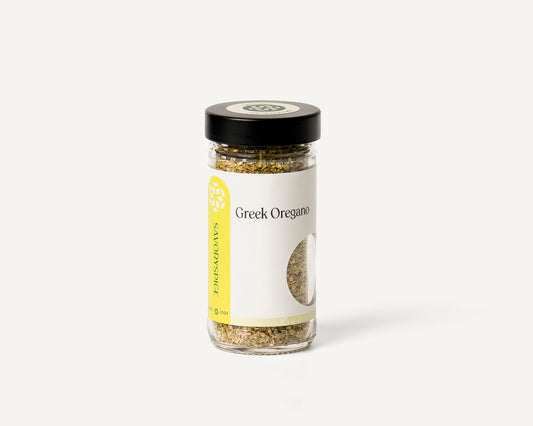
Oregano is the clearest example. Dried oregano, particularly Greek Oregano, is more potent than fresh, with a concentrated, almost peppery pungency that lands exactly where you want it: tomato sauces, marinades, dry rubs, braises. Fresh oregano is mild enough that you'd need a quantity that changes the texture of the dish. If your homemade pizza sauce never tastes like the restaurant version, this is usually why. Read more in Behind the Seasoning: Oregano.
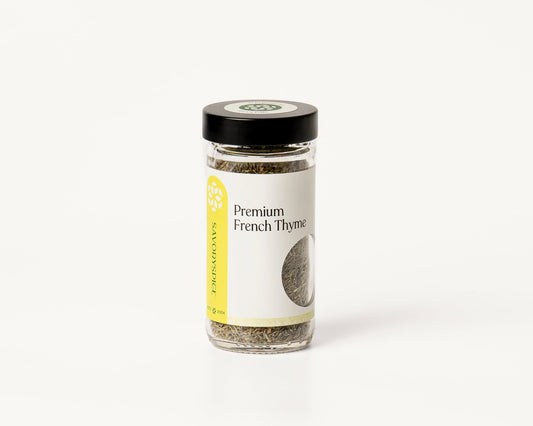
Thyme handles both forms well, but dried has a real advantage in long-cooked dishes, where its woody character concentrates and integrates under heat instead of sitting on top as sprigs you have to fish out. Read more in Behind the Seasoning: Thyme.
One thing worth flagging here: Mexican Oregano isn't a variety of the same plant. It comes from an entirely different botanical family, with citrus and mild licorice notes rather than minty pungency, and the two are not interchangeable.
Bay Leaves are almost always used dried. Fresh bay has a muted, faintly medicinal quality that never develops the complex, subtly floral character dried bay contributes to stocks, braises, and soups. Dried bay needs time in hot liquid to do its work, which is why it goes in at the beginning of a long cook and comes out before serving. Read more in Behind the Seasoning: Bay Leaves.
Dill Weed undergoes one of the most interesting shifts of any herb. Fresh dill is grassy, bright, and so volatile it breaks down almost immediately under heat. Dried dill loses the grassy edge and becomes warmer, more buttery, and more aromatic, and it holds up in baked fish, dressings, dips, and grain dishes. Dried dill is why a dip tastes better the next morning than it did the night you made it: the herb needs time and a fatty medium to fully bloom. Read more in Behind the Seasoning: Dill.
Rosemary works in both forms, but dried rosemary in a long braise or slow roast integrates more completely, with less of the piney sharpness that dominates when fresh rosemary hits something quick. Cracked Rosemary keeps enough leaf structure to release slowly into a roast or a bread dough, while our ground version disperses faster for rubs. Use roughly half the volume you would use fresh. And Marjoram is the underused one in this group, sweeter and gentler than oregano, and worth knowing if you find oregano too aggressive. Behind the Seasoning: Rosemary covers the difference in more detail.
Some herbs lose enough in drying that the fresh version is worth a trip to the store, specifically when the recipe asks them to be the main event.
Basil is the strongest case. The compounds behind its sweet, peppery, faintly anise character are among the most volatile in any common herb, and they don't survive drying in meaningful concentration. Where basil is the primary flavor, pesto, caprese, fresh pasta sauces, anything raw, fresh is the only version that delivers.
Cilantro is compromised the same way: its bright, citrusy character comes from highly volatile aldehydes that dissipate almost entirely during drying, so salsas and fresh sauces need the bunch. See Behind the Seasoning: Cilantro for more on its flavor chemistry.
Parsley loses most of its clean, grassy brightness, which matters when it's a finishing herb or going into a salad raw. And Tarragon is a step down in cold applications, since fresh tarragon's bright anise-licorice edge is what makes béarnaise and herb butters work.
The general principle: herbs that go in raw, finish a dish, or carry the primary flavor are usually worth buying fresh. Herbs going into a long cook, or used as background seasoning in a blend, are where dried performs reliably and often better.
*Which is exactly where the dried versions earn their place*
None of that makes dried basil or dried parsley useless. It makes them specific, and knowing the specific job is the whole point.
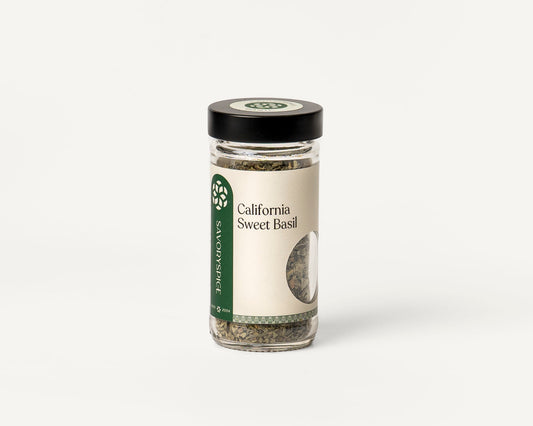
California Sweet Basil is genuinely excellent in a long-simmered tomato sauce, where it finally has the heat, fat, and 30-plus minutes it needs to bloom. This isn't a consolation prize: it's why nearly every good marinara, pizza sauce, and Italian blend is built on dried basil rather than fresh. Fresh basil dropped into a sauce that simmers for an hour is wasted. Parsley does its best work the same way, as a mild green backbone in blends, dips, compound butters, and anything where you want the color and a gentle herbal note without competing with the other seasonings.
The same logic applies to the other two. Our Dried Cilantro is milder and more herbal than fresh, which some cooks actively prefer, and it works well stirred into a simmering pot of beans or a rub.
French Tarragon keeps enough of its anise character to carry a cream sauce or a long braise on its own. Reach for fresh when the herb is the point, and dried when it's doing structural work underneath everything else.
Freeze-drying is a genuinely different process, and it changes the math. Conventional dehydrating uses gentle heat to evaporate water, which also carries off volatile oils and collapses the plant's cell structure. Freeze-drying instead freezes the herb solid, then pulls the ice directly to vapor under vacuum, skipping the liquid stage entirely. The cell walls stay intact.
The result is more retained color, more retained aroma, and something that rehydrates almost instantly. This is why freeze-dried herbs break the 3:1 rule and convert roughly 1:1 with fresh: same quantity, nearly the same character, with the shelf stability of dried.
Freeze Dried Chives are the clearest case. Stir them into sour cream, a dip, a dressing, or onto a hot baked potato and within a minute they look and taste remarkably like fresh snipped chives, which no dehydrated chive manages. Freeze Dried Shallots solve a different problem: the sweet, delicate allium flavor shallots bring, without peeling and mincing something that turns soft in the bin inside a week.
Rehydrating Tip: Freeze-dried ingredients want moisture and a few minutes. In a dip, dressing, sauce, or soup they rehydrate on their own. For a dry application like a rub or a finishing sprinkle, stir them into a spoonful of oil, lemon juice, or water first and let them sit 2 to 3 minutes. That one step is the difference between tasting like fresh and tasting like confetti.
How can you swap dried aromatics for fresh?
Garlic, Onion, Ginger, and Turmeric do not follow the three to one herb rule, because they are roots, bulbs, and rhizomes rather than leaves, and dehydrating them concentrates them far more dramatically. These are the conversions people get wrong most often, usually by using far too much.
Grind size is doing real work in that garlic section.
Minced Garlic is dehydrated in visible pieces, so it stays closest to fresh in texture and behavior and rehydrates in any liquid. Minced Onion works the same way, and it's the reason you can build a dip or a burger blend without crying over a cutting board. Go finer and you go stronger:
Granulated Garlic is roughly twice as potent by volume as minced and better for rubs where you want even distribution, and garlic powder is stronger again. Reaching for powder when a recipe means minced is how a dish ends up harsh.
The chemistry explains why some of these swaps work better than others. Fresh garlic's sharpness comes from allicin, released the moment a clove is cut or crushed. Dried garlic is mellower, sweeter, and more rounded, with less raw bite and more integrated flavor. That's why cooked applications convert cleanly and raw ones like aioli, vinaigrettes, and compound butters really do need fresh.
Is Ground Ginger the Same as Fresh Ginger?
No, and this is the most important fresh-versus-dried distinction outside of herbs entirely.
Fresh ginger and ground ginger contain different compounds in different proportions. Fresh ginger is dominated by gingerol, which is bright, citrusy, and cleanly pungent. When ginger is dried and ground, gingerol converts to shogaols, which are warmer, spicier, more concentrated, and far less citrusy.
This is why Ground Ginger dominates in baked goods, gingerbread, pumpkin pie, spice cake, and molasses cookies, where warm earthy spice is the goal, while fresh ginger belongs in stir-fries, teas, dressings, and marinades where you want brightness and sharp heat.
They don't substitute reliably for each other. The conversion in the chart above will get you in the ballpark in a pinch, but where ginger is prominent, the flavor shift is significant enough to change the dish. Fresh ginger in a spice cake produces a different and generally worse result than ground; ground ginger in a stir-fry misses the point entirely. Read more in Behind the Seasoning: Ginger.
Ground Turmeric shifts more gently. Fresh turmeric root is brighter, more peppery, and slightly floral, while dried is earthier and more concentrated. For curries, spice blends, and braises, dried performs reliably and is far easier to work with than something that stains everything it touches. Read more in Behind the Seasoning: Turmeric.
The broader rule across all of these: when an ingredient carries significant volatile aromatics, drying doesn't just concentrate it, it changes it. Knowing which form a recipe was developed around is the difference between a dish that works and one that tastes almost right.
When should you add dried herbs instead of fresh?
Timing matters as much as quantity, and getting it wrong will undo a perfectly correct ratio.
Dried herbs go in early. They need heat, fat or liquid, and time to rehydrate and release their oils. Add them at the start of a braise, when you are building a sauce base, or in the first layer of a marinade. In anything cooking less than 10 minutes, add dried herbs at the very beginning. Dried herbs sprinkled on at the end taste dusty, because they never got the chance to open up.
Fresh herbs go in late. Their volatile compounds are exactly what long cooking destroys, so tender herbs like basil, cilantro, and parsley belong in the last 30 seconds or off the heat entirely.
Cold applications need the most patience. In a dip, dressing, or compound butter, dried herbs need at least 30 minutes in fat or liquid to bloom, and overnight is better. This is the single most common reason a homemade dip tastes flat when you serve it immediately.
Freeze-dried splits the difference, going in near the end like fresh, as long as there is moisture for it to drink.
Blooming Tip: Crush dried herbs between your palms as you add them. The friction and warmth break the leaf surface and release aromatic oils on the spot, and you'll smell the difference immediately. Better still, bloom them in fat at the start of cooking. 30 seconds of dried oregano in warm olive oil before the garlic goes in does more for a sauce than doubling the amount later. For more on blooming technique, check out Spices 101: How to Bloom Spices in Oil.
What dried herbs and aromatics do not convert?
Being useful here means being honest about the edges, and there are three.
Garnish. Nothing dried replaces the look of fresh herbs scattered over a finished plate. If the herb is doing visual work, buy the bunch.
Dishes where the herb is the bulk ingredient. Pesto, salsa verde, tabbouleh, and a proper mint chutney are built on cups of fresh leaves providing volume, moisture, and body. No ratio turns a teaspoon of dried basil into pesto.
Raw preparations with no moisture and no time. A dried herb needs something to rehydrate in. Tossed dry over a salad with nothing to soften it, it stays papery.
Everywhere else, which is most of cooking, the swap isn't just workable but frequently preferable.
Can you make sauces using dried instead of fresh?
You can, and it's the best test of everything above.
Chimichurri sauce is traditionally almost entirely fresh: parsley, oregano, garlic, chile, oil, and vinegar, chopped and whisked and used within a day or two. Which makes it exactly the kind of thing people assume a jar can't do.
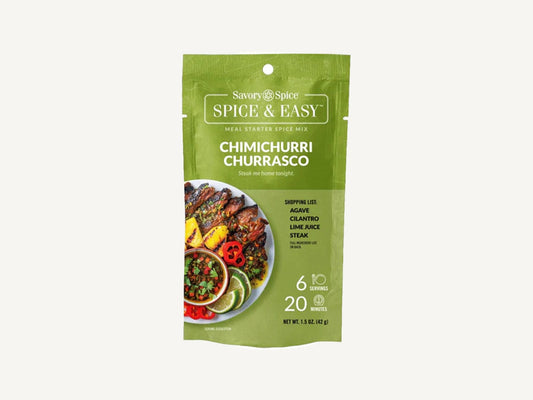
It works because the dried aromatics rehydrate in the very liquid the sauce already needs. Our Chimichurri Churrasco mix is the Argentine-style version, whisked with olive oil, an acid, and a handful of fresh cilantro or parsley if you happen to have it. That's sauce in 2 minutes instead of 15, at any point in the year, with no bunch of herbs going slimy in the crisper. Chimichurri Rojo Dry Rub takes it red, with paprika and chile joining the herbs, and since it's salt-free it doubles as a straight rub for steak.
Our Chimichurri Skewers recipe shows the method plainly: the dry mix gets whisked with lime juice, agave, and olive oil into a marinade, half of it goes on the protein and half is reserved as sauce for the table. That is a dried blend doing the full job of a fresh herb sauce, and it is the clearest argument in this whole guide.
Chimichurri is only one example. Almost any dry blend can become a sauce, a paste, a marinade, or a dressing once you know the ratios of seasoning to fat to acid, and we walk through those combinations in Transforming Seasonings Into Sauces or Pastes.
Cooking from the jar is not a compromise.
3:1 for leafy herbs, half that again for ground, 1:1 for freeze-dried, and much less than you think for garlic, onion, and ginger. But the ratio is the easy part.
What separates a good substitution from a flat one is adding dried herbs early enough to bloom, crushing them between your palms on the way into the pot, and giving freeze-dried something wet to wake up in.
And the choice runs both directions. Buy fresh basil for pesto and fresh cilantro for salsa, because nothing on a shelf replaces them. Reach for dried oregano in tomato sauce and dried bay in a braise, because fresh would be the downgrade. Most of cooking sits comfortably in between, where the jar means you can make the dish you had in mind on a Tuesday in February without a special trip.
So open them. Use more than a pinch. Dried herbs fade in the cabinet whether you cook with them or not, so the worst thing you can do is save them for an occasion that never comes. When a jar smells faint instead of sharp, grab a refill and keep going. Spices are meant to be used up.