Putting down the salt shaker does not mean putting down flavor.
But it does mean changing how you cook, and the reason most people find salt-free food disappointing is that they simply leave the salt out and hope the rest of the recipe carries it.
It will not. Something has to go in its place.
The good news is that what salt actually does in a dish can be replicated, and the ingredients that do it are typically already sitting on a spice shelf.
Whether you are on a low-sodium diet for health reasons or just cutting back, this is the part nobody explains: there are five specific levers, and once you know them, salt-free cooking stops feeling like subtraction.
Here is what salt is doing, the 5 things that replace it, and the blends we make with no salt at all.
Why does food typically taste flat without salt?
Salt is not just a flavor. It is a flavor amplifier and enhancer, which is why removing it affects everything on the plate rather than just making things less salty.
Salt suppresses our perception of bitterness, which is why a pinch makes coffee, chocolate, and leafy greens taste rounder.
It heightens sweetness and sourness at the same time. And it draws moisture and aromatic compounds to the surface of food, so you actually smell more of what you are eating, and most of what we call taste is really smell.
Take it out and none of that happens. Bitter notes step forward, sweetness recedes, aroma stays locked in.
The dish is not just under-seasoned, it is genuinely flatter. So the job is not finding something that tastes like salt. The job is putting back the contrast, the aroma, and the savory depth that salt was providing.
How do you replace salt in cooking?
Five levers. Most good salt-free dishes use at least three of them.
1 – Acid
The single best substitute, and the one people underuse most. Acid creates the same brightness and contrast that salt does, and it hits the palate in a similar way. Citrus juice and zest, vinegar, tomatoes, and sumac all work.
Citrus Pepper Seasoning (Salt-Free) is the one to start with, because it is our salt-free answer to lemon pepper. That matters more than it sounds: lemon pepper is one of the most popular seasonings in any grocery store and almost every version of it is salt-first, which means the flavor most people love has been effectively off-limits on a low sodium diet. This one is not. It stacks bright citrus against real pepper bite, which is two of the five levers in a single shake.
Ground Sumac Berries is the other one worth knowing, and its own label makes the case better than we can: use it to enhance flavor the way salt would. Bright, tart, and lemony, it does for a finished dish what a squeeze of lemon does without adding liquid, which is why it belongs on hummus, rice, kebabs, roasted vegetables, and fish.
Umami is the savory depth that makes food taste substantial, and it is the closest thing to a direct replacement for what salt contributes to a savory dish. Mushrooms, tomatoes, and alliums are the most useful sources.
Four Mushroom Umami Blend (Salt-Free) is the most useful jar in this entire post if you are cooking without salt. Stir it into broths, soups, stews, gravies, and pan sauces, or sprinkle it over vegetables and pasta. It adds a meaty richness that has nothing to do with sodium.
Tomato Powder does double duty, bringing both umami and a natural sweetness and acidity, and it dissolves into sauces without thinning them the way fresh tomato would.
If you asked our merchants for one salt-free recommendation, most would say this. Alliums bring savory intensity that reads as fullness on the palate, and they are the backbone of nearly every salt-free blend worth owning.
Roasted Granulated Garlic is the upgrade over plain garlic powder here, because roasting deepens it and adds a nutty sweetness that plain garlic does not have.
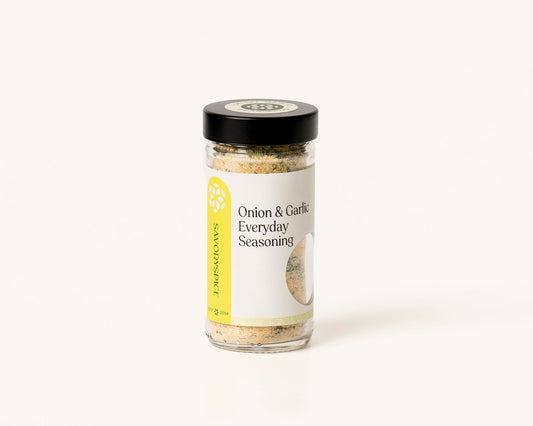
Onion & Garlic Everyday Seasoning is the one to keep on the table in place of a salt shaker, and it is exactly what it sounds like: the two most useful savory ingredients in cooking, salt-free, ready to sprinkle on anything.
Capsaicin gives your palate something to pay attention to, which distracts from the absence of salt and makes a dish feel more vivid. It does not have to be aggressive; even a background warmth changes how a dish reads.
Cajun Blackening (Salt-Free) is proof of the whole concept, since Cajun cooking is usually salt-forward and this version is not. Use it to blacken chicken or fish, or sprinkle it over fries and sautéed vegetables.
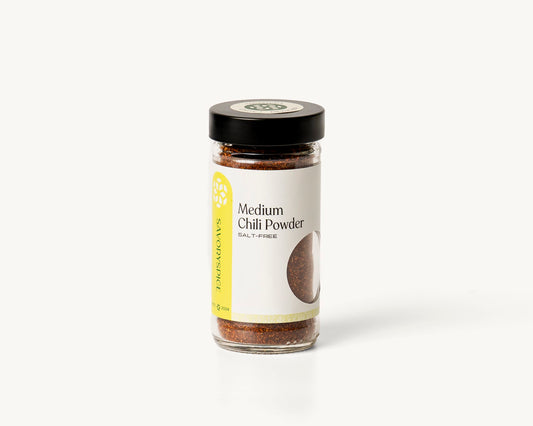
Medium Chili Powder (Salt-Free) is the pantry workhorse, garlicky and earthy with real heat, and it is worth knowing that our chili powders are salt-free across the board.
The final layer, and the one that makes a dish taste composed instead of merely spicy or tangy. Dried herbs bring complexity that reads as care rather than as seasoning.
Cantanzaro Herbs is our most useful herb blend for salt-free cooking specifically, because it adds a lemon and garlic twist to a classic Italian herb base, which means it hits three levers at once.
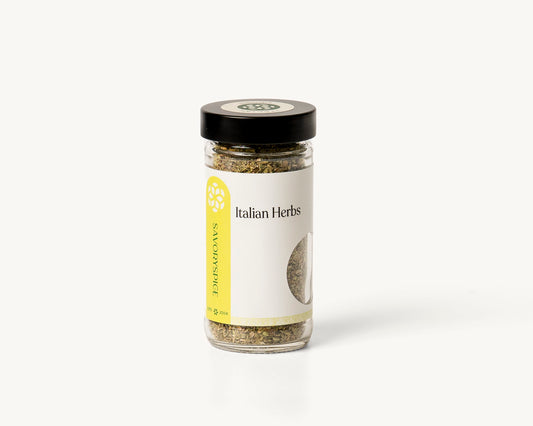
Italian Herbs is the straightforward version, and it belongs in pasta sauces, on roasted vegetables, in vinaigrettes, and on pizza (unless you want to use the Pizza Herb Topper, which is salt-free too!) Also worth knowing: single herbs are all naturally salt-free, so Herbes de Provence, Dill Weed, and Cracked Rosemary are all fair game.
Layering Tip: Season in stages rather than all at the end. Salt-free blends need heat, fat, and time to open up, so add them early enough to bloom, then finish with something fresh at the table: a squeeze of citrus, a grating of zest, torn herbs, or a shake of sumac. Two applications at different points do far more than one heavy hand.
What are the best salt-free seasoning blends?
Worth saying up front: single spices and herbs do not contain salt, so every chile powder, paprika, peppercorn, dried herb, and baking spice on our shelf is already salt-free.
What follows are the handcrafted blends made with no salt at all, organized by what you are cooking. Every one of them is a genuine low sodium option, since none of them contribute any sodium themselves.
Best for Chicken or Pork
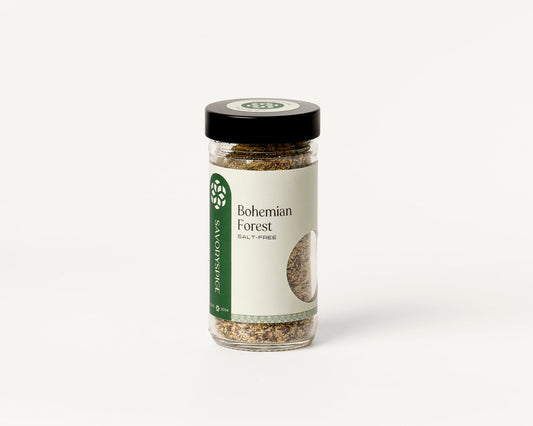
Bohemian Forest (Salt-Free) is an herb-filled European-style blend with the sharp bite of mustard and the sweet aroma of lavender. Our favorite easy meal with it: rub a whole chicken and cook it in a slow cooker on low for six to eight hours. It is also excellent on roasted or mashed potatoes and baked white fish. Poultry Seasoning (Salt-Free) is the classic for a reason, and it does more than Thanksgiving.
Butcher's rubs are the hardest category to shop salt-free, because nearly all of them are built on salt and pepper as the base. That is what makes Rocky Mountain Butcher's Rub (Salt-Free) genuinely useful rather than merely convenient. It uses chunky pieces of herbs and spices to do what a butcher's rub normally does with salt, it stands up to the slow cooking of soups, stews, and roasts, and it works on chicken, steak, burgers, pork, and vegetables alike. If you buy one salt-free rub for red meat, buy this one.
Shawarma Seasoning (Salt-Free) is the other one, and it is the more interesting of the two. Traditionally the blend for spit-roasted lamb and street-style chicken or beef shawarma, it brings warm Middle Eastern spice that gives red meat depth without any sodium doing the work. Use it as a dry rub or loosen it with oil and lemon into a marinade, and it is just as good on roasted cauliflower or eggplant as it is on lamb.
Seafood is the easiest place to start cooking without salt, and most people never realize it. The classic partner for fish has always been a squeeze of lemon, which means the tradition was already built on acid rather than salt. Fish also has a delicate flavor that heavy salting tends to bury, so you are working with the grain instead of against it.
Barrier Reef Caribbean Mix (Salt-Free) is our best answer here, and it was practically built for the job. It layers chiles, nutmeg, and ginger against lemon, orange, and makrut lime leaves, which is acid and aroma in a single jar. It is excellent on halibut, orange roughy, and any mild white fish, and it does the same work on chicken. Thai Green Curry (Salt-Free) is the bolder direction, with galangal, lemongrass, cilantro, and makrut lime leaves behind real heat at about a 6 or 7. Use a light hand, a teaspoon or two goes a long way, and it turns shrimp or a firm fish into something genuinely exciting.
Two more from earlier also belong on fish. Cajun Blackening (Salt-Free) is what you want for a proper blackened fillet, since a hard spice crust in a hot pan gives you all the intensity a salt crust would. And Bohemian Forest is genuinely good on baked white fish, where its mustard and lavender notes read as delicate rather than heavy.
Best for Global Cuisine
This is where salt-free is easiest, because so many spice traditions build flavor from aromatics rather than salt. Baharat (Salt-Free) is the Middle Eastern all-purpose blend, warm and peppery with allspice and cinnamon behind it, and it works on lamb, chicken, rice, lentils, and roasted vegetables without needing anything else. Tikka Masala (Salt-Free) is the one that surprises people, because it turns a can of tomatoes and some cream into a full curry with no sodium in the seasoning at all.
Worth knowing about too: Garam Masala is technically a curry blend but contains no turmeric, which makes it almost the savory counterpart to chai, with coriander, charnushka, and cumin instead of ginger and cinnamon. In Punjabi cooking it is used as a finishing seasoning the way salt and pepper are elsewhere, which tells you something about how much flavor it carries on its own. Use it on lamb, pork, fish, and vegetables, or in homemade barbecue rubs, and it even works as a baking spice.
Best for Vegetables or Stir-Fry
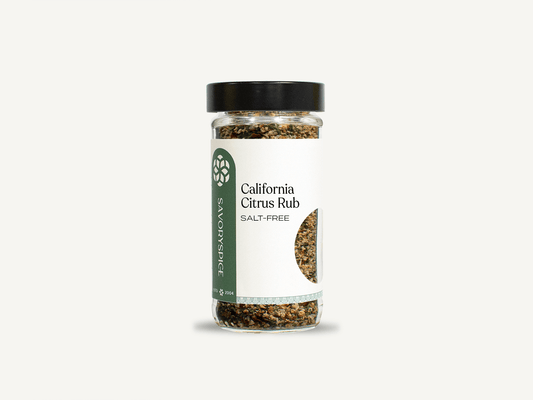
Sweet Sesame Stir Fry (Salt-Free) is sweet, nutty, and aromatic with citrus notes and mild heat, about a 3 out of 10. Shake it over vegetables or seafood, or use it for what the name suggests. California Citrus Rub (Salt-Free) is the everyday vegetable answer, with tart orange and lemon balanced by black pepper and crushed red pepper. Sprinkle it over cooked vegetables, whisk it into a vinaigrette, or toss it with kale before baking it into chips.
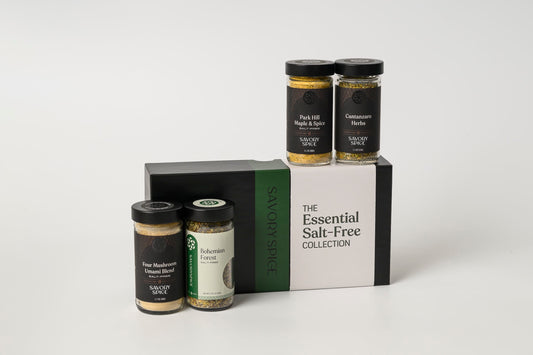
If picking from all of that feels like work, The Essential Salt-Free Collection takes the decision off your hands. It gathers four of our salt-free blends into one salt-free gift set, which is the fastest way to cover several of the levers above at once rather than buying one jar and hoping it does everything. It also makes a genuinely useful gift for anyone who has recently been told to cut back, since figuring out where to start is the hardest part.
The grill is where people assume low sodium cooking falls apart, since rubs are usually salt-first and bottled sauces are salt-heavy. It does not, and the reason is worth understanding: what makes food taste like it came off a fire is smoke, char, and sweetness. None of those require any sodium at all.
Smoke is the first thing to get right. Smoked Spanish Sweet Paprika is the foundation of any no salt rub, made from sweet Spanish peppers dried over an oak fire, and it delivers both the smoky depth and the deep red color that make a rub look and taste the part. Chipotle Chile Powder (Morita) stacks more smoke on top of real heat, and it is the single best salt-free way to add barbecue character to anything.
Mix and store in a jar. The sugar does what salt usually does on a rub, drawing moisture to the surface and building a crust, while the smoked paprika and chipotle carry the flavor. Adjust the chipotle for heat and add more brown sugar if you want a sweeter bark.
If you would rather not mix your own, two salt-free blends handle the grill on their own. Park Hill Maple & Spice (Salt-Free) is the closest thing we make to a ready-built salt-free barbecue rub, because maple sugar brings exactly the sweetness a rub needs alongside warm cinnamon, ginger, and nutmeg and earthy turmeric, coriander, and cumin. It is excellent on pork, salmon, and root vegetables. And Chimichurri Rojo Dry Rub (Salt-Free) is the grilling counterpart, tangy and garlicky with a kick from Aleppo chiles, and it works either dry on steak or whisked into a marinade.
Mix 4 Tbsp. Chimichurri Rojo Dry Rub with ½ cup olive oil, 1 cup warm water, and 1 cup wine vinegar or balsamic vinegar. Marinate meat about 4 hours before grilling. The acid does the tenderizing that a salt brine would normally handle, which is the whole trick to marinating without salt.
Two blends from earlier also belong on the grill. California Citrus Rub is the one for chicken and fish, since the acid does double duty as seasoning and as a tenderizer. Rocky Mountain Butcher's Rubis coarse enough to survive high heat and long cooking, which is exactly what you want on beef.
And for sauce, skip the bottle. Simmer any of these with tomato sauce or tomato paste, a splash of vinegar, and a little brown sugar, and you have a homemade barbecue sauce with no added sodium at all.
What are the most common mistakes in salt-free cooking?
Being useful here means being honest about the edges.
Simply omitting salt. Going no salt by taking it out of a recipe and changing nothing else is the most common mistake and the reason people conclude salt-free food is bland. You have to add something back, which is what this whole post is about.
Expecting a one-to-one substitute. Nothing tastes like salt except salt. Salt substitutes built on potassium chloride read metallic or bitter to a lot of people, which is why we would rather point you at acid, umami, and aromatics than at a shaker that mimics sodium.
Baking. Salt is structural in bread, not just flavor, because it regulates yeast activity and strengthens gluten. Cutting it from a loaf changes the rise and the texture, not only the taste. Cured and preserved foods are the same story for safety reasons.
Only seasoning at the end. Salt-free blends need time in heat and fat to open up. A shake at the table alone will always taste thinner than the same blend added during cooking, then refreshed at the table.
Tip for Reading Labels: Sodium hides in the things you are cooking with, not just the shaker. Broths and stocks, canned beans and tomatoes, soy sauce, mustard, prepared condiments, cheese, and cured meats all carry it. A dish can be seasoned entirely with salt-free blends and still land high, so if you are tracking intake, the ingredient list matters more than the spice rack.
Cooking with flavor was never about the salt.
Acid for brightness. Umami for depth. Garlic and onion for savoriness. A little heat for interest. Herbs to tie it together.
Use three of those five in a dish and nobody at the table will ask where the salt went. That is the whole of low sodium cooking, and none of it tastes like a compromise.
What surprises people who cook this way for a while is that it makes them better cooks. When salt is not available to paper over a flat dish, you start reaching for lemon, for mushrooms, for smoked paprika, for a handful of herbs, and those are the moves that make food genuinely interesting rather than merely seasoned.
So start with two jars, not ten. An acid-forward blend and an umami one will change more meals than a whole shelf of anything else. Then build from there, and use them generously, because these blends are doing more work than most and a light hand is the only way to get this wrong. When a jar runs low, grab a refill. Spices are meant to be used up.